
The hard part is not naming the new rate. It is telling a valued client that the relationship still matters while the price changes. They need to know when it starts, what stays included, and how they can respond.
Start by stating the rate, effective date, and continuing scope, then leave room for a reply. This is honest without turning a notice into a negotiation before they have read it.
A rate increase is not a scope-creep email
When a client adds work to one project, the issue is the new scope, fee, and start condition. For that situation, see How to Tell a Client Extra Work Is Outside the Original Scope. A long-term rate increase is different: the ongoing service remains in place, but it moves to a new regular price from a stated date.
Do not blur the two. If you are updating a monthly retainer, the first notice does not need to reopen every historical task or announce that all future requests will cost more. Keep it anchored to the actual ongoing service.
Decide the four facts before you write
Your client should not have to send a second email just to learn the basics. Decide these four points first:
- the new rate;
- the exact effective date;
- the work that remains included;
- when and how you would like the client to respond.
If you have not settled those facts, the email will feel tentative. How to price your work, whether a contract permits an adjustment, and what tax or legal consequences apply depend on your own agreement and circumstances. This article is about communicating a decision, not giving pricing, contract, tax, or legal advice.
Give a brief reason, not a financial autobiography
You can say that the rate is part of an annual update, reflects the current level of service, or supports a changed way of working. You do not need to list every cost increase or make the client carry your anxiety about the business.
For a regular client, a direct sentence is usually stronger: "From February 1, the monthly rate will be 1,750 US dollars."
Give notice and a response date
The earlier you communicate a change, the more room the client has to plan. Include both the effective date and a separate response date. For example, a February 1 increase could ask for confirmation by January 15, or invite the client to schedule a conversation about the next phase.
That response date is not an ultimatum. It gives both sides time to decide what happens before the new price takes effect. If the client chooses not to continue, you can still finish the current period and arrange a professional handoff.
Rate increase email example for a long-term client
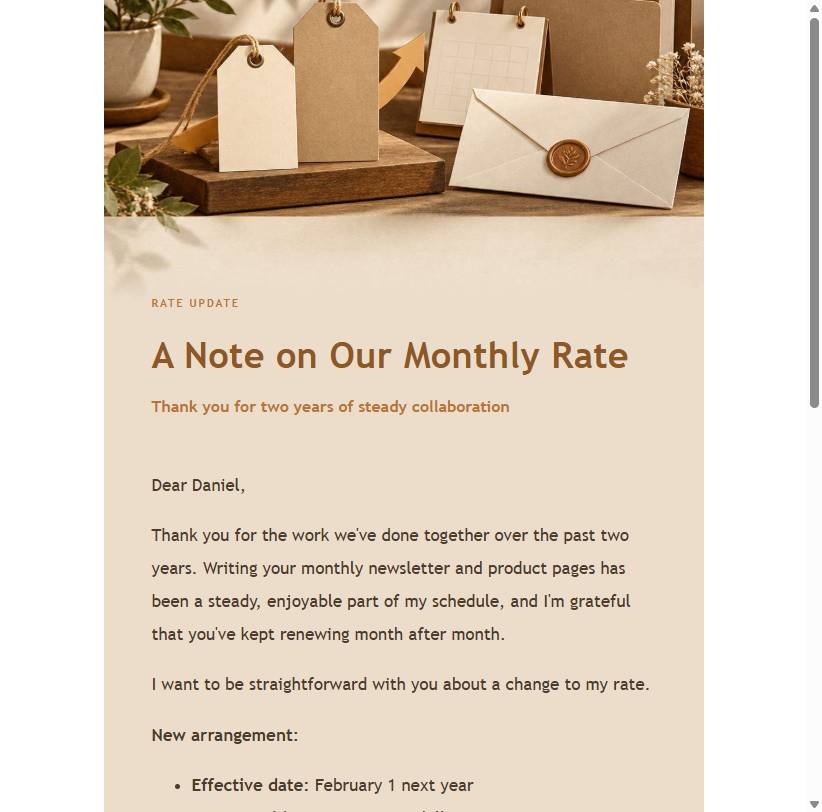
Subject: Update to monthly content services from February
Dear Daniel,
Thank you for the trust you have placed in Brightwell Content Studio over the past two years. I have appreciated being able to support the newsletter and product-page work for your brand.
From February 1 next year, the monthly rate will be 1,750 US dollars. The current monthly scope will remain the same: two newsletters, one product page, and one content review.
I wanted to share this early so you have time to plan for the next stage. If you would like to continue under the new arrangement, please let me know by January 15. If it would be useful to talk through timing or the next steps, I would be glad to find a time that works for you.
Whatever you decide, thank you for the ongoing collaboration.
Naomi Brooks
Brightwell Content Studio | Founder
This note does not assume the client will agree, and it does not rush to discount the work. It gives the client the change, the continuing scope, and a respectful next step.
If the client asks why the price is changing
A question is not automatically a challenge. You can answer briefly: this is an update to the ongoing service and its current level of work; it begins on a stated date, while the listed scope remains the same. If you are open to discussing a smaller scope or a different cadence, do that in a separate conversation rather than filling the first notice with defensive alternatives.
What if the client says their budget is limited?
First find out whether the issue is temporary budget pressure or a mismatch between the current scope and what they need. You may choose to discuss a smaller, workable scope or a later transition. You do not need to promise a concession in the original email, and you do not need to make a business decision before you understand the request.
Do not turn the notice into a sales page
The job of a rate-increase email is to make the change understandable. Adding a menu of upgrades, products, and packages can hide the most important information: rate, date, and scope.
If you are instead responding to a new prospect who wants a quote, read How to Write a Quote or Inquiry Reply Email for a Small Business. That is a different conversation, where the first task is understanding the prospective client's needs.
What the visible template review showed
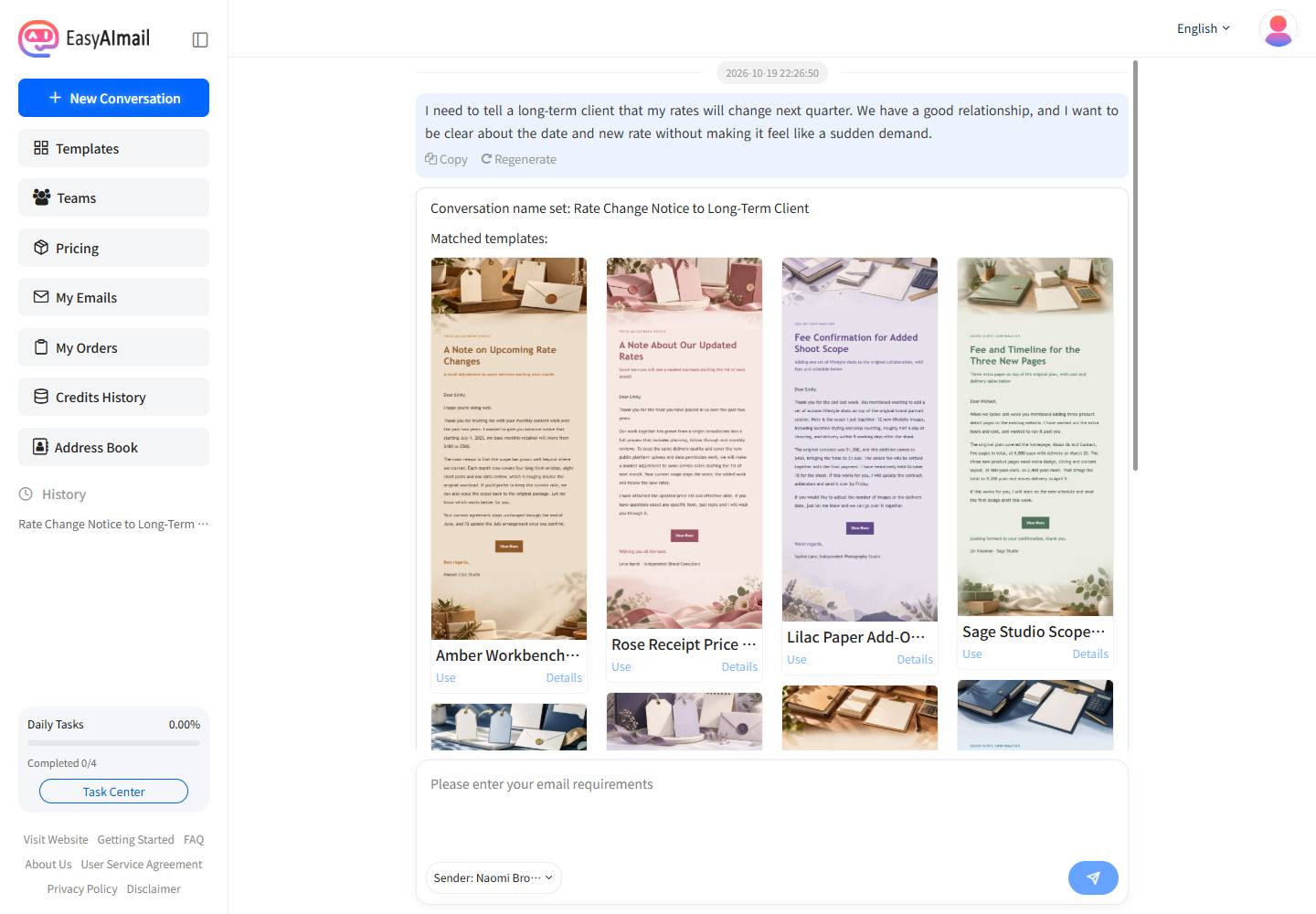
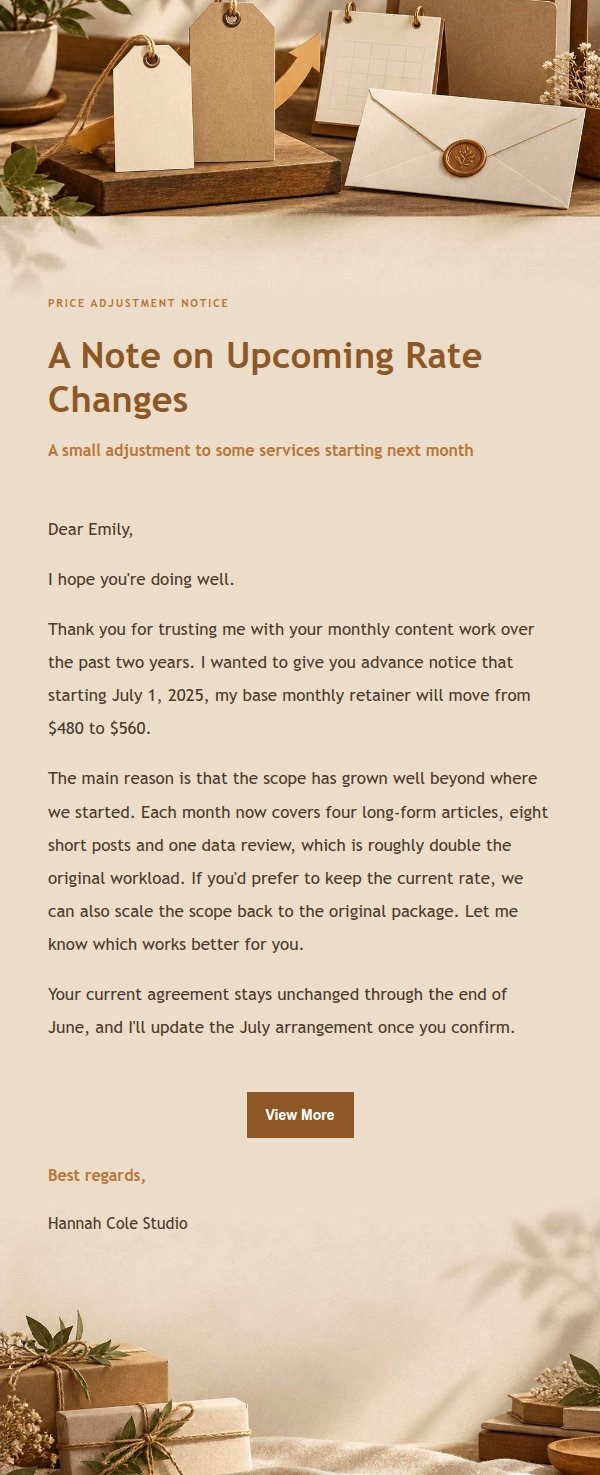
In this English-interface test, the simulated user described an upcoming rate increase for a valued repeat client, reviewed the template detail, and selected Amber Workbench Price Adjustment Notice. The useful test was not whether the title sounded polished. It was whether the layout could make the new rate, the effective date, and the continuing scope easy to find without making the relationship feel cold.
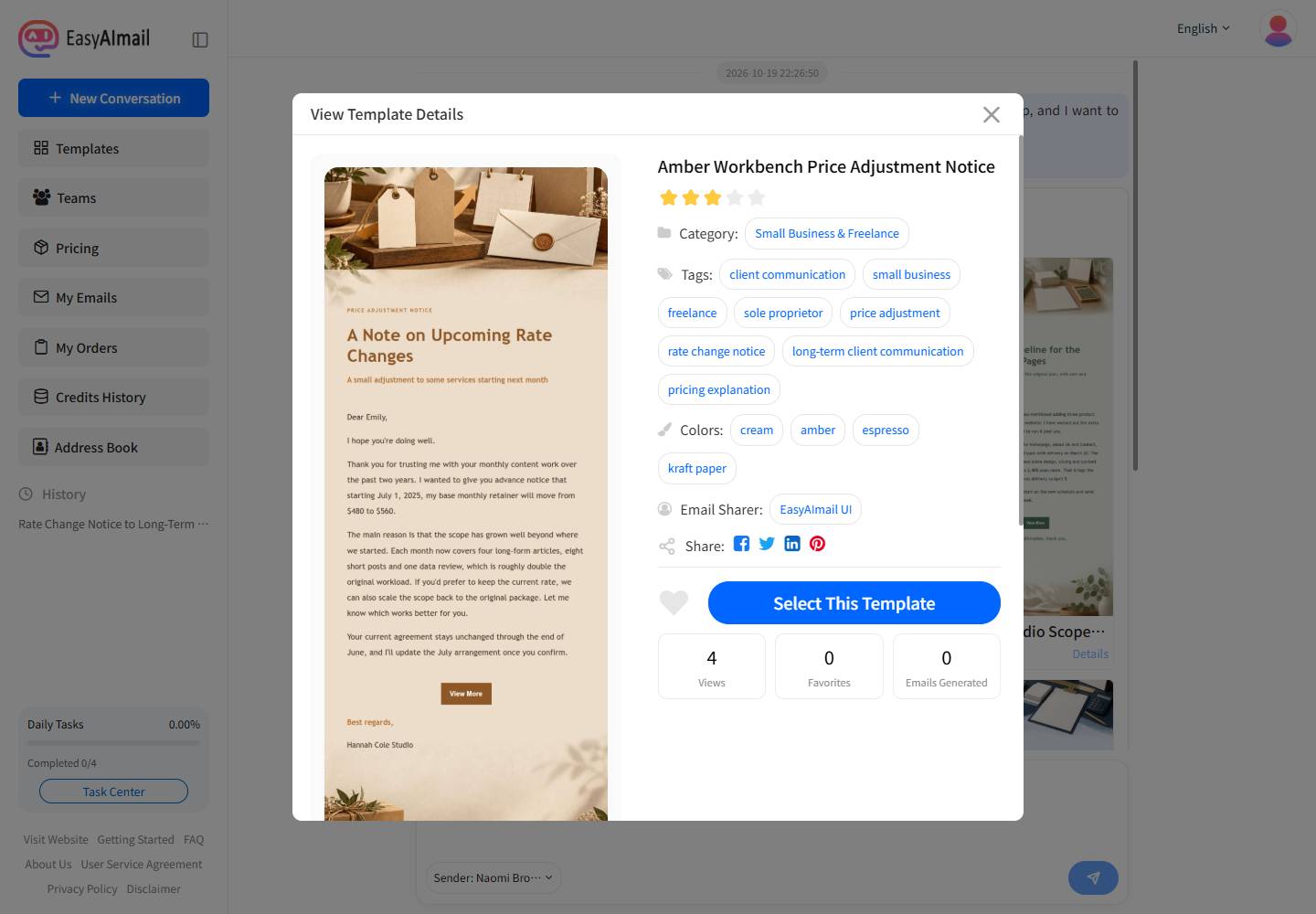
A template can help the update read like a considered message instead of an invoice. It cannot decide whether your rate is right or whether your agreement allows the change. Confirm those facts before you send.
Use EasyAImail to state the sensitive facts one at a time
With EasyAImail, you can begin with a simple request such as "I need to tell a long-term client that my rate will change next quarter." AI can recommend related templates, but the person writing the email chooses after reviewing the visible details.
Then add the client name, new rate, effective date, ongoing scope, and preferred tone as the conversation asks for them. Before generation, you confirm there is nothing else to add and review the email yourself. EasyAImail helps make a real update readable and considerate; it does not set prices, interpret contracts, give tax or legal advice, or send an email automatically.
Before you send it, check
- Is the new rate stated once, clearly, with an unambiguous effective date?
- Does the client know what is still included?
- Have you given them a realistic period to consider the change?
- Have you kept business stress, legal claims, and negotiation tactics out of the first notice?
FAQ: Common questions
How much notice should I give a long-term client?
That depends on the service cycle, your agreement, and the client's budget process. The practical principle is to give real time before the new rate begins, rather than announcing it at the end of the current period.
Do I need to explain every reason for the increase?
No. A short and honest context is often enough. The client mainly needs to know what changes, when it changes, what stays included, and how to respond.
What if the client will not accept the new rate?
You may be able to agree on a different scope or a transition, or you may decide to end the arrangement professionally. The email's purpose is not to force agreement. It is to make the next conversation possible.
If the price change shows that the arrangement no longer fits, keep that as a separate conversation. How to Pause or End Services With an Existing Freelance Client covers the final service date, remaining work, and handoff without folding that decision into a routine rate notice.
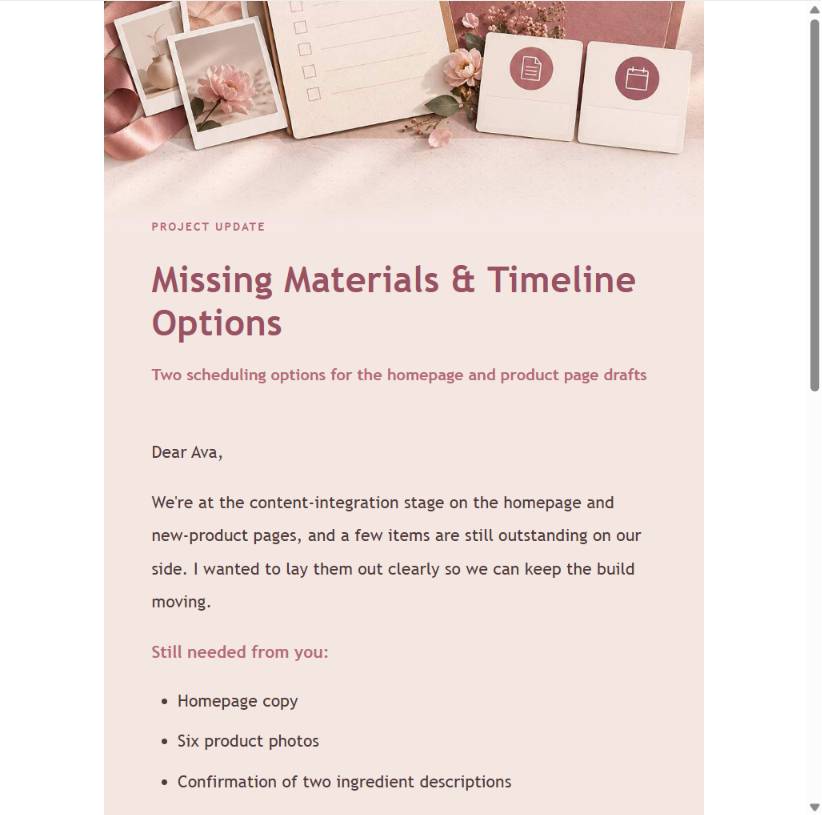
How to Email a Client About Missing Project Materials and Timeline Options
Write a clear, non-blaming email when a client has not sent the materials your project needs, including the timeline impact and practical options.
Read more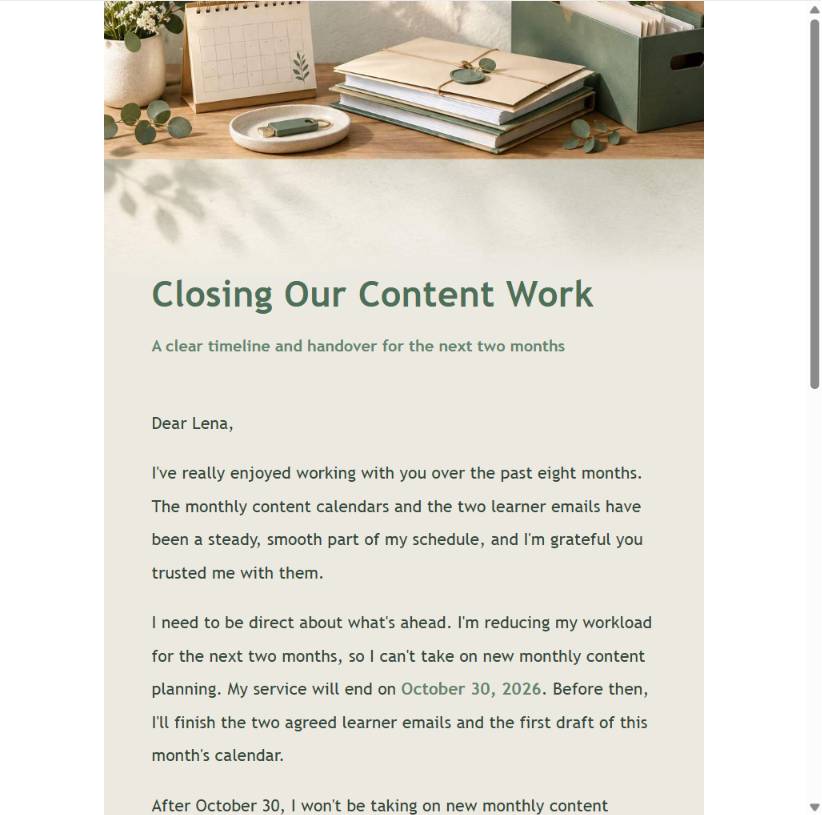
How to Pause or End Services With an Existing Freelance Client
Learn how to tell an existing freelance client about a pause or end of service with a clear final date, remaining work, and handover plan.
Read more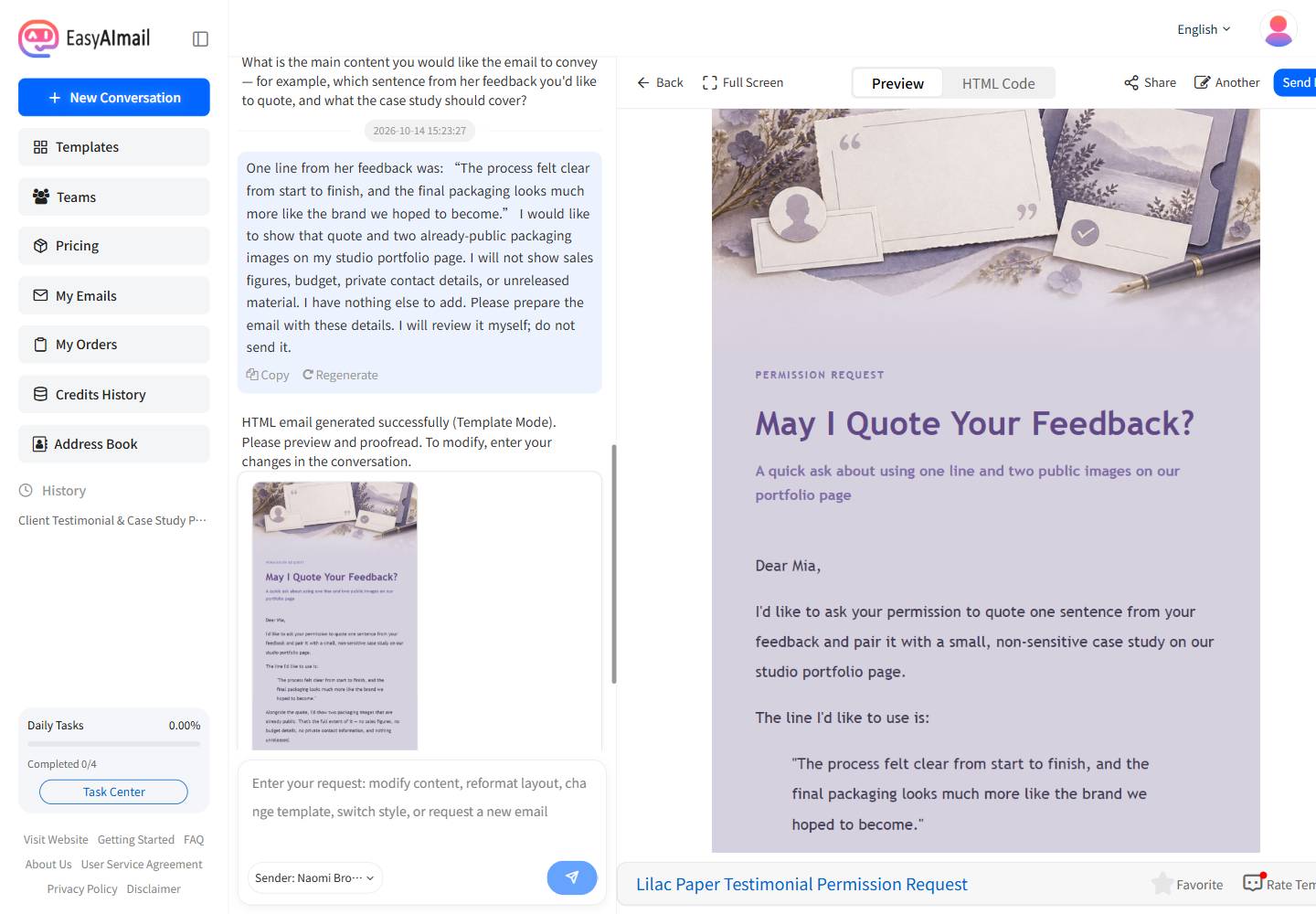
How to Ask a Client for Permission to Use a Testimonial or Case Study
Ask a client for permission to publish a testimonial or case study with a clear, respectful email that makes the scope and their choices explicit.
Read more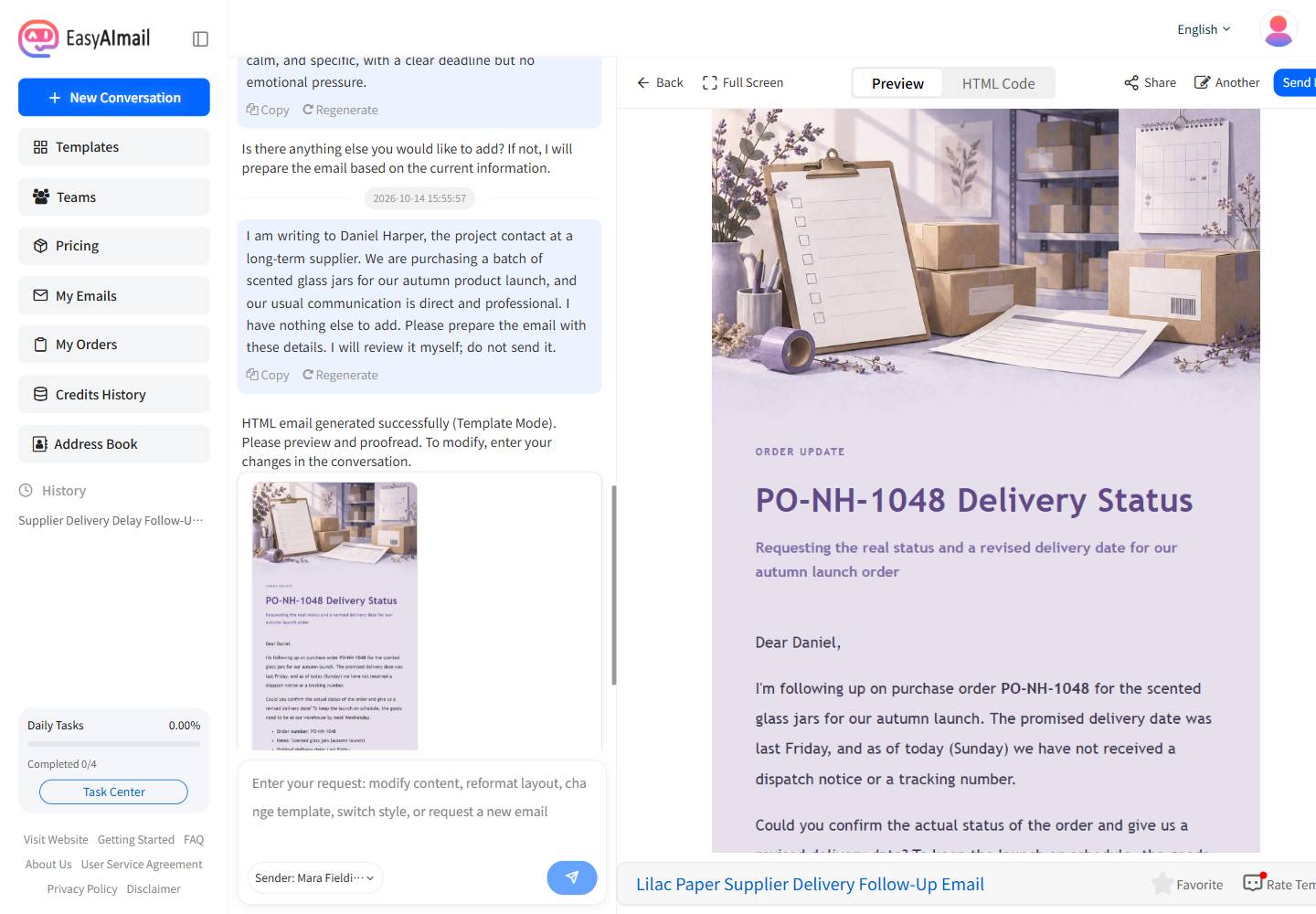
How to Follow Up With a Supplier When a Delivery Date Has Passed
Learn how to request a factual production and shipment update from a supplier after a promised delivery date has passed, without vague or hostile wording.
Read more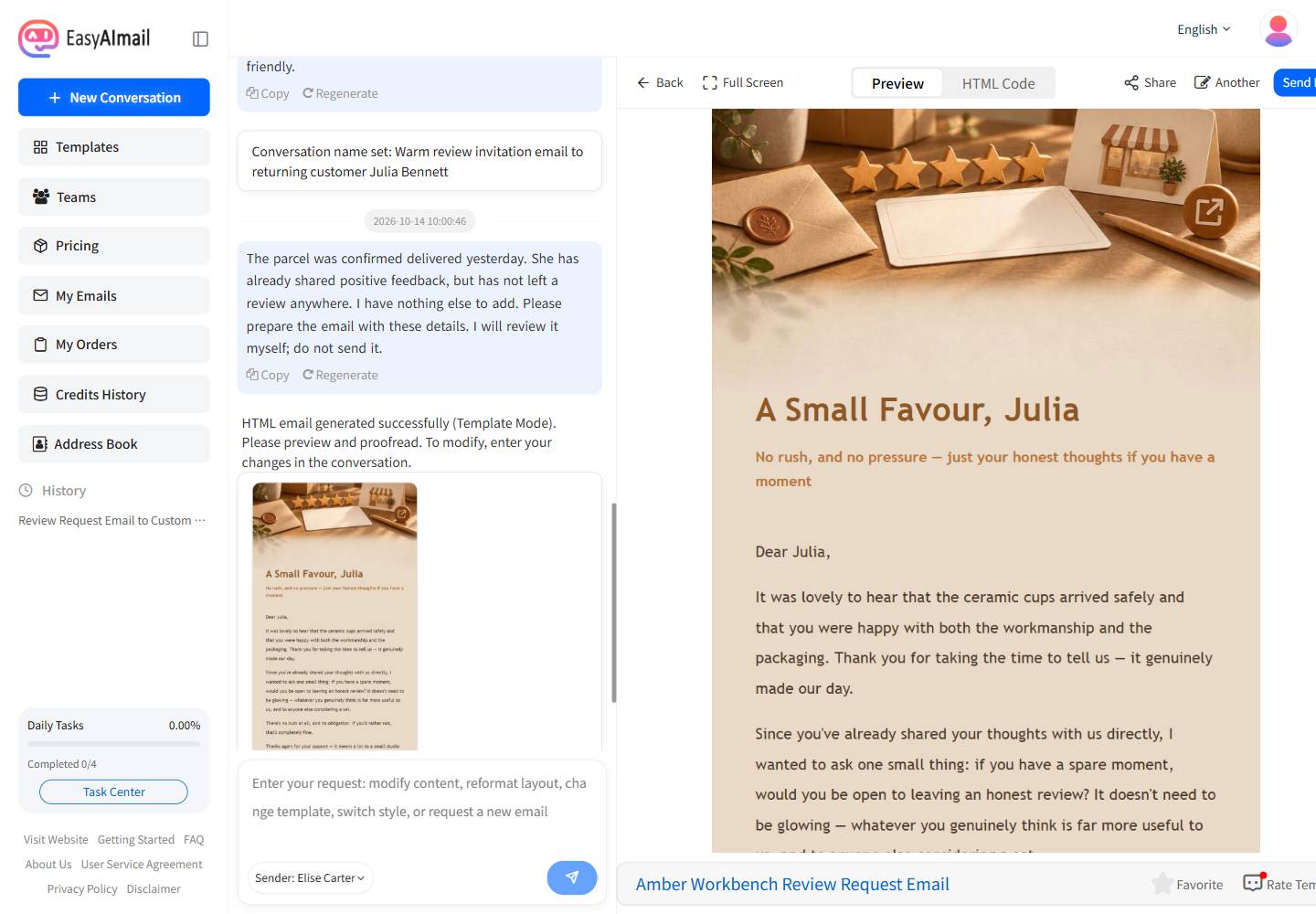
How to Ask a Happy Customer for a Review Without Sounding Pushy
Learn how to invite a satisfied customer to leave an honest review with a clear, low-pressure email that respects their time.
Read more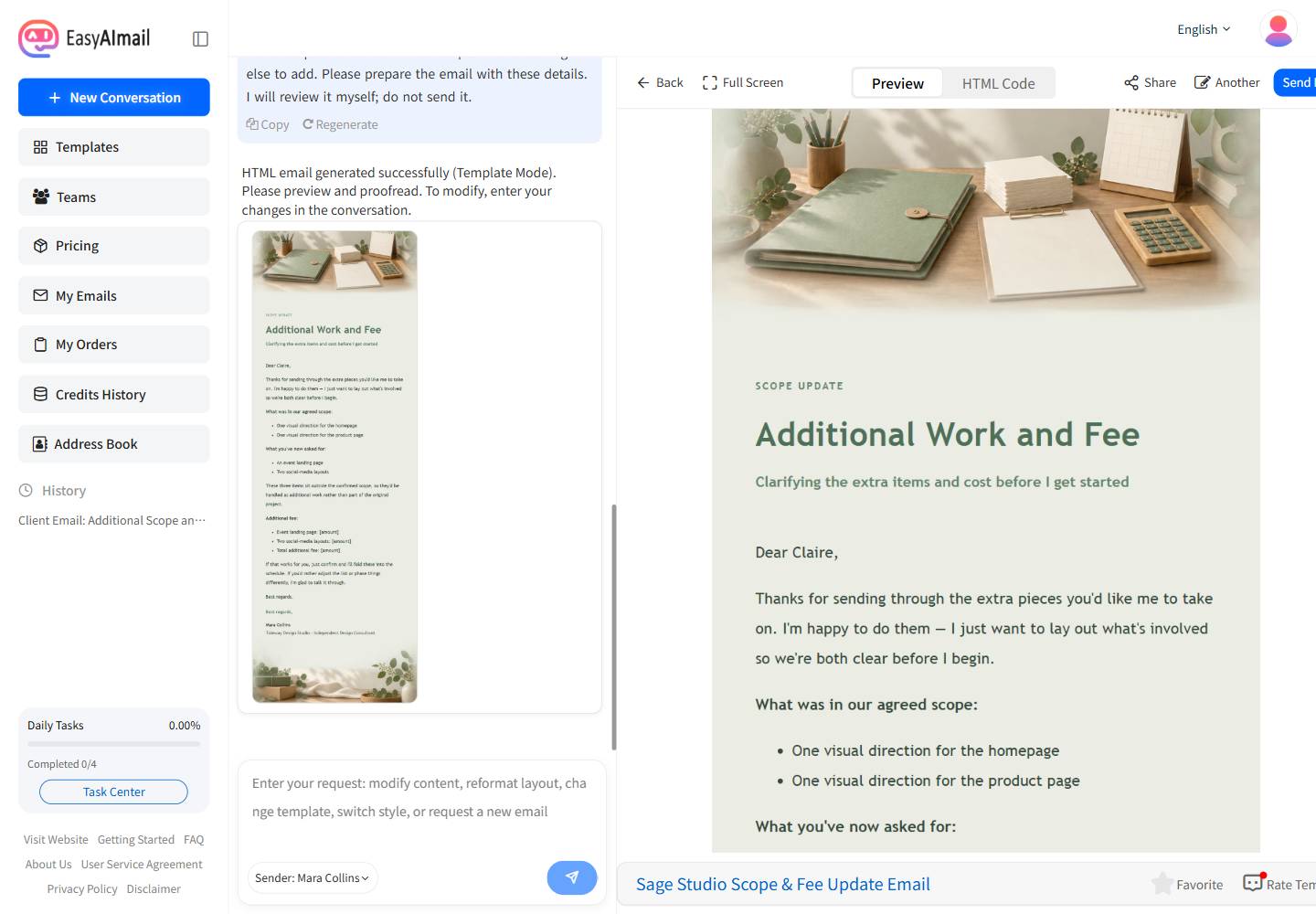
How to Tell a Client Extra Work Is Outside the Original Scope
Learn how to confirm added work, scope, fees, and timing with a client without sounding defensive or doing unpaid extra work.
Read more