
A client has sent you a sentence you would love to share. It may feel harmless to put it on your portfolio or website, especially when the project went well. But kind feedback is not the same thing as permission to publish it. Start by naming exactly what you want to publish, then give the client choices about credit, edits, partial approval, and saying no.
That clarity is not a legal flourish. It tells the client that their trust will not be quietly converted into marketing material. It also makes it much easier for them to give a useful, informed answer.
Positive feedback is not implied permission
A client may say that a project felt clear, that the final work finally looks like their brand, or that they enjoyed working with you. Those words may be intended for you alone.
Once a quote, name, or image appears on a public page, the context changes. Potential clients, competitors, and search engines can see it. Even images that are already public can take on a different meaning when they are presented as part of a case study. Ask before you make that move.
Describe the proposed use with enough detail
“Can I use your testimonial?” leaves too much unsaid. A respectful request says what you intend to use and where. Include:
- The exact quote, and whether you would edit it.
- The images or project details you want to show.
- The places where it could appear, such as a portfolio page, website case study, or proposal.
- What you will not include, such as budgets, sales figures, private contact details, or unreleased work.
Specificity does not make the note heavy. It saves the client from having to guess.
Offer real choices about attribution and scope
Do not assume that a client wants to be named. Offer options such as the company name, a first initial, or anonymity. If the credit would look different in different places, say so.
Also allow edits and partial approval. A client may approve the quote but not the images, or one image but not the brand name. Giving people a way to say “this part is fine” is often better than presenting a single all-or-nothing request.
Say plainly that no reply is not a problem
The client may be busy, need internal approval, or simply prefer to keep the work private. A sentence saying that a no, or no reply, is completely fine takes pressure out of the exchange.
Do not publish anything until you have clear permission. Silence is not consent, even if the feedback was generous and the images have appeared elsewhere.
The four parts of a permission request
- Thank the client for the feedback.
- List the quote, material, and places you want to use.
- Offer attribution, editing, and partial-approval options.
- Confirm that nothing will be published without a clear yes.
Keep a permission email separate from a renewal pitch, referral request, or sales update. The client is deciding how their words and work may be used, not whether to buy again.
Testimonial permission email example
Subject: May I ask your permission to quote your feedback on our portfolio?
Dear Mia,
Thank you again for the note you sent after the project. Your line, “The process felt clear from start to finish, and the final packaging looks much more like the brand we hoped to become,” meant a great deal to us.
May I ask for your permission to quote that sentence on our studio portfolio page alongside two packaging images that are already public? We would not include sales figures, budget information, private contact details, or any unreleased material.
You could be credited by your brand name, first initial, or not at all. You are also welcome to edit the quote or approve only part of this request. We will not publish anything without your explicit approval.
If you would rather not take part, or do not have time to reply, that is completely fine. Thank you for considering it.
Best,
Naomi Brooks Shoreline Brand Studio | Project Lead
The names, quote, company, and project details in this example are fictional. Confirm the actual scope and any applicable agreement before sending.
Use EasyAImail to collect the details before drafting
It is easy to begin with only “I want to use a lovely client quote” and forget the platform, attribution, or refusal option. In EasyAImail, you can start with the real intention and add those facts as the conversation asks for them. The AI recommends templates; it does not select one for you. You review visible details, choose the template yourself, confirm the remaining information, and inspect the draft.
In this English-interface test, the user chose Lilac Paper Testimonial Permission Request. Its visible description is specifically for testimonial and case-study permission, with room to list platforms, credit format, data scope, and dates. The lilac, smoky-violet, ivory, and ink-blue treatment supports a careful request without making it look demanding.
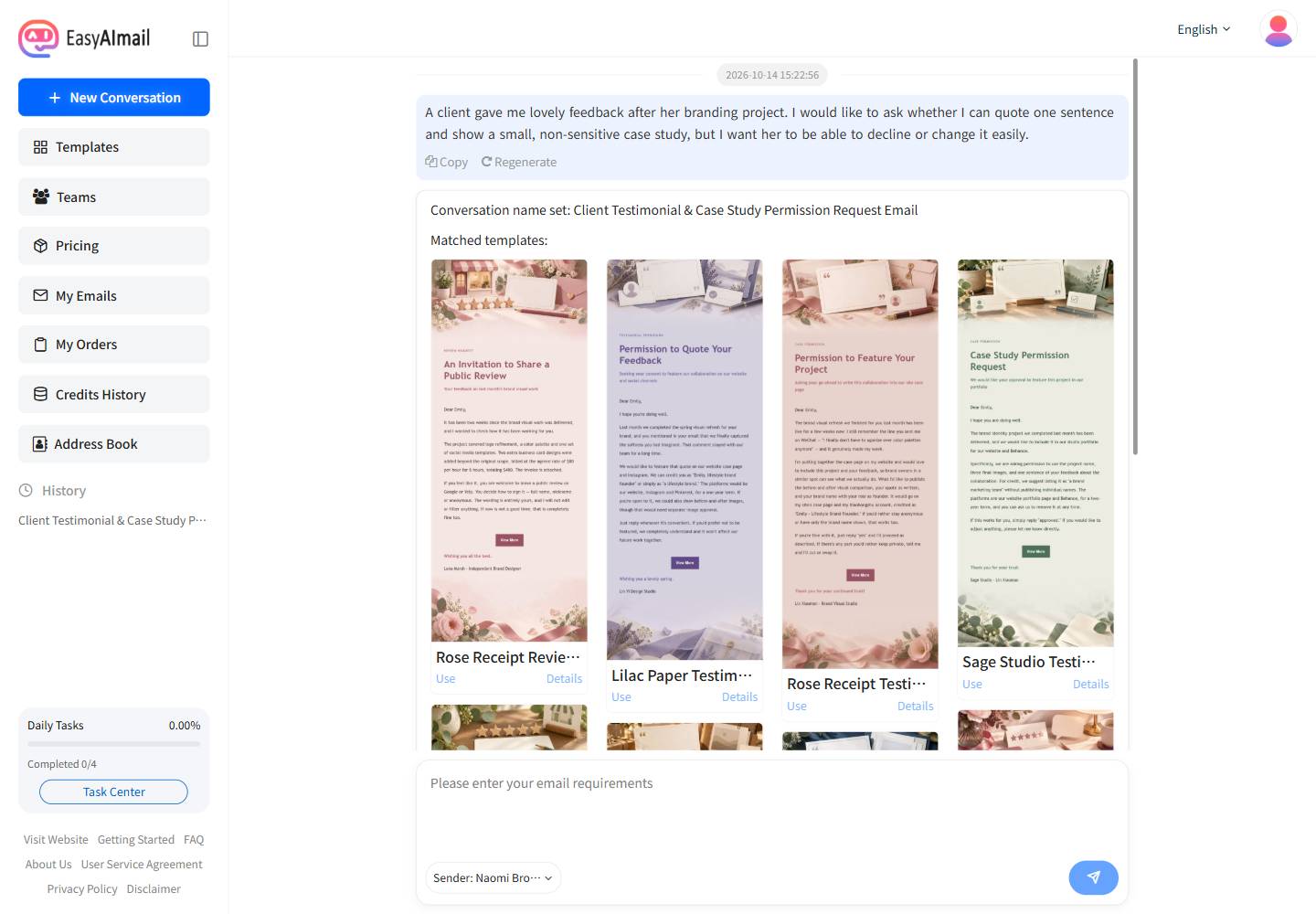
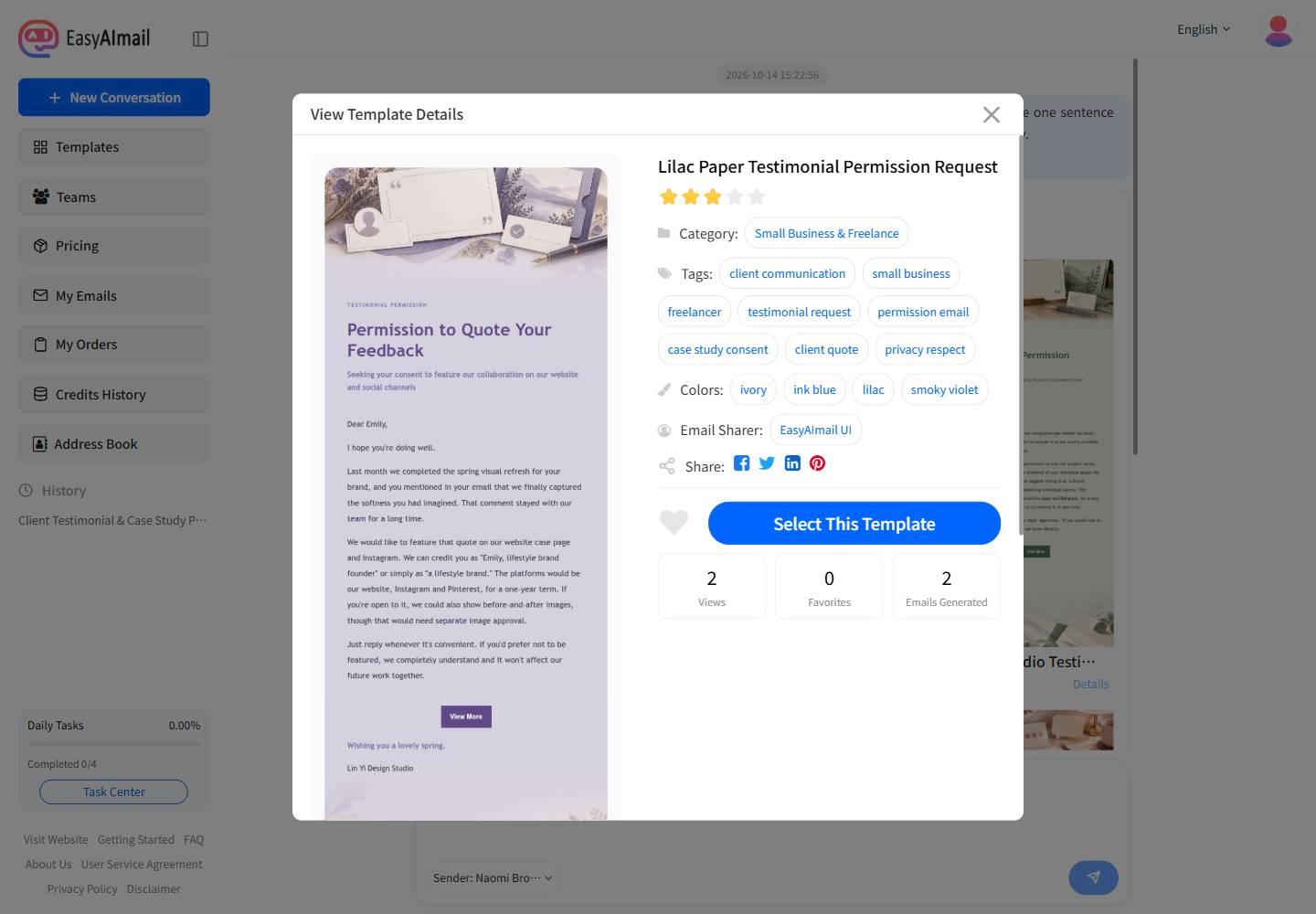
This test generated and reviewed the email only. No recipient address was entered and the Send Email action was not used. The preview retained a fictional studio and role for a final signature check.
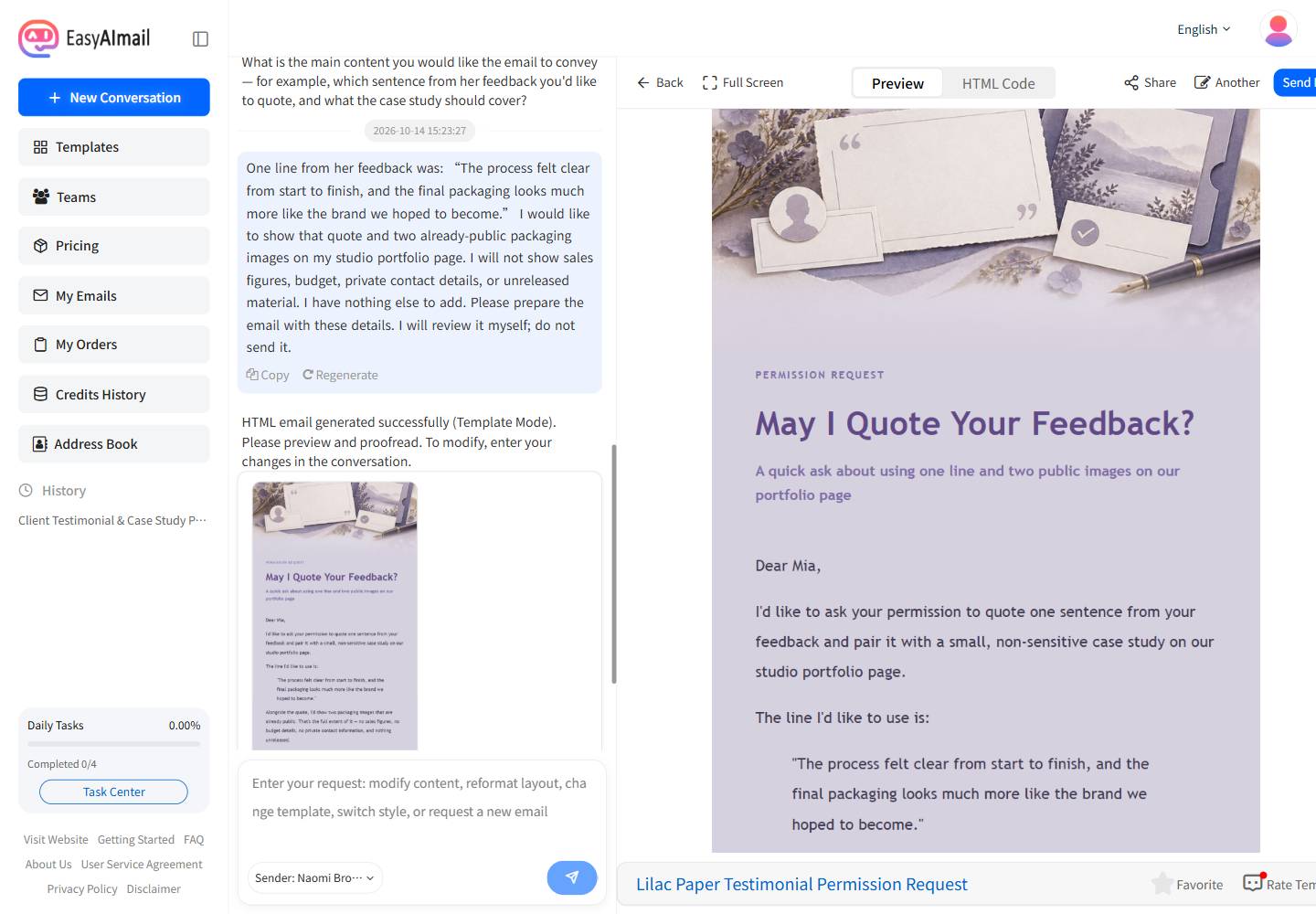
If you are still inviting feedback, learn how to ask a happy customer for a review first. A referral request email is another trust-based ask, but it should not be treated as permission to publish a client story.
Before you send
- Can the client see exactly what text, images, and channels are involved?
- Have you named what will stay private?
- Can they choose attribution, anonymity, edits, or partial approval?
- Does the email say clearly that you will wait for permission?
- Would a client feel comfortable declining?
FAQ
The client posted the review publicly. Do I still need to ask?
Ask about the new use. A public review may not answer how they want to be credited, whether you may shorten the wording, or whether it can sit beside project images.
Can I show the brand if the client agrees to an anonymous quote?
Do not assume so. Anonymous may mean no personal name, or it may mean no identifying connection at all. Confirm the quote, brand, and images separately.
What if the client does not reply?
Do not treat silence as approval. One considerate follow-up may be appropriate, but wait for a clear yes before publishing.
Before you send it, make sure the client has a real choice. A clear permission request protects the relationship as much as it protects the page you hope to publish.
How to Follow Up With a Supplier When a Delivery Date Has Passed
Learn how to request a factual production and shipment update from a supplier after a promised delivery date has passed, without vague or hostile wording.
Read more
How to Ask a Happy Customer for a Review Without Sounding Pushy
Learn how to invite a satisfied customer to leave an honest review with a clear, low-pressure email that respects their time.
Read more
How to Tell a Client Extra Work Is Outside the Original Scope
Learn how to confirm added work, scope, fees, and timing with a client without sounding defensive or doing unpaid extra work.
Read more
How to Write a First Email to a New Client Without Sounding Like a Sales Pitch
Learn how to write a first email to a new client with a relevant reason to reach out, a clear value, and a low-effort next step.
Read more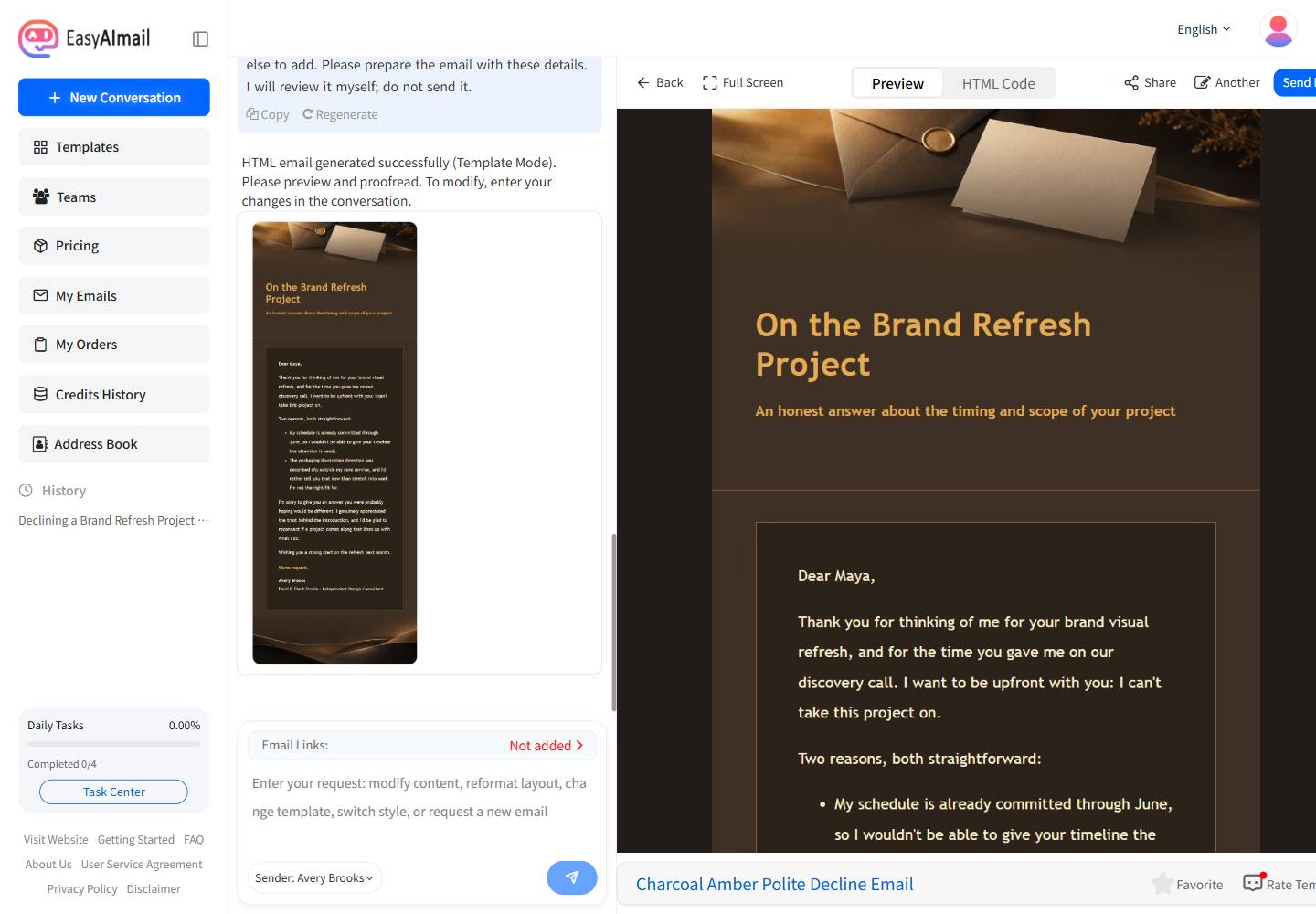
How to Politely Decline a Client Without Damaging the Relationship
Learn how to politely decline a client by stating the answer clearly, giving a brief real reason, and knowing when an alternative is useful.
Read more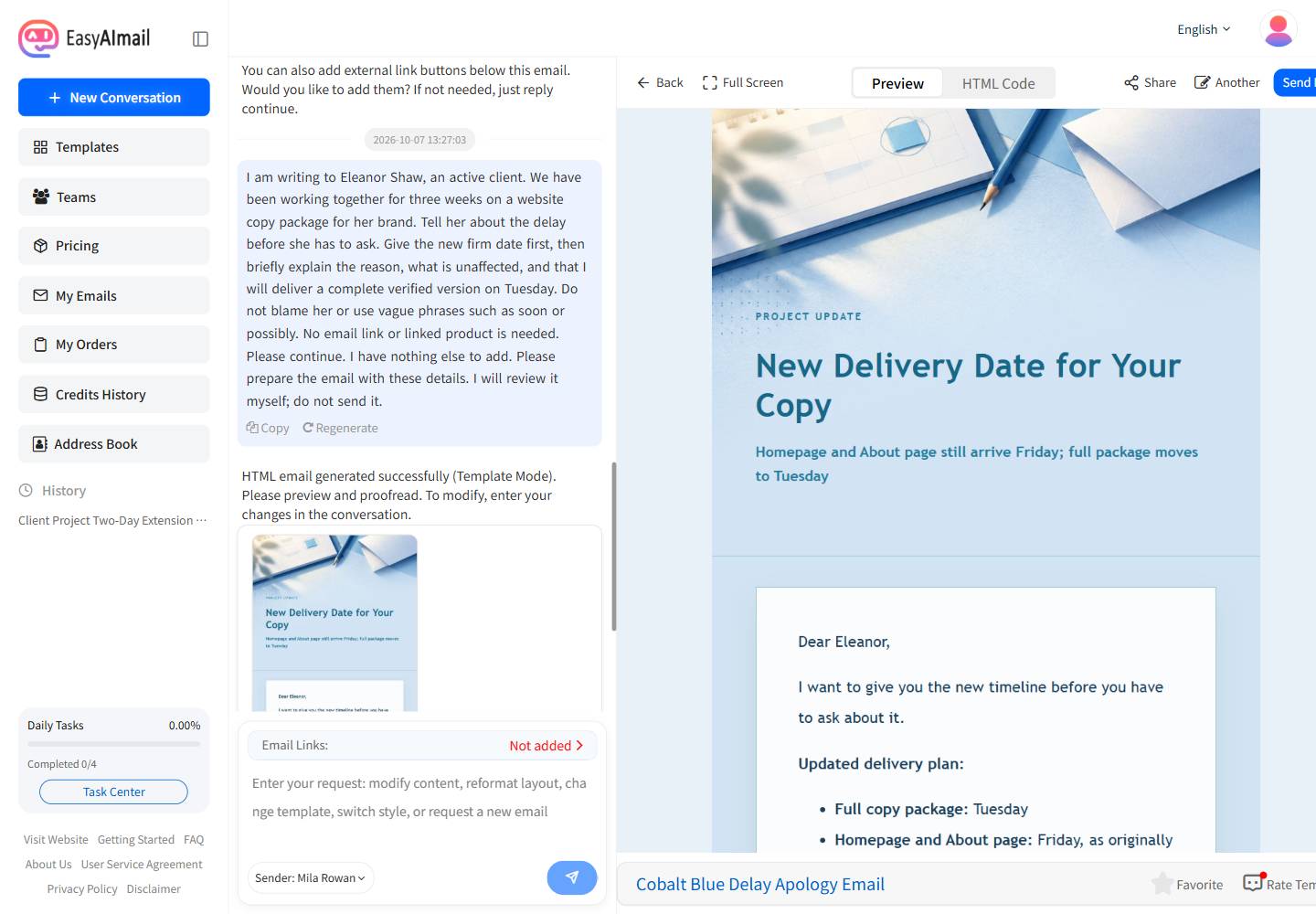
How to Tell a Client About a Delay Before They Have to Ask
Learn how to tell a client about a delay with a reliable new date, a brief reason, the affected scope, and a clear next step.
Read more