
Knowing how to tell a client about a delay is less about writing the strongest apology and more about not making the client discover the problem through silence. A delay affects the schedule. Telling them too late affects trust.
Moving a delivery by two days does not have to damage a relationship. Waiting until the due date can make a client wonder whether you knew earlier and why there was no plan. An early note turns the same issue into a new, understandable arrangement.
How to tell a client about a delay early
Imagine you find a conflict in the source material five days before delivery and need two more days to verify it. Tell the client then. They can adjust their own work and see which parts are still moving as planned.
If you wait until the due date, they may already have scheduled a launch, review, or meeting around the original date. The same two days become much bigger.
You do not need to wait until the problem is fully solved. Once you know the original date will not hold and you can give a date you trust, it is time to write. A conservative date is better than a promise you may need to move again.
How to tell a client about a delay with four clear details
Start with the new date. The reader should know when they can expect the work within the first few lines.
Then give a one-sentence reason. Be specific, but do not write an internal postmortem. “During final review, two product references conflicted and need verification” is enough.
Next, explain the affected scope. A full copy package moving to Tuesday does not mean every page stops. Saying that the homepage and about page will still arrive Friday tells the client what can continue.
Finally, say what you will do. Not “I will finish as soon as possible,” but “I will deliver the complete verified version on Tuesday.” That turns a delay into a new plan.
Three ways to weaken a delay notice
First, avoid words such as “soon,” “try,” and “hopefully.” A client needs a date they can schedule around.
Second, do not apologise repeatedly. One sincere apology is enough. More than that asks the client to spend energy reassuring you without giving them a better plan.
Third, do not wait for the client to ask. Speaking up does not make the problem larger. It saves them from having to infer risk from silence.
There is a parallel with a polite payment reminder email. One asks someone else to act; the other asks them to wait. Both depend on being clear early.
A project delay email example
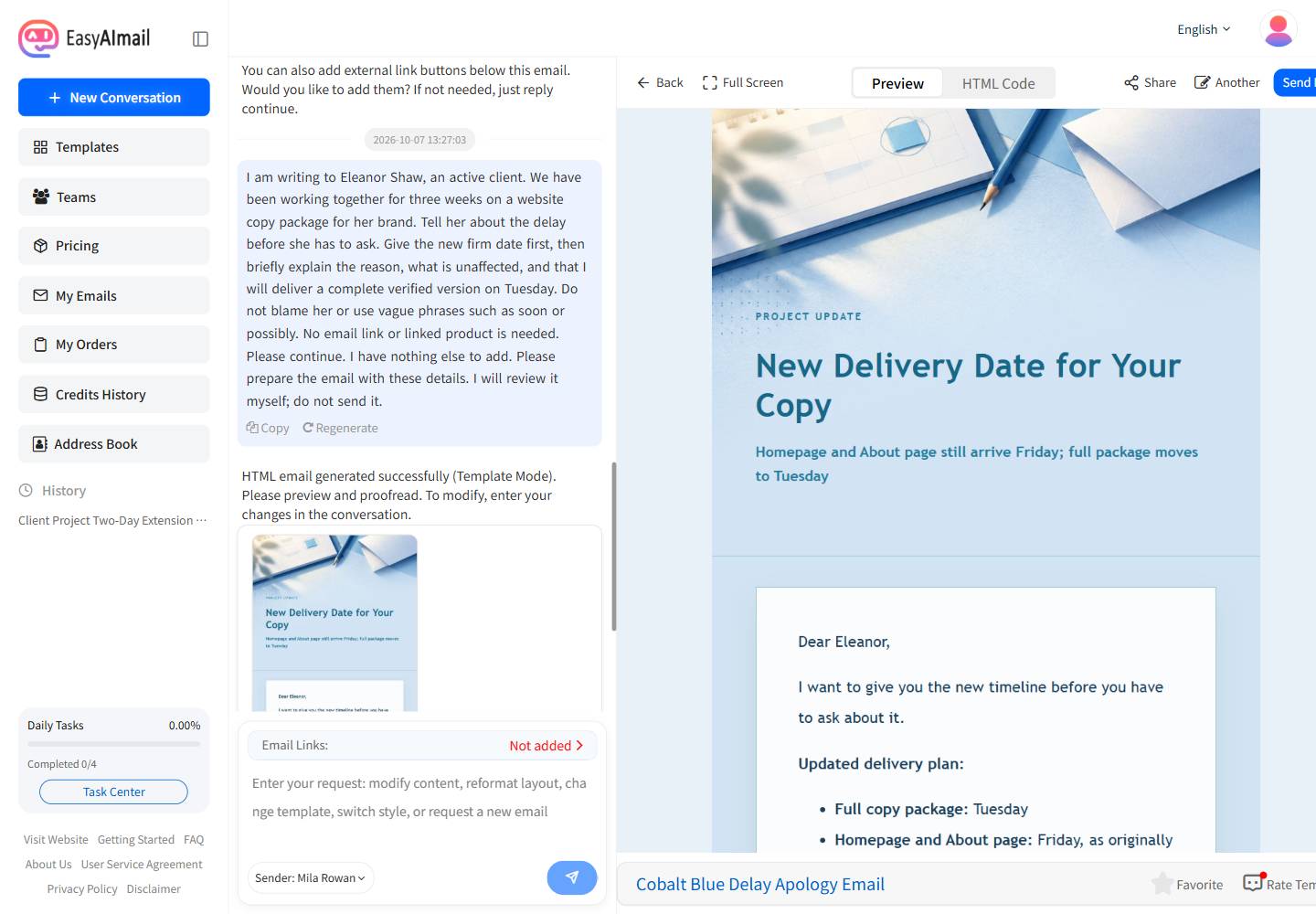
> Dear Eleanor, > > I want to let you know in advance that the complete website copy package needs to move from this Friday to Tuesday. During final review today, I found two product references that conflict and need verification so the full version is consistent. > > The homepage and about page will still be delivered this Friday as planned. The remaining pages will arrive Tuesday as a complete, verified package. > > I am sorry for the adjustment, and I appreciate your understanding. > > Mila Rowan > Brightbank Content Studio | Project Lead
The new date appears early, the explanation takes one sentence, and the unaffected work is visible. It does not promise an uncontrollable “soon,” and it does not shift the cause onto the client.
When should you offer compensation?
The useful question is not whether the client may be unhappy. It is whether the delay caused an actual loss. Perhaps they paid for expedited work because of your delivery, or missed a confirmed launch window.
When you should make it right, state the arrangement directly. Do not write “if you feel it is necessary.” That asks the client to define the seriousness of a problem you already understand.
If your email itself displays badly in Outlook, fix that presentation issue before discussing compensation. See why email breaks in Outlook.
Draft a focused delay email from the real facts
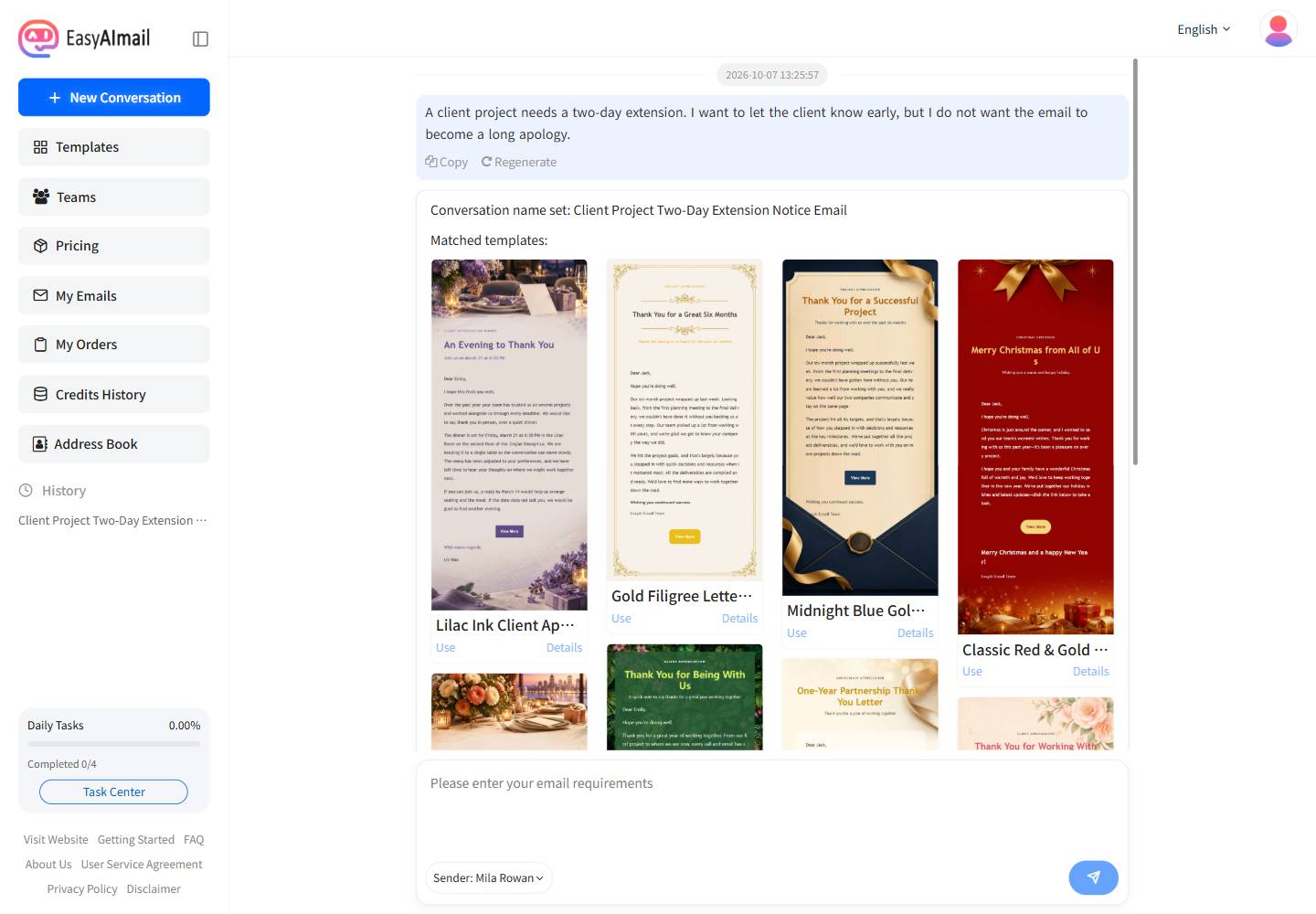
In EasyAImail, start with the reliable new date, reason, affected scope, and next action. The conversation gathers missing details in stages, recommends templates, and leaves the final selection to you.
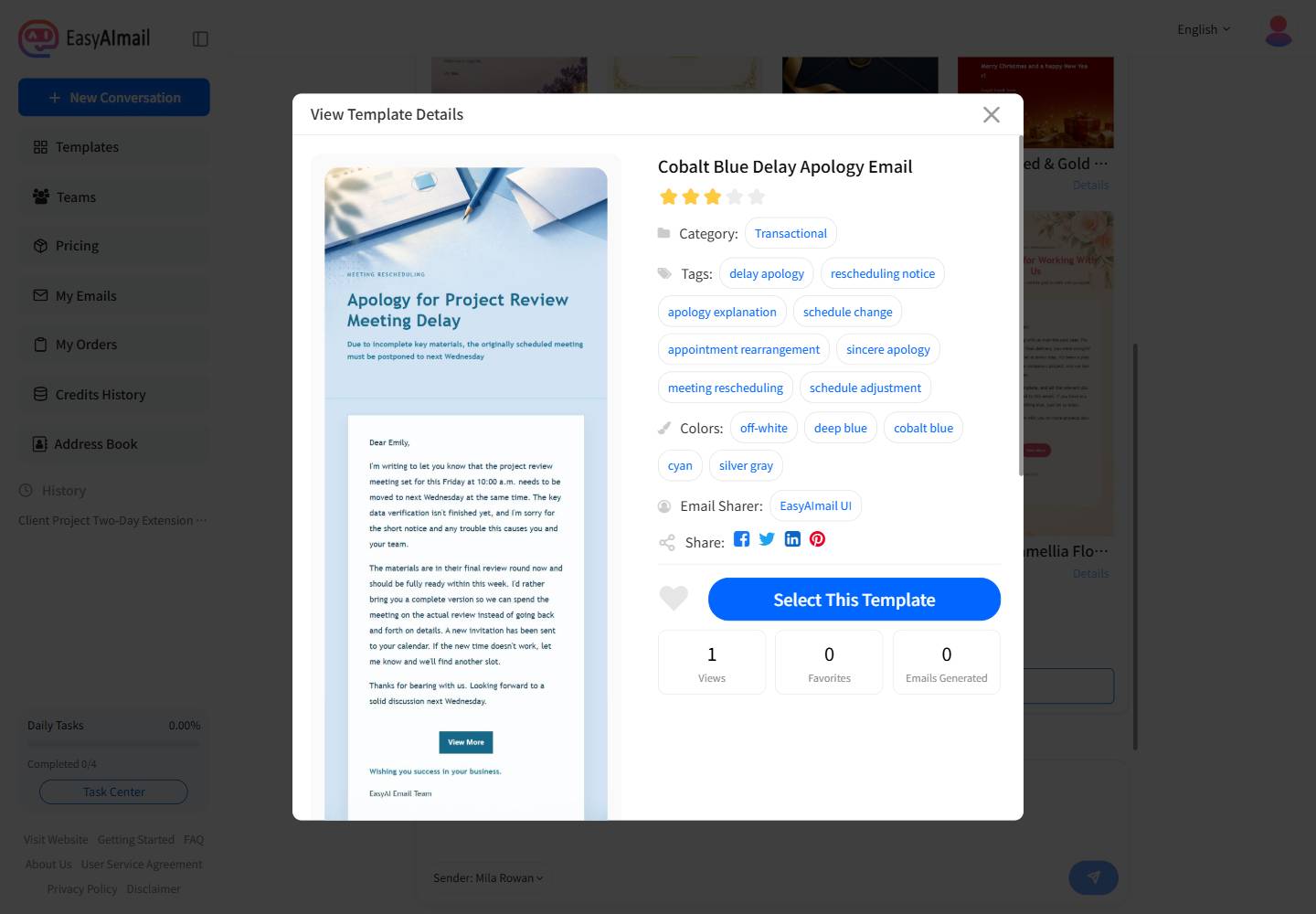
For this scenario, we chose Cobalt Blue Delay Apology Email. Its delay-apology, rescheduling-notice, and schedule-change tags match a message that needs to reset a delivery plan without becoming defensive.
A simple notification timeline
On the day you see the original delivery may be affected, confirm the scope and choose a conservative new date.
On the day you know the original date will not hold, tell the client before they ask.
Before the revised delivery date, send one short update confirming that the new plan is still on track.
Earlier is better. A client may not enjoy a delay, but they are more likely to trust someone who explains the new arrangement early.
FAQ
Should I explain the full reason for a project delay to a client?
No. Explain the facts that affect delivery. The client needs to understand the new arrangement, not read the complete internal history of the problem.
Should I tell a client about a delay of only a few days?
Yes, if it affects the date you promised. Even two days can matter when the client is scheduling review, publication, or payment around your delivery.
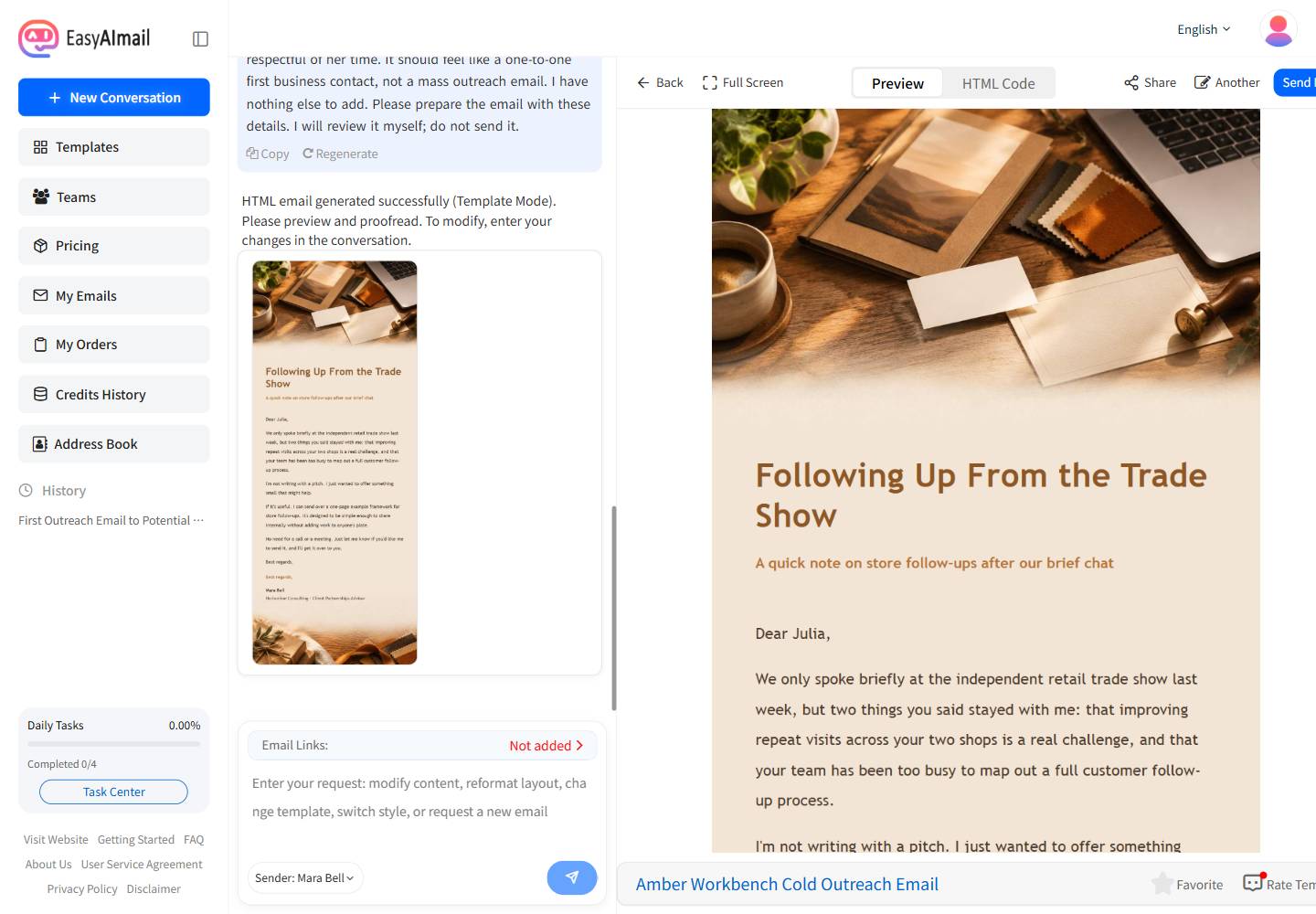
How to Write a First Email to a New Client Without Sounding Like a Sales Pitch
Learn how to write a first email to a new client with a relevant reason to reach out, a clear value, and a low-effort next step.
Read more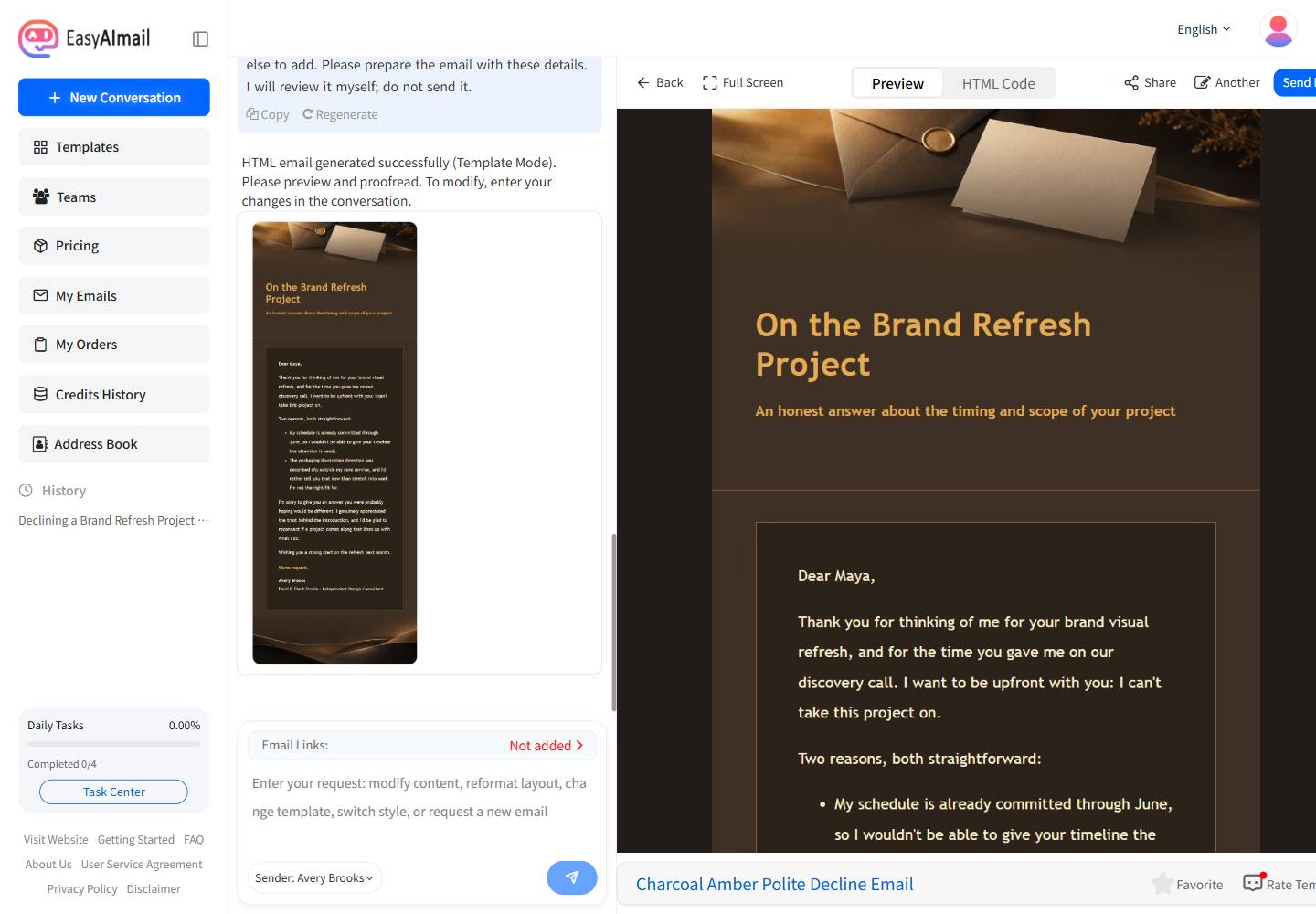
How to Politely Decline a Client Without Damaging the Relationship
Learn how to politely decline a client by stating the answer clearly, giving a brief real reason, and knowing when an alternative is useful.
Read more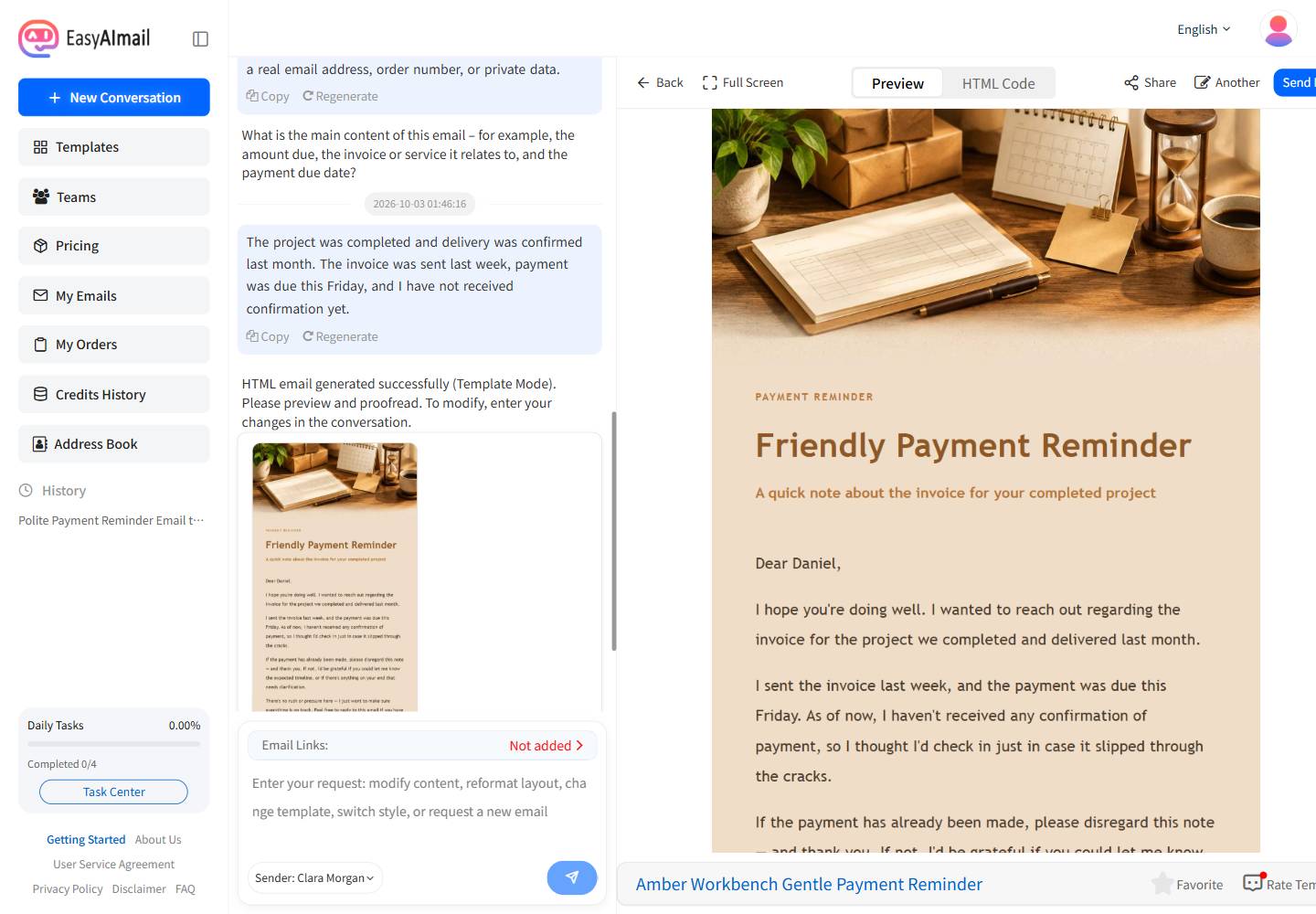
How to Write a Polite Payment Reminder Email Without Damaging the Relationship
Learn how to write a clear and considerate payment reminder email that protects the client relationship.
Read more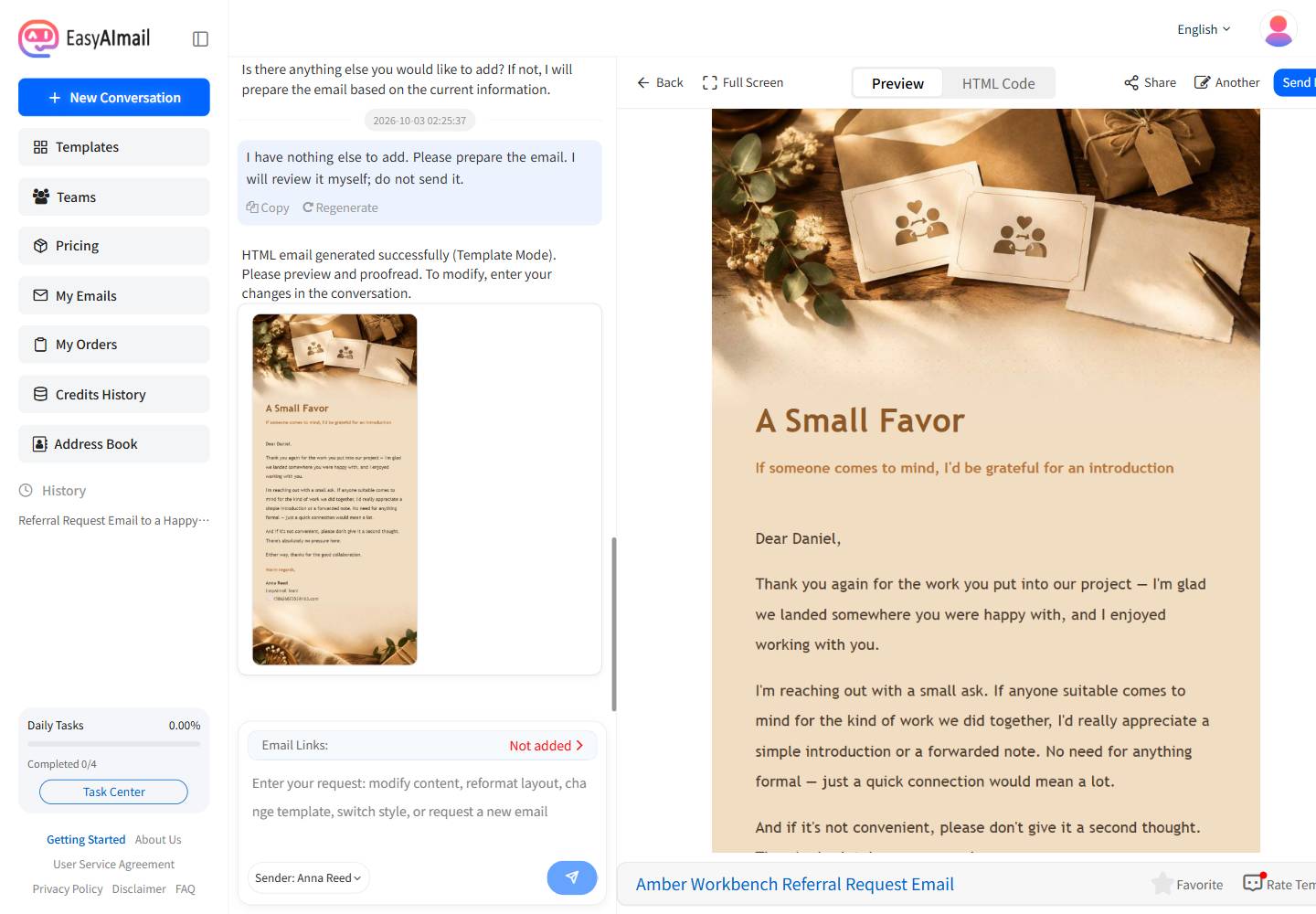
How to Write a Referral Request Email Without Making It Awkward
Learn how to ask a happy client for a referral in a genuine, low-pressure way.
Read more
How to Write a Quote or Inquiry Reply Email for a Small Business
Learn how to reply to a service inquiry with a clear, friendly quote and a practical next step.
Read more