
Learning how to politely decline a client is not mainly about finding a softer version of “no.” The difficult part is worrying that they will hear a rejection of themselves when you only mean that the work is not right. Those are different things.
You can decline a project, a budget, or an invitation without dismissing the person who brought it to you. Once that distinction is clear, the email needs less padding and less apology.
How to politely decline a client when saying no feels hard
Solo operators, freelancers, and independent consultants often handle every opportunity themselves. Because someone gave their time to a conversation, it is tempting to explain too much, soften every sentence, or promise something you may not be able to deliver later.
What the other person usually needs is a clear answer. Waiting too long, or writing as though there is still an opening when there is not, creates more uncertainty for both sides.
How to politely decline a client: state the answer first
The first principle of how to politely decline a client is to lead with the answer. That does not mean dropping a cold “no.” It means letting the reader know early that this project cannot move forward, then giving one or two honest reasons.
“My schedule is committed through June, and packaging illustration is outside my core service, so I cannot take on this project” is more useful than “Things are rather busy right now.” It is clear without turning into a defence.
Your reason can be specific without becoming a full account of your calendar. You do not need to explain every commitment. Avoid “I will make you a priority next time” unless you genuinely can. A consolation promise can become a new obligation.
Offer an alternative only when you mean it
An alternative is not required in every decline email.
Offer one when the need can genuinely be met in a different scope and you would be willing to do that work. A full brand refresh might become a limited strategy session, for example. If you only want to avoid sounding unkind, do not invent a vague option or recommend someone whose fit you cannot vouch for. That turns a clear answer into another open thread.
There is a related lesson in writing a polite payment reminder email. Both situations need tact. Tact is not the same as vagueness.
Three common ways to decline work
You cannot take the project
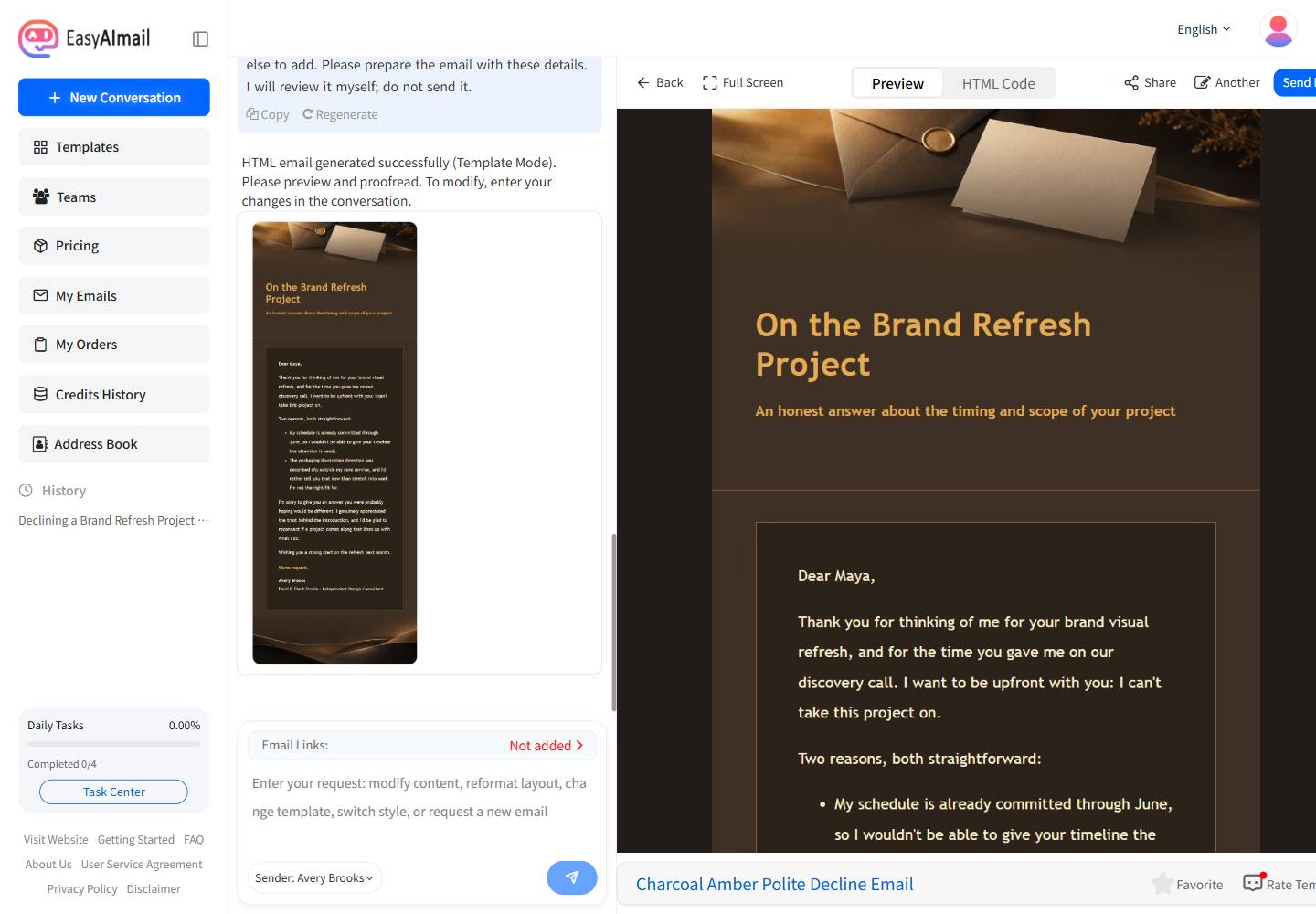
> Dear Maya, > > Thank you for considering me for the brand refresh. Given your hoped-for start date next month and the packaging illustration direction involved, I will not be able to take this project on. My schedule is committed through June, and illustration is not the part of my practice where I can offer the strongest support. > > I appreciate the conversation and wish you a smooth next stage with the project.
The answer comes first. The reason is real, but it is not presented as a brief to be argued with.
The budget does not work
> Thank you for being open about the budget. At the current scope, I could not deliver the quality the work needs within that amount, so it would not be the right fit to continue.
You do not need to turn your price floor into a negotiation lesson.
You do not want to join an invitation or collaboration
> Thank you for the invitation. It does not fit my work commitments over the coming weeks, so I will pass this time. I hope the event goes well.
A clear, short answer is usually enough for a one-off invitation.
How to keep the relationship after a no
If this was a one-time request, let the answer stand. The other person may be disappointed, but clarity is a form of respect.
For an ongoing relationship, reconnect later for a real new reason. You might share information that is relevant to them or ask about a different kind of project. Do not make the next conversation another apology for the original decline.
The same balance of thanks and boundaries matters when you write a referral request email.
Match the tone to the relationship, not to a script
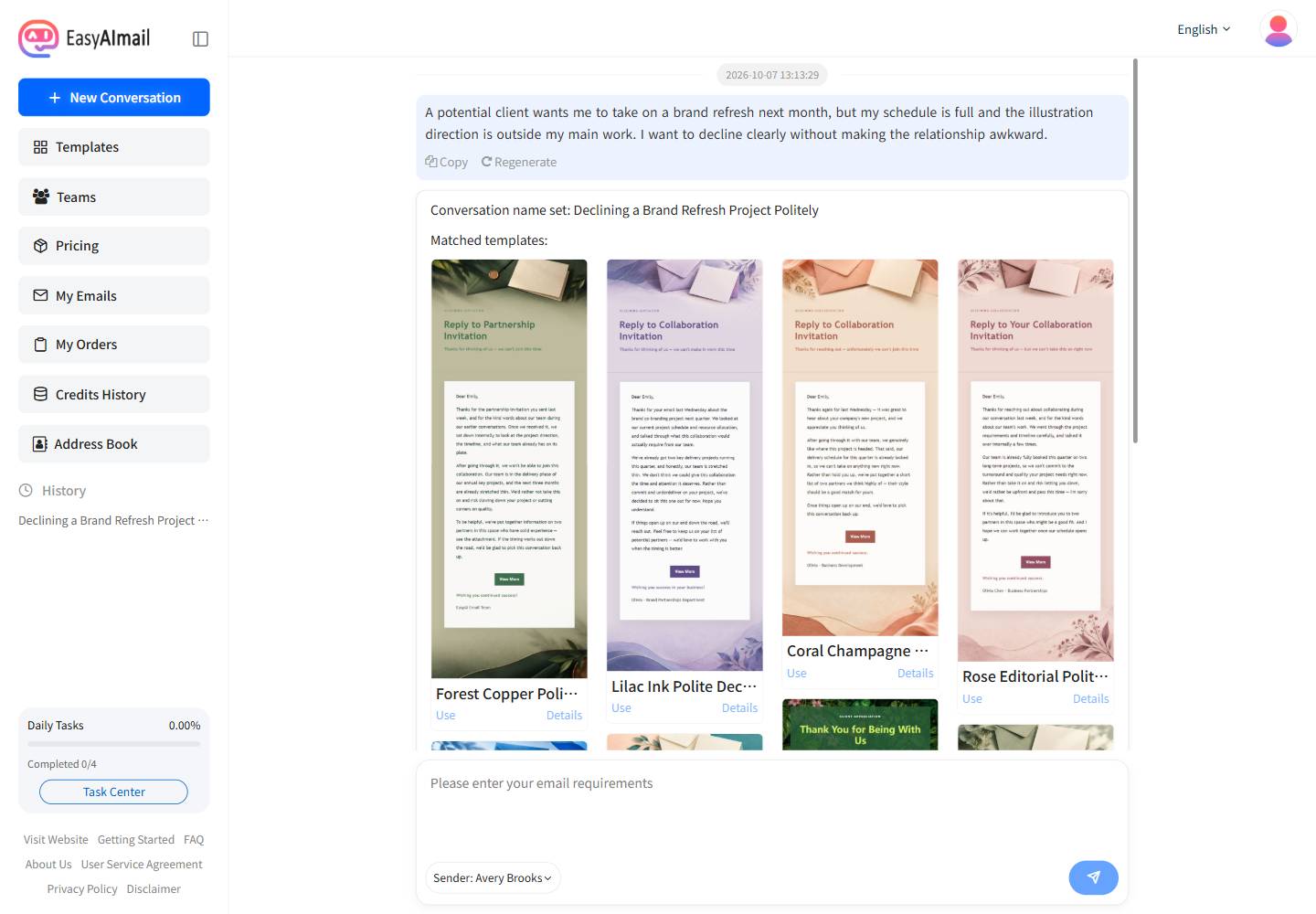
EasyAImail is useful when you do not want a stock refusal. Describe who the recipient is, why you cannot accept the work, whether an alternative is appropriate, and how direct you want to be. The conversation fills in missing details in stages, recommends templates, and lets you review the details before making the final choice.
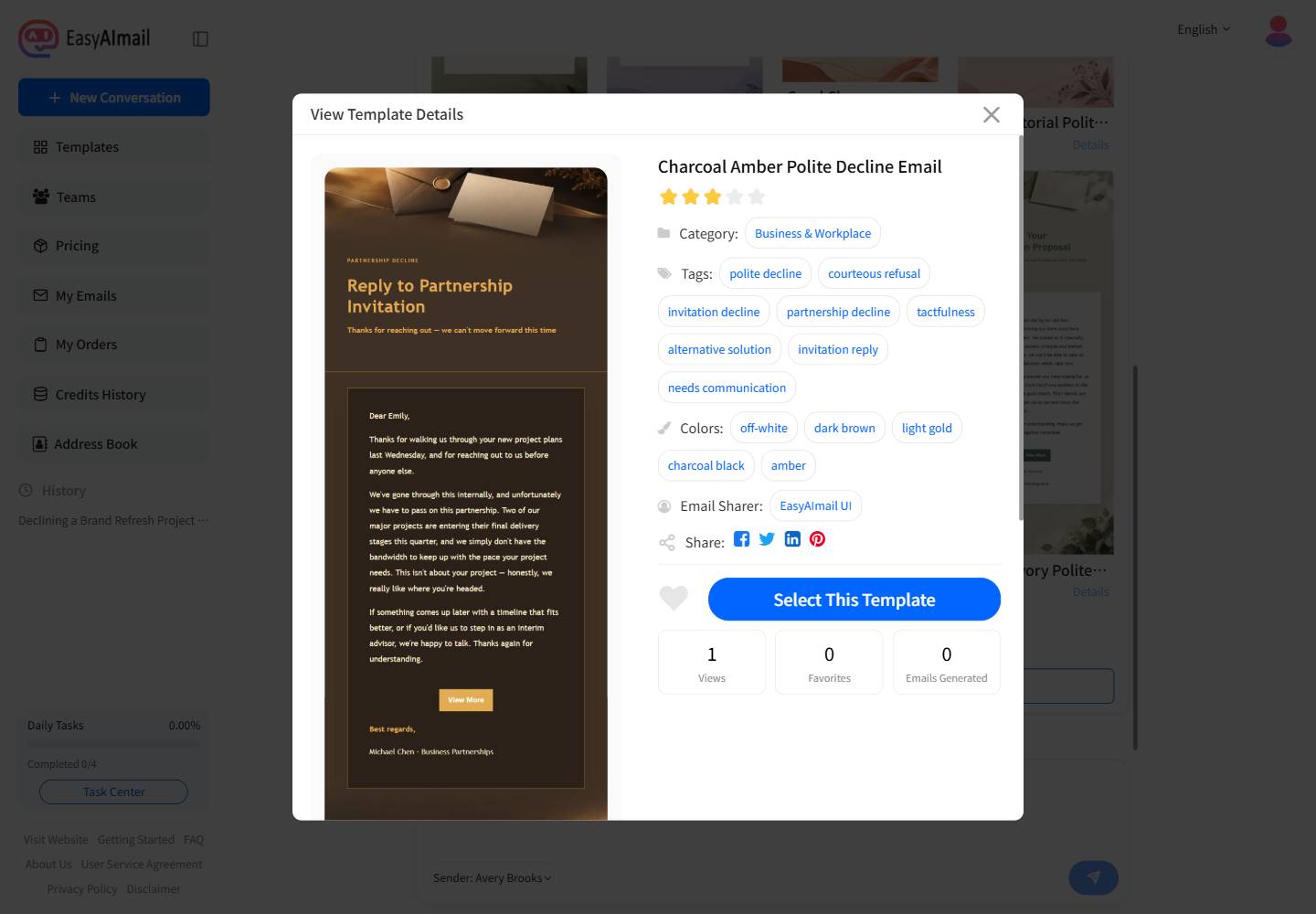
For this situation, we chose Charcoal Amber Polite Decline Email. Its polite-decline, partnership-decline, and tactfulness tags fit a message that has to be clear while still treating the recipient well.
You do not owe someone an open door when the answer is no. You owe them a clear answer and basic respect.
FAQ
How do I decline a client without sounding cold?
Give the answer early, add one real reason, and close with thanks. Coldness usually comes from evasion or delay, not from being brief.
Do I have to recommend someone else when I decline a client?
No. Recommend someone only when you know they are a good fit and you are comfortable making the introduction. A casual referral can create more work for everyone.
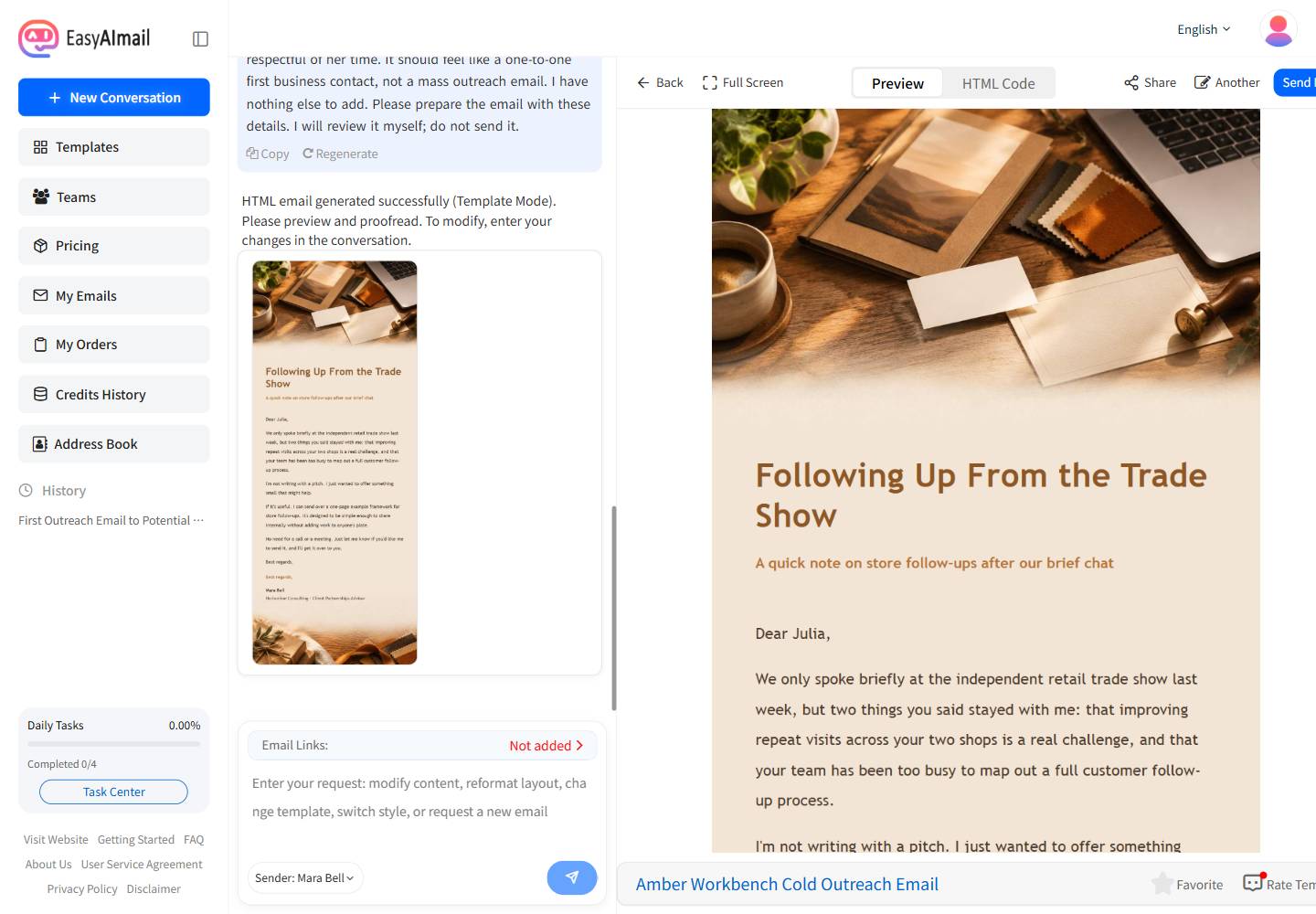
How to Write a First Email to a New Client Without Sounding Like a Sales Pitch
Learn how to write a first email to a new client with a relevant reason to reach out, a clear value, and a low-effort next step.
Read more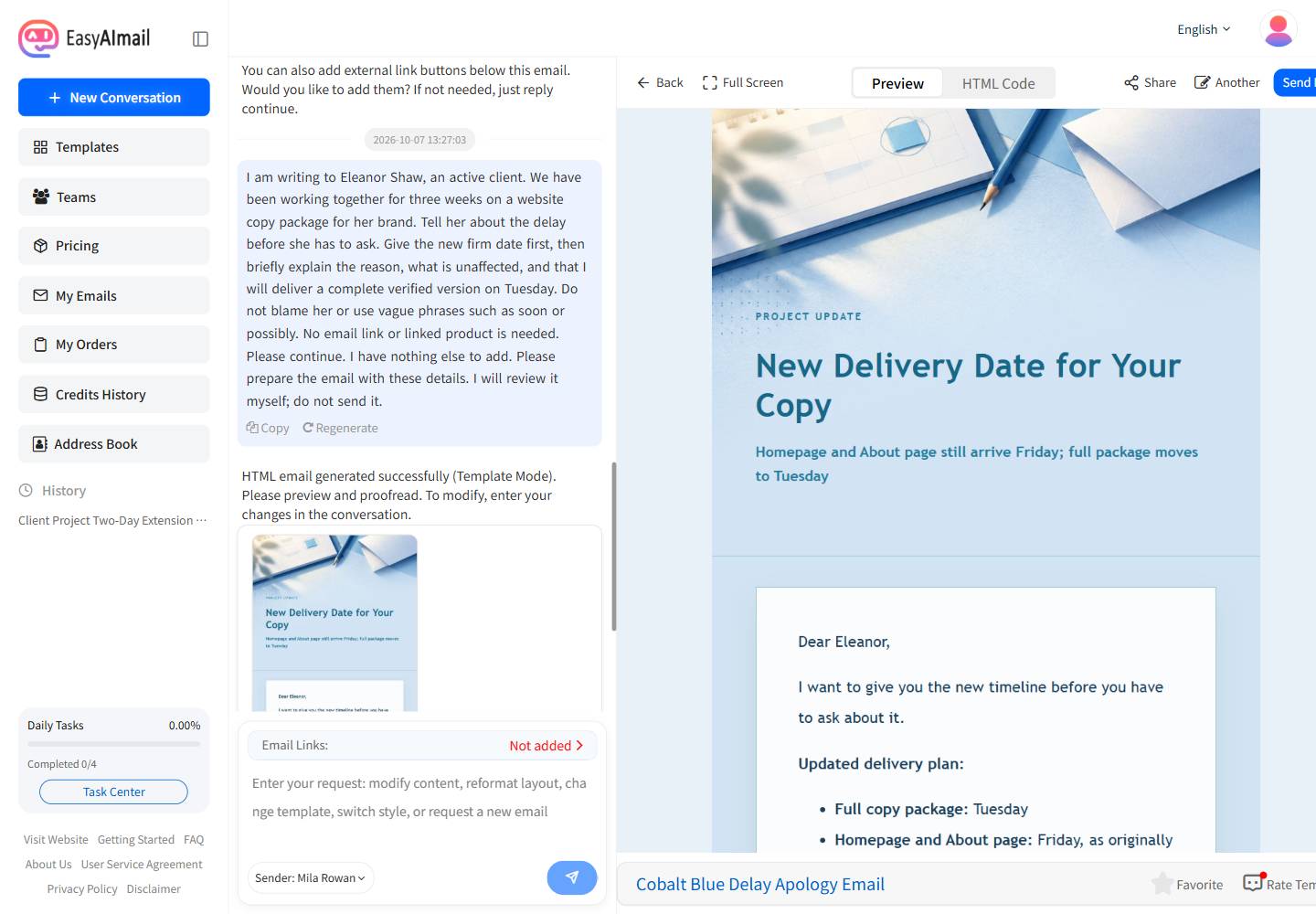
How to Tell a Client About a Delay Before They Have to Ask
Learn how to tell a client about a delay with a reliable new date, a brief reason, the affected scope, and a clear next step.
Read more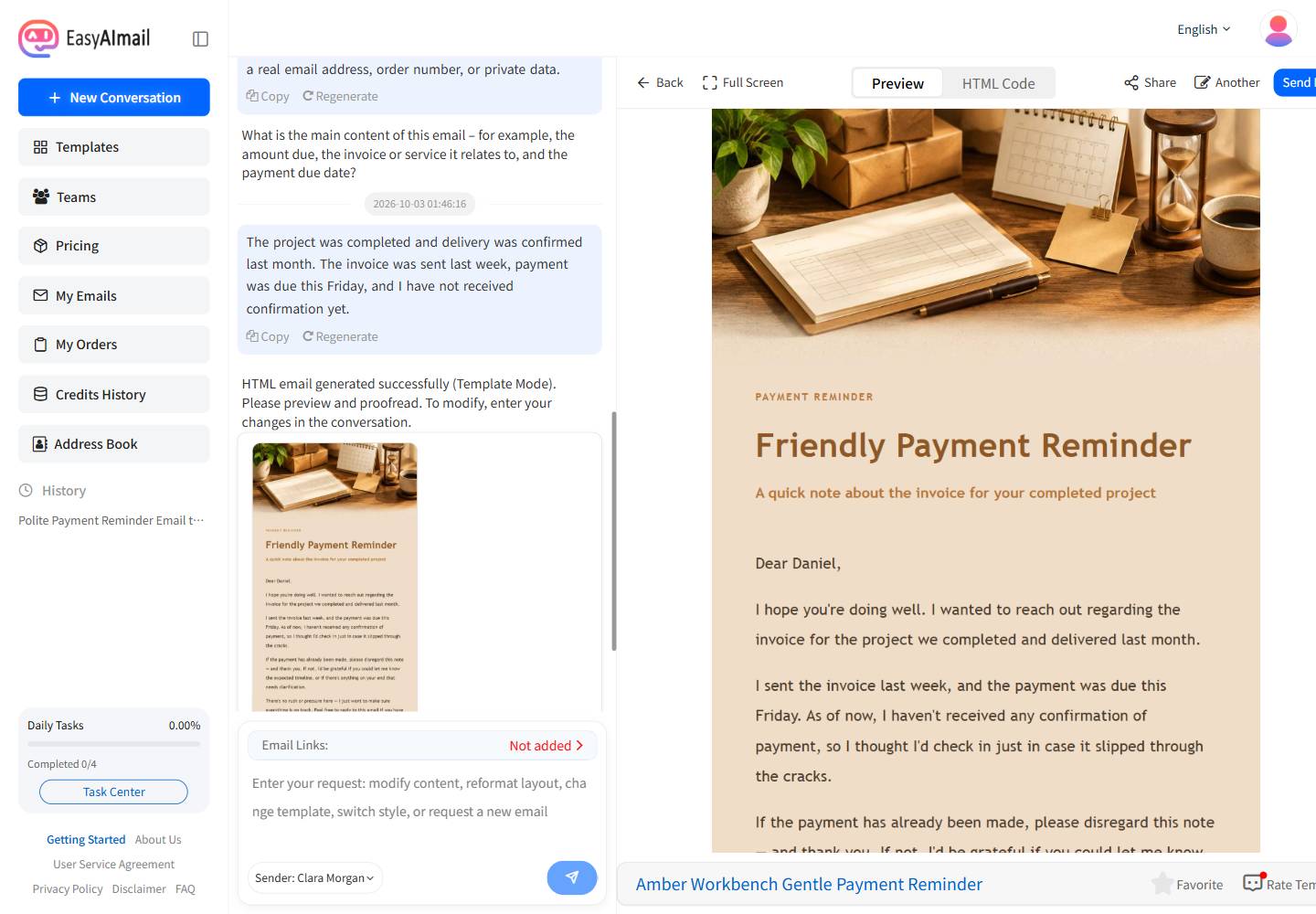
How to Write a Polite Payment Reminder Email Without Damaging the Relationship
Learn how to write a clear and considerate payment reminder email that protects the client relationship.
Read more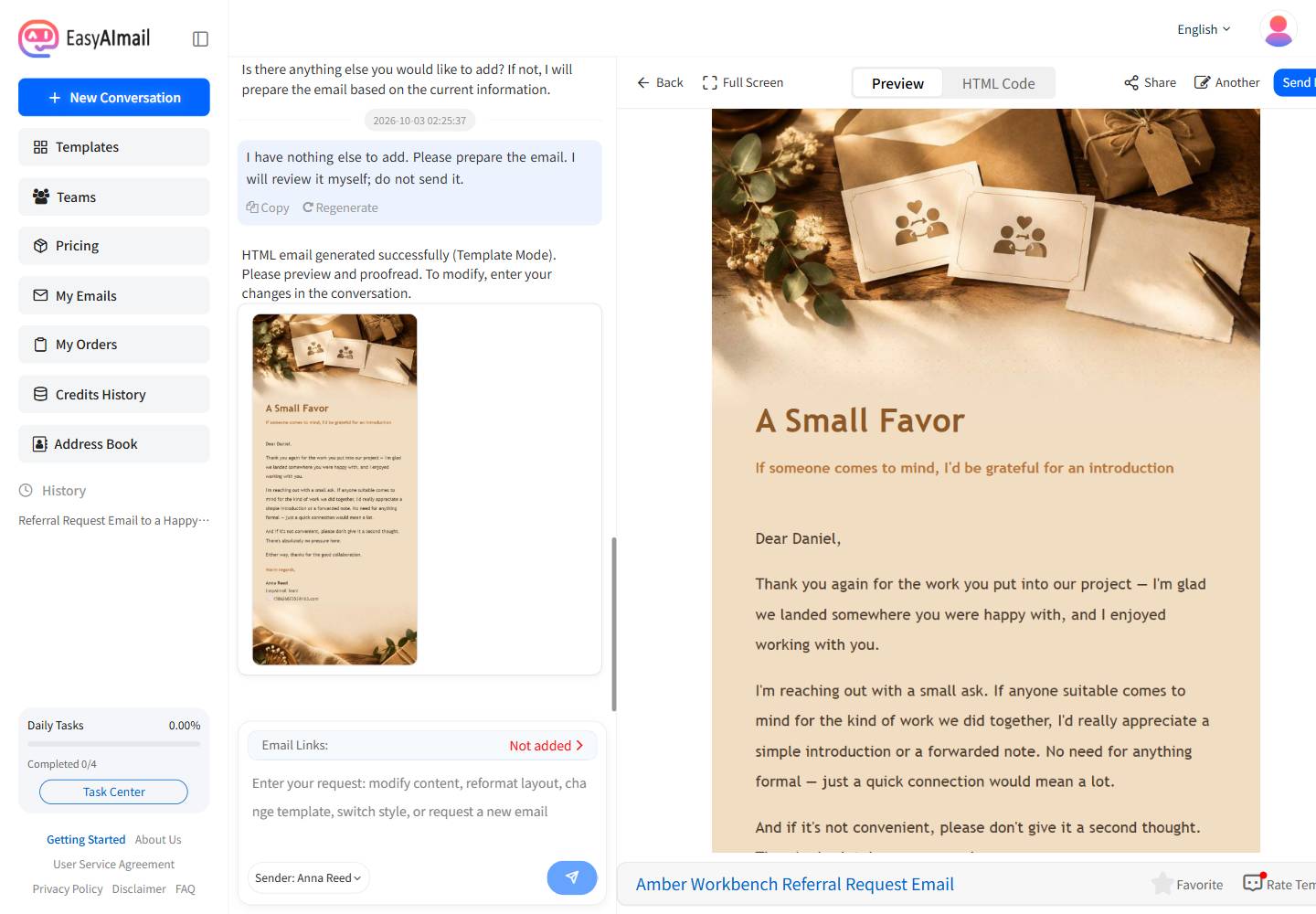
How to Write a Referral Request Email Without Making It Awkward
Learn how to ask a happy client for a referral in a genuine, low-pressure way.
Read more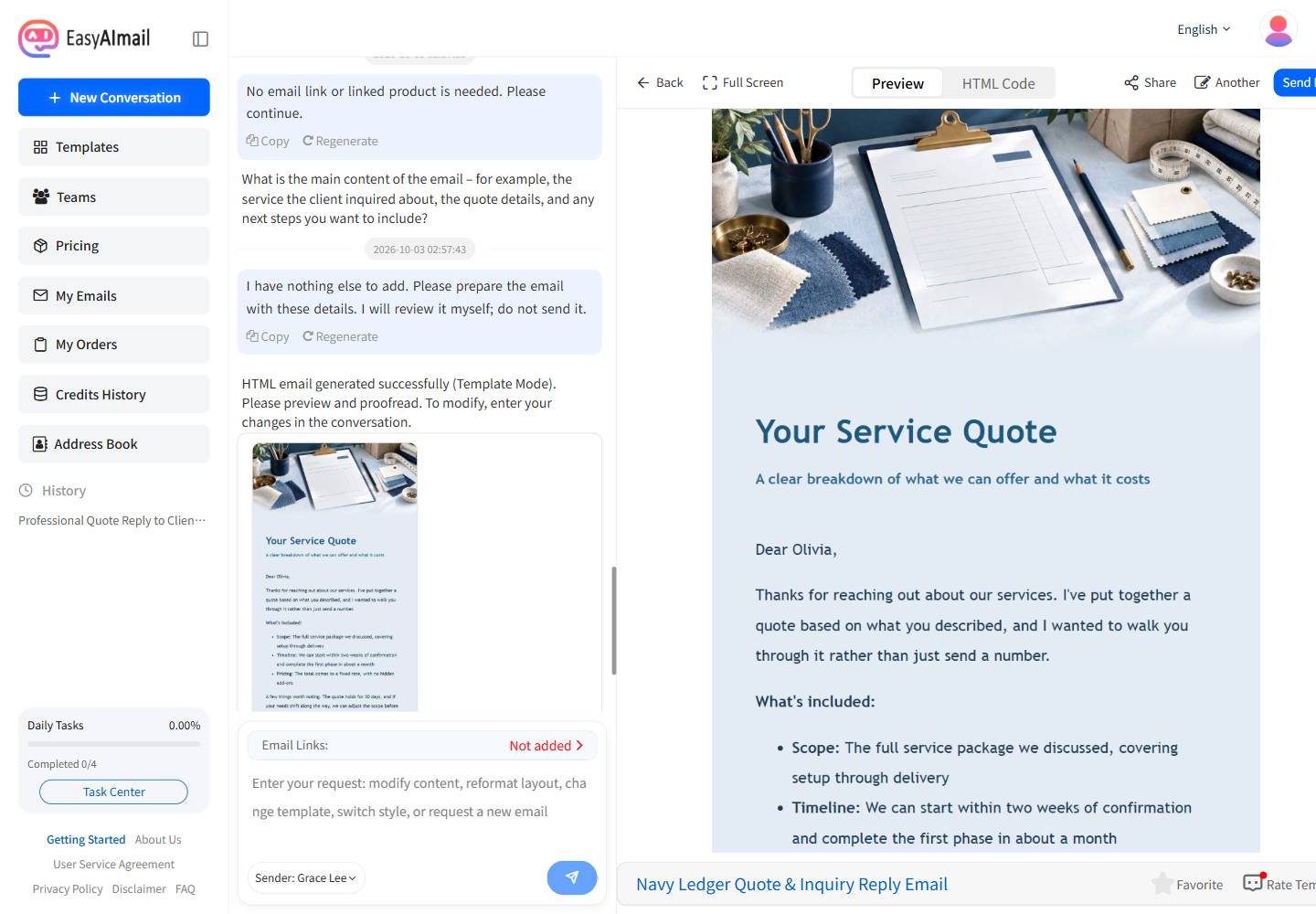
How to Write a Quote or Inquiry Reply Email for a Small Business
Learn how to reply to a service inquiry with a clear, friendly quote and a practical next step.
Read more