
Writing a first email to a new client is rarely difficult because of manners. The harder part is giving someone who does not know you a reason to keep reading. They do not need your company history or a tour of every service before they know why the message matters to them.
In a first email to a new client, you are the supporting character. Start with something about their work, their situation, or the connection you already share. It is less about being clever than making the message easier to place.
First email to a new client: make the first three seconds about them
“I am with X company and we provide…” is not rude. It simply asks a stranger to care about you before you have given them a reason.
A concrete opening is easier to trust: “At the independent retail show last week, you mentioned that follow-up for members across your two shops is hard to keep organised.” It explains why you are writing and shows that the greeting was not copied from a list.
A first email to a new client does not have to be dazzling. It needs to be accurate. If a prospect contacted you first, the task is different. This guide to a quote inquiry reply email is a better fit for that moment.
First email to a new client: what to include and what to hold back
An introduction email usually needs only three things: why you chose this person, what useful help you can offer, and how little effort the next step requires. That last part is easy to miss.
“Could we schedule a thirty-minute call?” is not a light next step for a busy client. “If it would help, I can send a one-page example framework for store follow-ups” is easier to answer. They can say yes, no, or not now without opening a calendar.
Save your company history, full service menu, and every case study for later. They may matter, just not in the opening message.
A referral changes the first sentence
When someone introduced you, name that person early. The recipient wants to confirm the connection and understand why that person thought the two of you should meet.
You might write: “Jordan Lee mentioned you are reviewing member follow-ups for your shops, and thought my approach might be useful context.” That gives the introduction its proper setting.
Do not use the referral as a container for a long pitch. It opens the door. It does not do the explaining for you. For the other side of relationship building, see this referral request email.
A short first-contact example
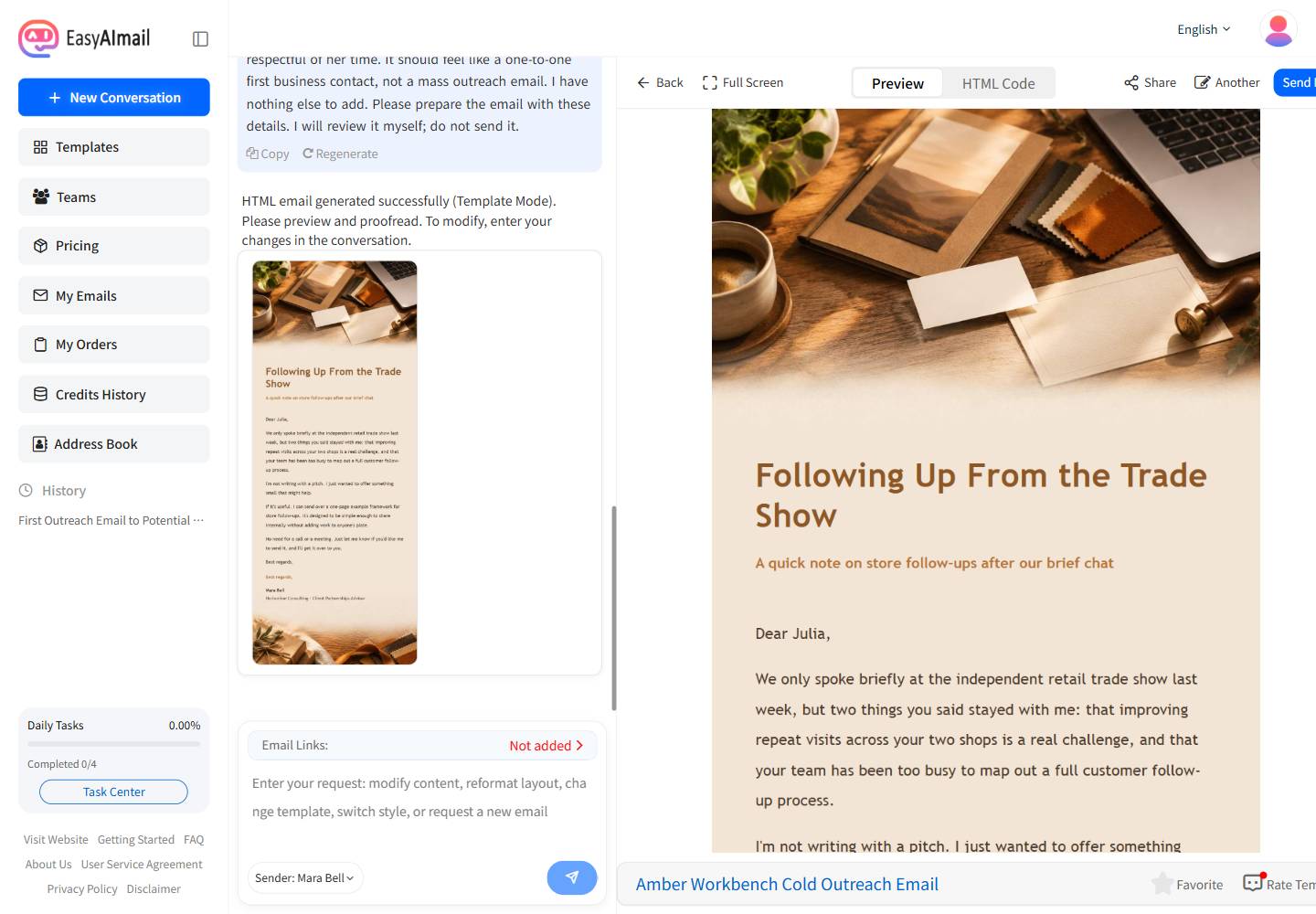
> Dear Julia, > > At the independent retail show last week, you mentioned that member follow-ups across your two shops have been difficult to organise. I remember you were careful not to let contact feel mechanical. > > I work on customer communication systems and may be able to offer a useful starting point. If you would like, I can send a one-page example framework for repeat-visit follow-ups that you can share internally. There is no need to schedule a meeting now. > > Mara Bell > Harborline Consulting | Client Partnerships Advisor
The email does not rush to prove how impressive the sender is. It returns to something Julia said, then offers a low-effort next step. Even if the timing is wrong, she has not been handed a packet of work.
Should you follow up if they do not reply?
One follow-up is reasonable, but it should contain new information. Perhaps you made a one-page example more relevant to their type of shop, or found a public resource connected to the issue they mentioned.
“Just checking that you saw this” gives the person no fresh reason to respond. After one useful follow-up, silence is a good reason to pause. Relationships are not built by adding reminders.
Turn a real relationship into a usable draft
With EasyAImail, you can describe who the recipient is, where you met, what you want to offer, and how restrained you want the approach to feel. It asks for missing details in stages, recommends templates, and leaves the final template choice to you.
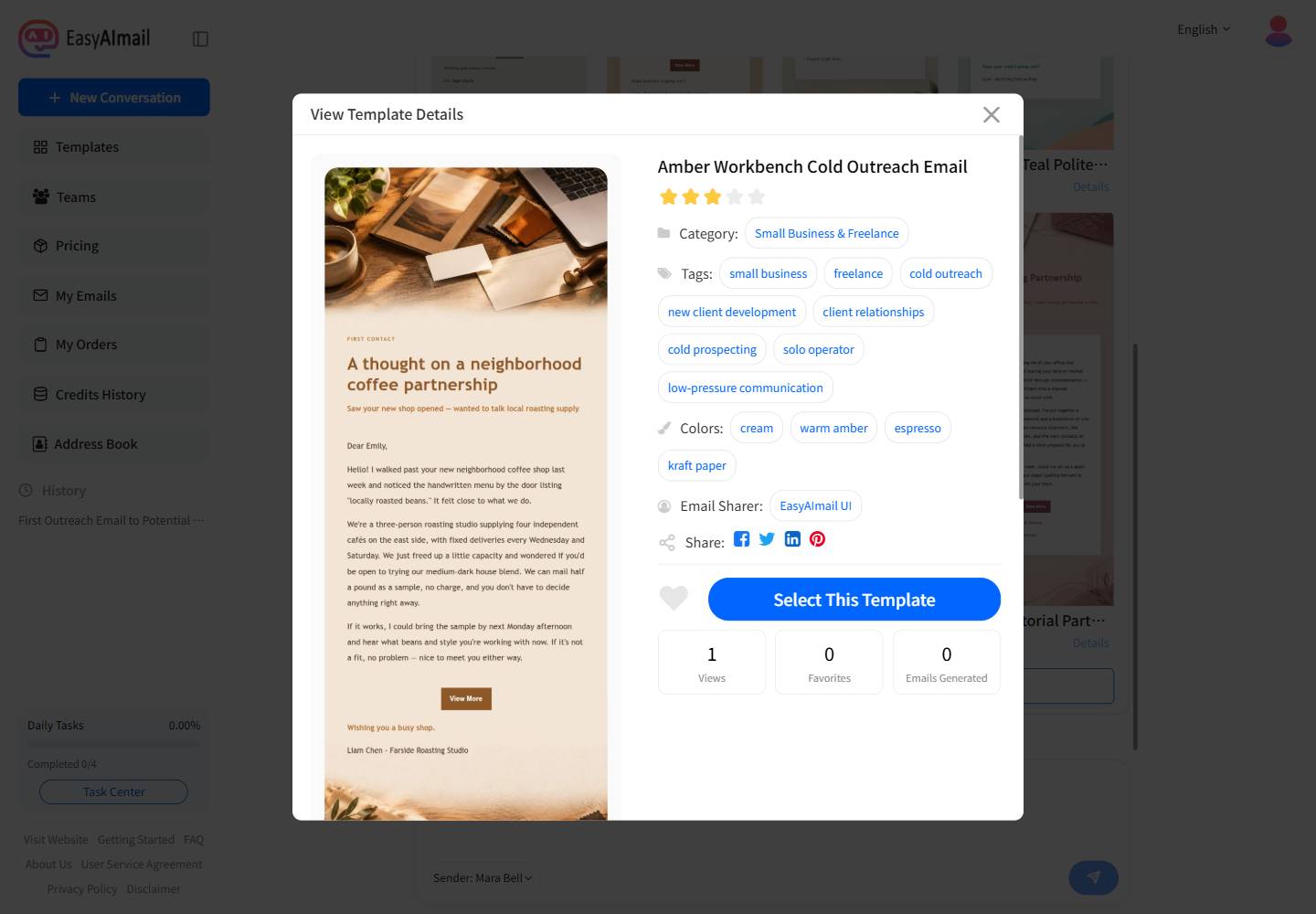
For this scenario, we selected Amber Workbench Cold Outreach Email. Its cold-outreach, new-client-development, and low-pressure-communication tags fit a message that needs to feel personal rather than broadcast.
Check before you send
- Does the opening name one specific thing that matters to the recipient?
- Is there only one easy next step to answer?
- Did you avoid placing your whole company story, portfolio, and service list in the first email?
- If you were introduced, did you name the introducer and the reason for the connection?
If those answers are in place, your first email to a new client has already done its job.
FAQ
Can I ask for a call in my first email to a new client?
Yes, when the person has already shown clear interest or the introduction is strong. For a cold email or first contact, a smaller action is usually more respectful of their time.
Should I send another email if a new client does not reply?
You can follow up once if you have something new and relevant to add. If that message is also unanswered, pausing is more considerate than sending repeated reminders.
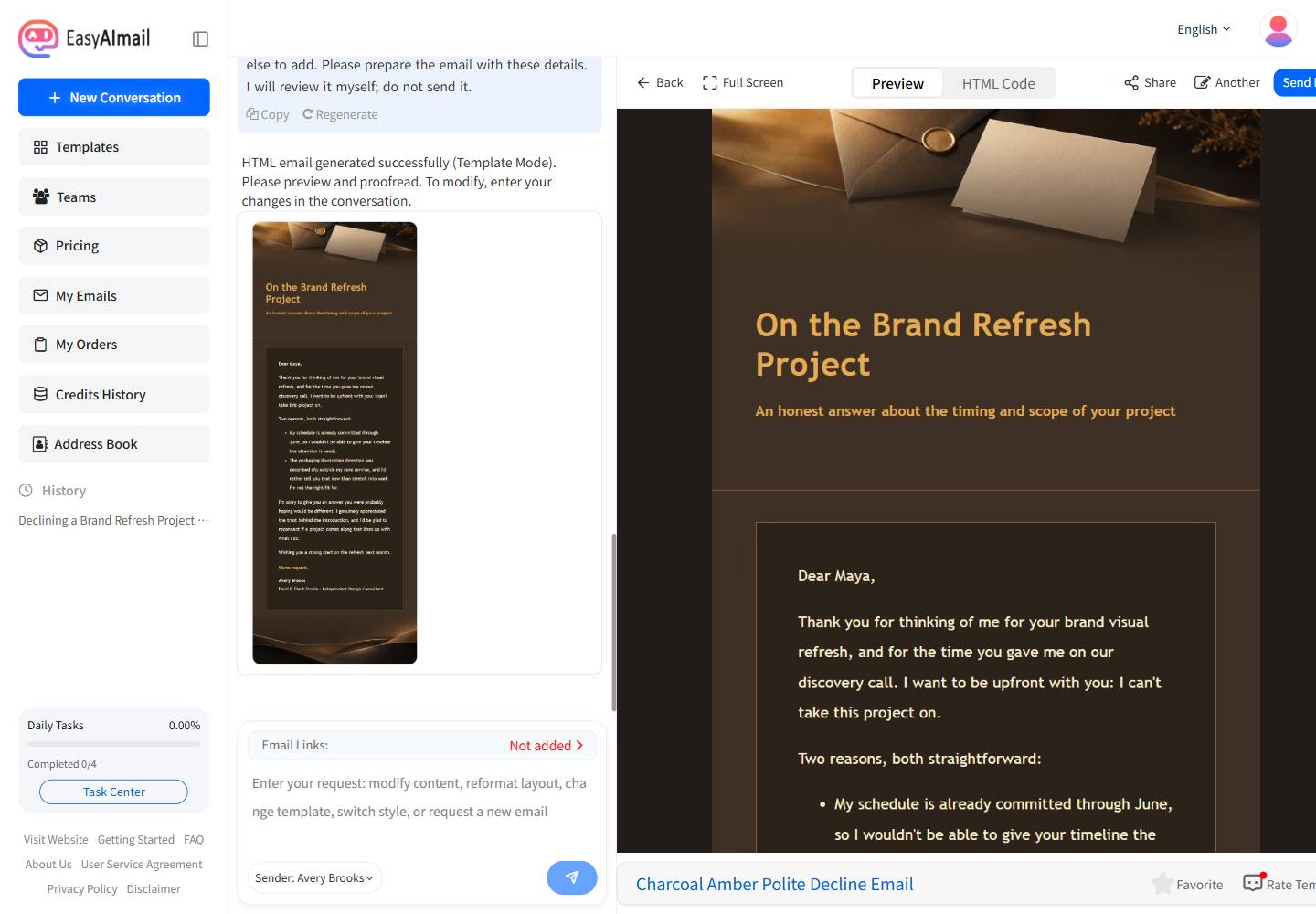
How to Politely Decline a Client Without Damaging the Relationship
Learn how to politely decline a client by stating the answer clearly, giving a brief real reason, and knowing when an alternative is useful.
Read more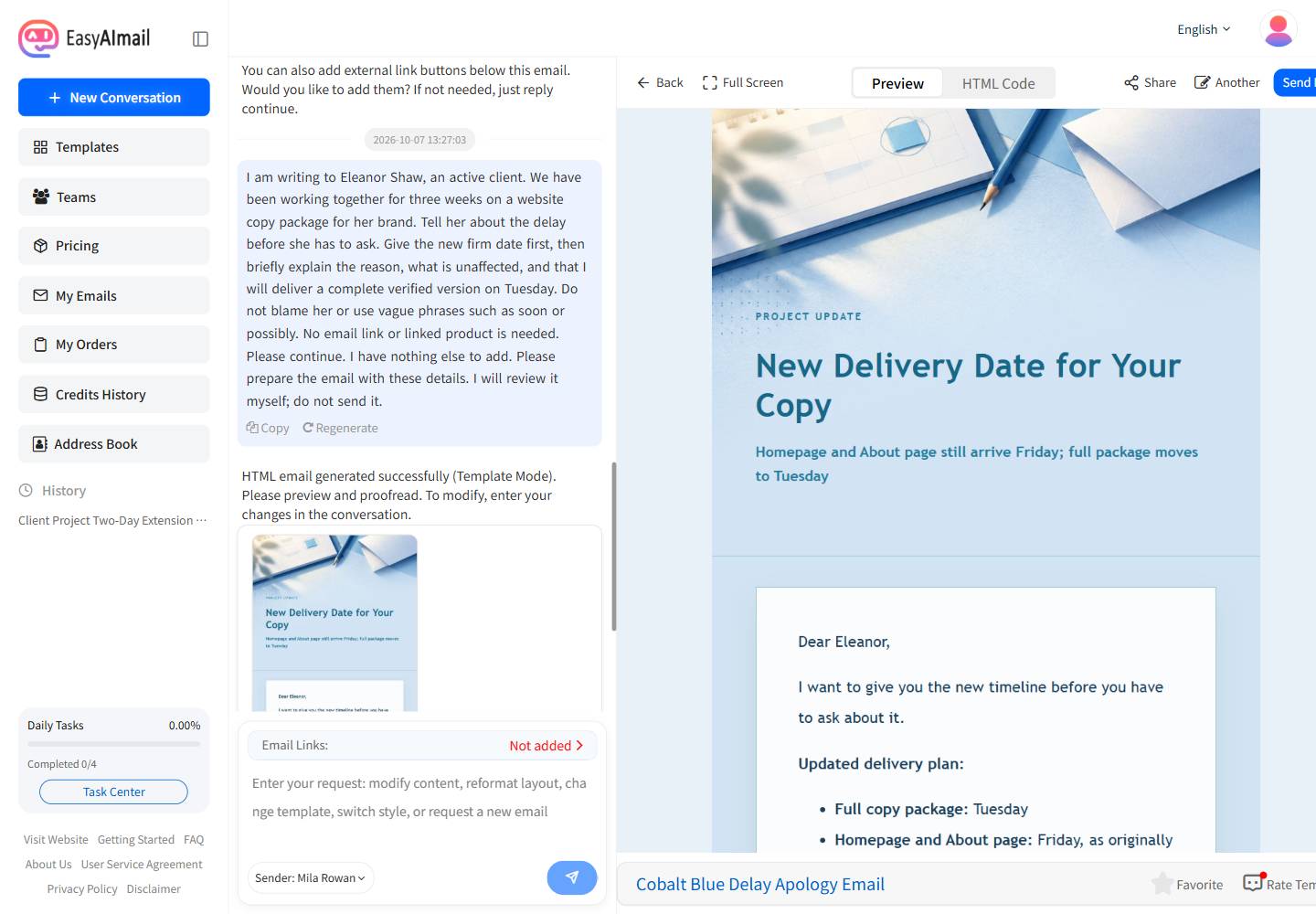
How to Tell a Client About a Delay Before They Have to Ask
Learn how to tell a client about a delay with a reliable new date, a brief reason, the affected scope, and a clear next step.
Read more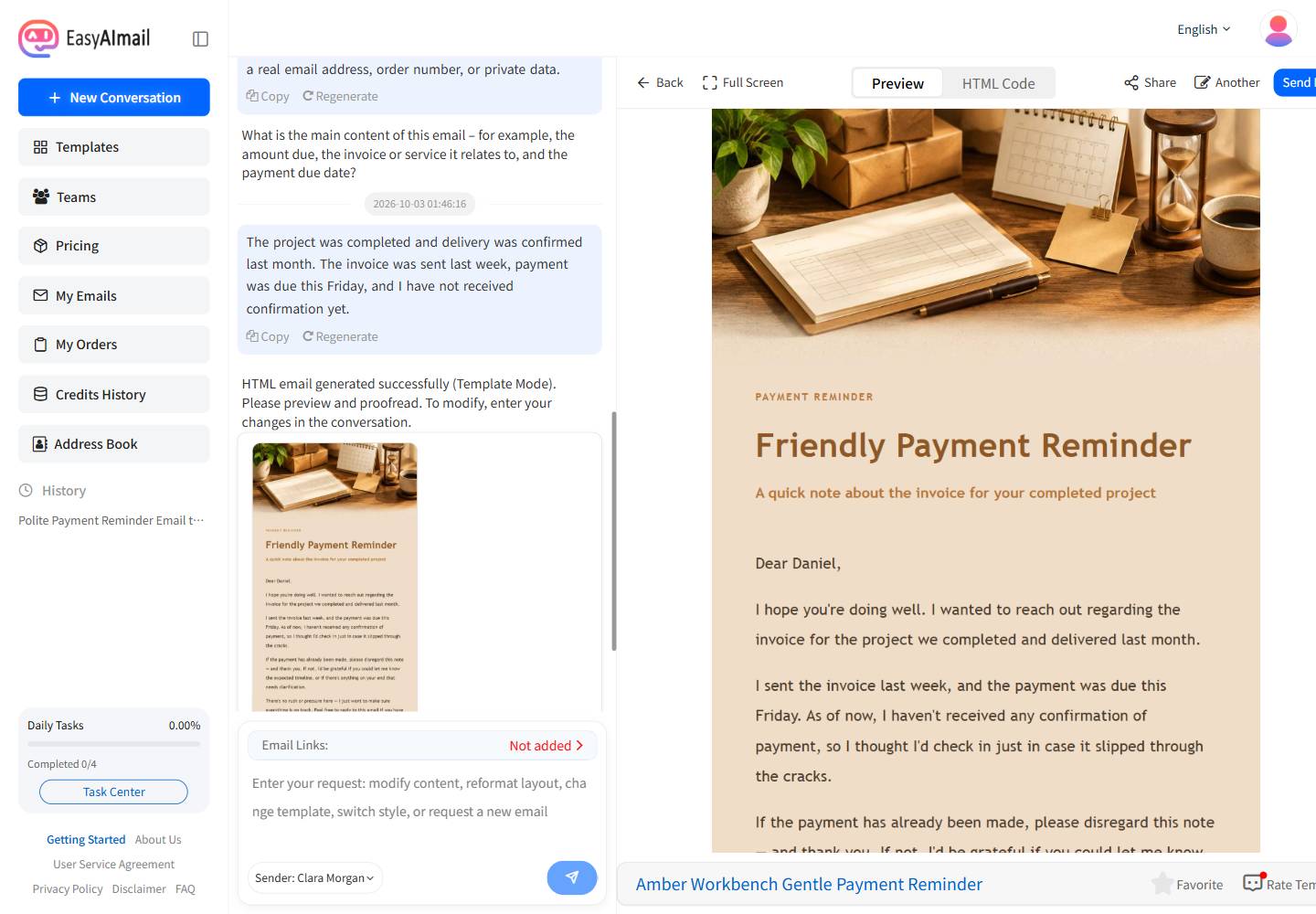
How to Write a Polite Payment Reminder Email Without Damaging the Relationship
Learn how to write a clear and considerate payment reminder email that protects the client relationship.
Read more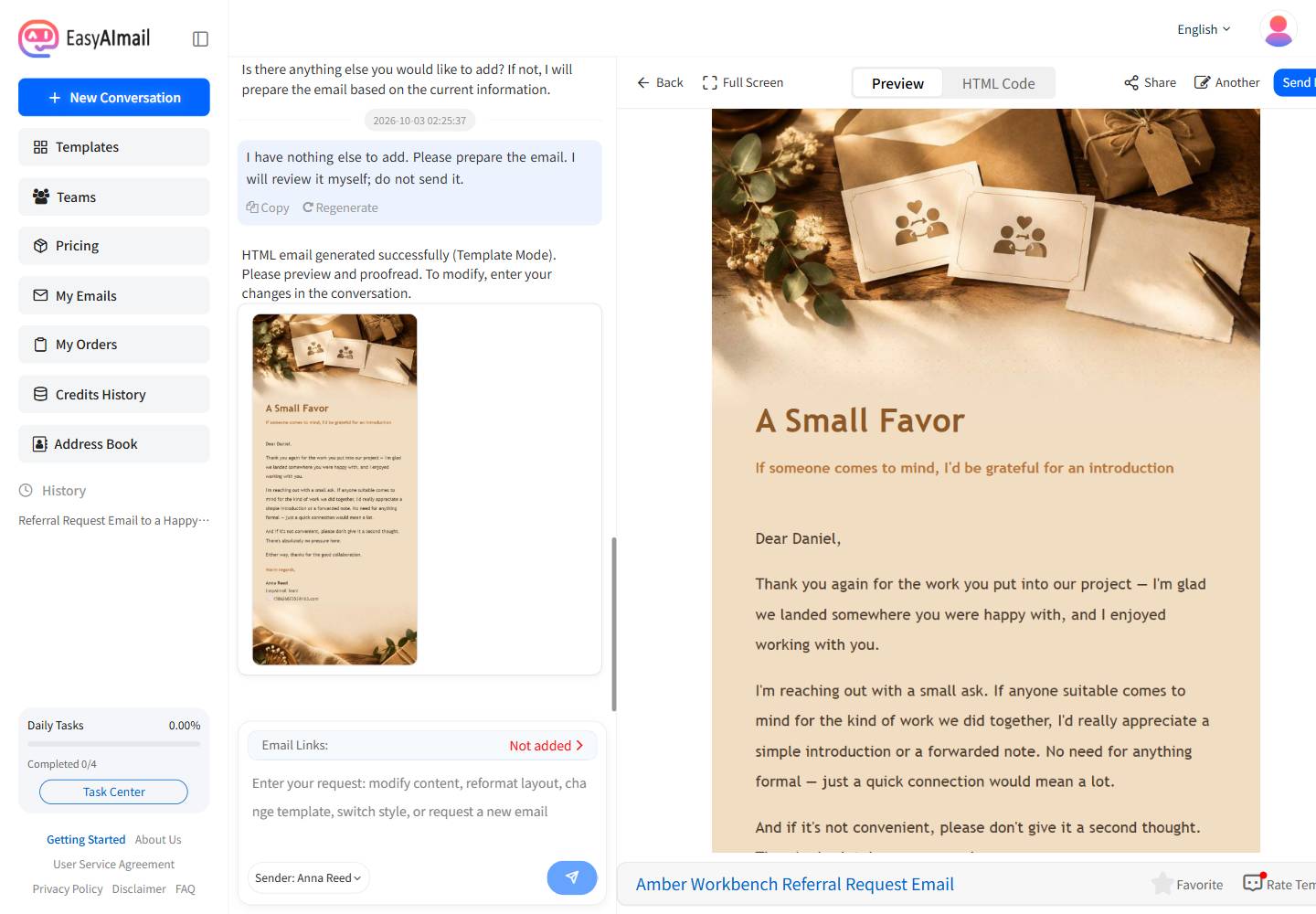
How to Write a Referral Request Email Without Making It Awkward
Learn how to ask a happy client for a referral in a genuine, low-pressure way.
Read more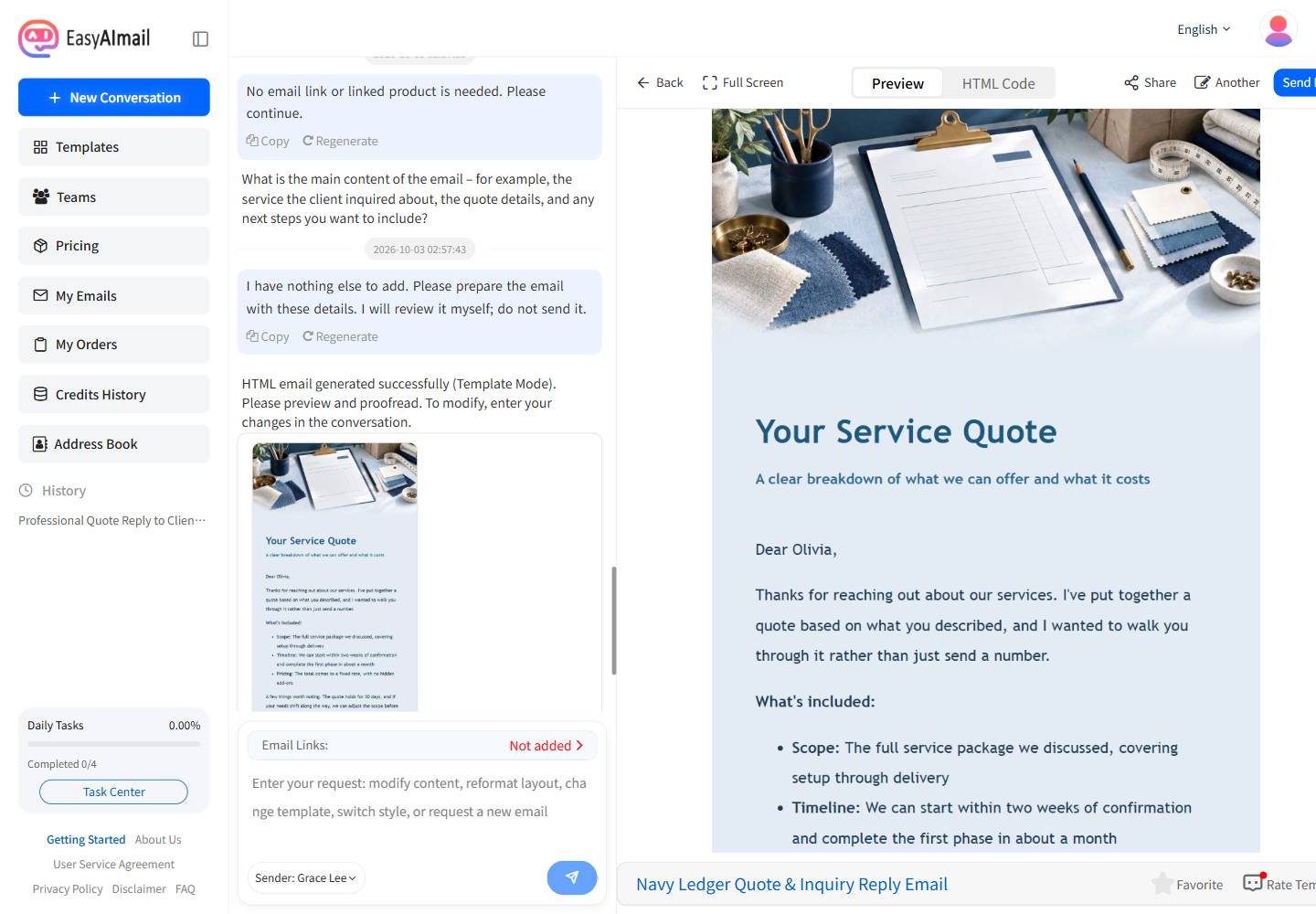
How to Write a Quote or Inquiry Reply Email for a Small Business
Learn how to reply to a service inquiry with a clear, friendly quote and a practical next step.
Read more