A prospective client tells you that they chose another provider. You want to understand why, especially after time spent on discovery, a quote, or a proposal. But asking at this moment carries built-in pressure: they have just said no, and now they may feel expected to explain themselves.
A useful lost-deal feedback email does not ask the client to defend their decision. It puts the question back where it belongs: on improving your service. The point is not “Why did you not choose me?” It is “If you are comfortable sharing, what would help me do better next time?”
This is a different stage from following up with an interested client who has gone quiet. There, you reduce the effort of the next step. Here, the decision has been made. Your work is to respect it, leave the relationship intact, and invite one small piece of optional feedback.
Thank them first, and make it clear that you will not argue
The first task is not asking the question. It is showing that the client is allowed to choose. State plainly that you will not reopen the sale or ask them to defend a price comparison.
For example:
> Dear Hannah, > > Thank you for letting me know about your decision, and for taking the time to discuss the content-planning project. I respect your choice to work with another provider, and I will not reopen the proposal or ask you to reconsider it.
That sentence matters. Without it, “May I ask for feedback?” can sound like a disguised recovery attempt.
Ask one question, not a survey
“Was it the price, scope, timing, communication, or experience?” sounds thorough, but it creates a questionnaire. A client who has just declined you is more likely to leave it unanswered.
Ask one question that can actually improve your work:
> If you are comfortable sharing, what factor led you to choose another option?
Do not immediately add “Was it because we were too expensive?” or “Did we lack enough experience?” Those suggestions put words in the client’s mouth and make the message feel defensive.
“No reply is completely fine” is the most important line
Make the client’s exit explicit. Write something like:
> If it is convenient to share, I would be grateful. If not, there is absolutely no need to reply.
This is not filler. It tells the client that their time matters and that silence will be accepted. Removing the obligation often makes a brief, honest answer more likely.
If they say the budget was the issue, do not turn the reply into a second pitch
Budget is useful feedback, but it is not automatic permission to negotiate again. Thank them for being direct first. If a smaller-scope option genuinely makes sense, raise it separately and only as an option.
For example:
> Thank you for being candid about the budget. That is genuinely useful as I review how I package the work. If it would ever be helpful to focus on one priority module instead, I can outline a smaller-scope option in a separate note. There is no decision needed from you now.
Two things matter: the alternative is optional, and it is separate from the feedback request. Do not turn “thank you for the feedback” into “then I can give you 10% off.” That makes the client regret being honest.
A low-pressure lost-deal feedback email example
> Dear Hannah, > > Thank you for letting me know about your decision, and for taking the time to discuss the content-planning project. I respect your choice to work with another provider and will not revisit or challenge it. > > If you are comfortable sharing, I have one question: what factor led you to choose another option? I would like to use that feedback to improve my service and communication. > > If you would rather not reply, that is completely fine. Thank you again for your time, and I wish the project every success. > > Tessa Morgan > Small Light Content Studio | Creative Services Lead
The value of this email is not a guaranteed response. It is that the relationship stays in a shape that could support future work. In a public discussion, a service provider used a similarly low-pressure approach to reopen a conversation and recover an order of about $383. That is one anecdote, not a promised outcome. The reusable method is the same: thank them, ask one question, make replying optional, and do not argue.
Keep the request measured with EasyAImail
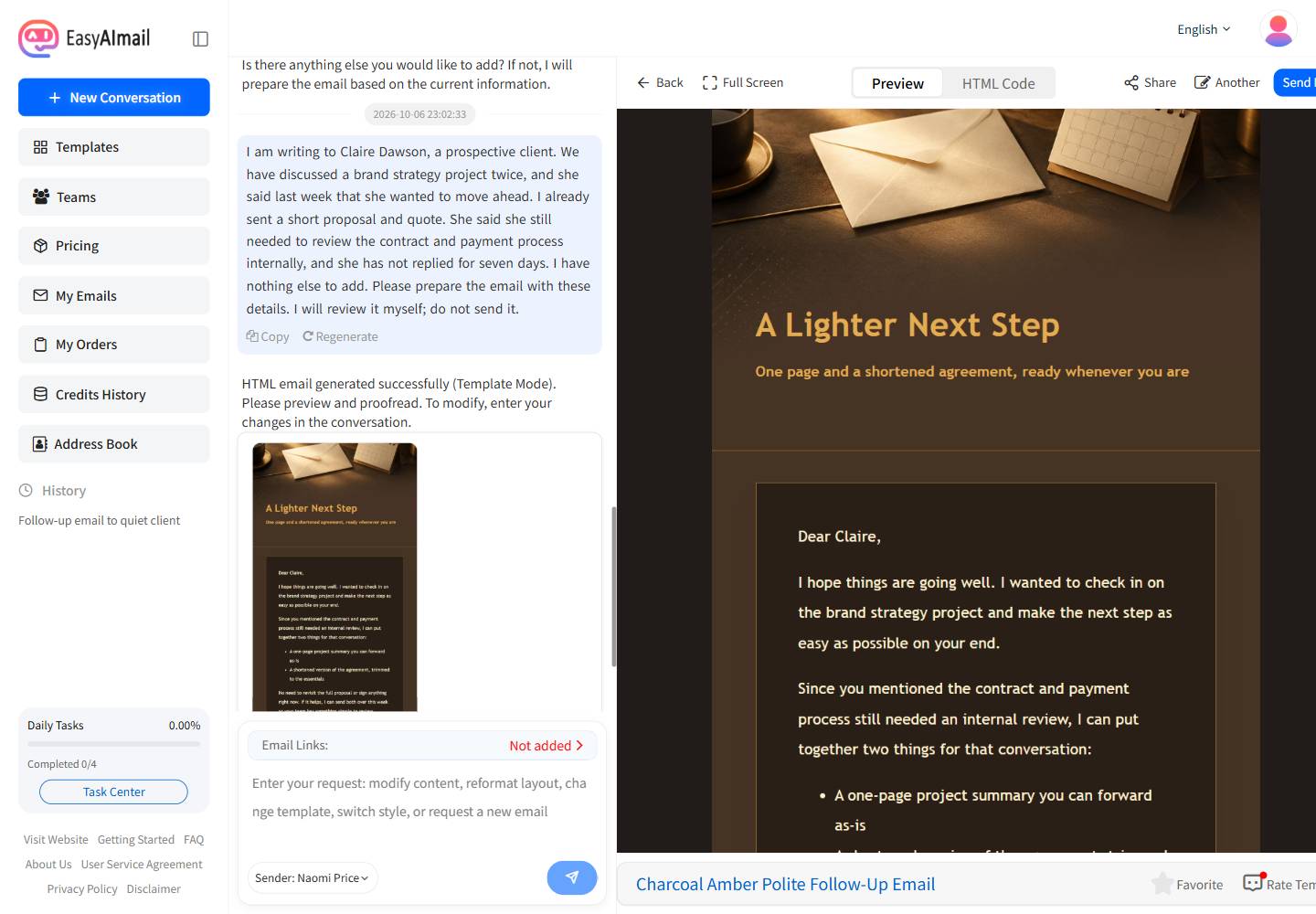
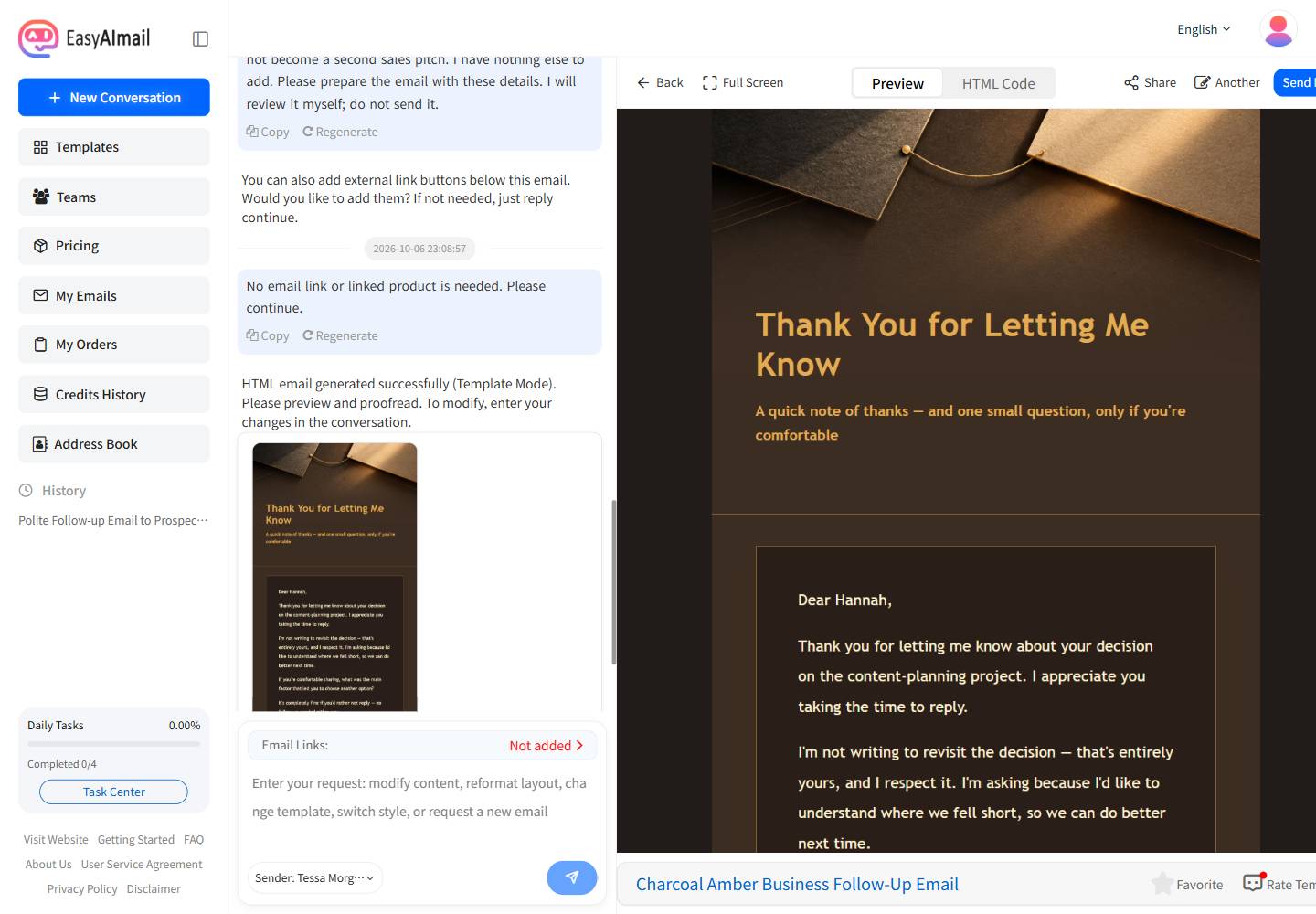
In EasyAImail, start with the actual situation: “A prospective client chose another provider. I want to thank her and ask one question for improvement, without making her feel guilty or giving her a second sales pitch.” The conversation can collect the recipient, context, single question, and tone step by step.
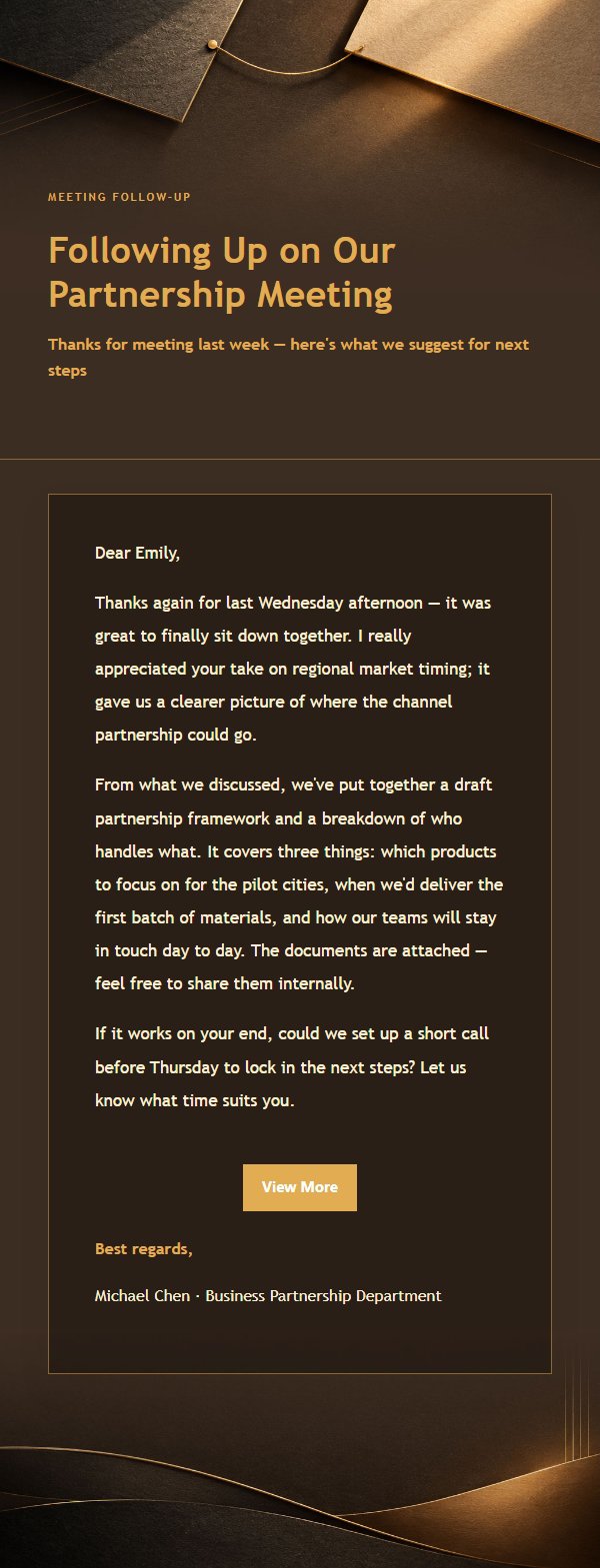
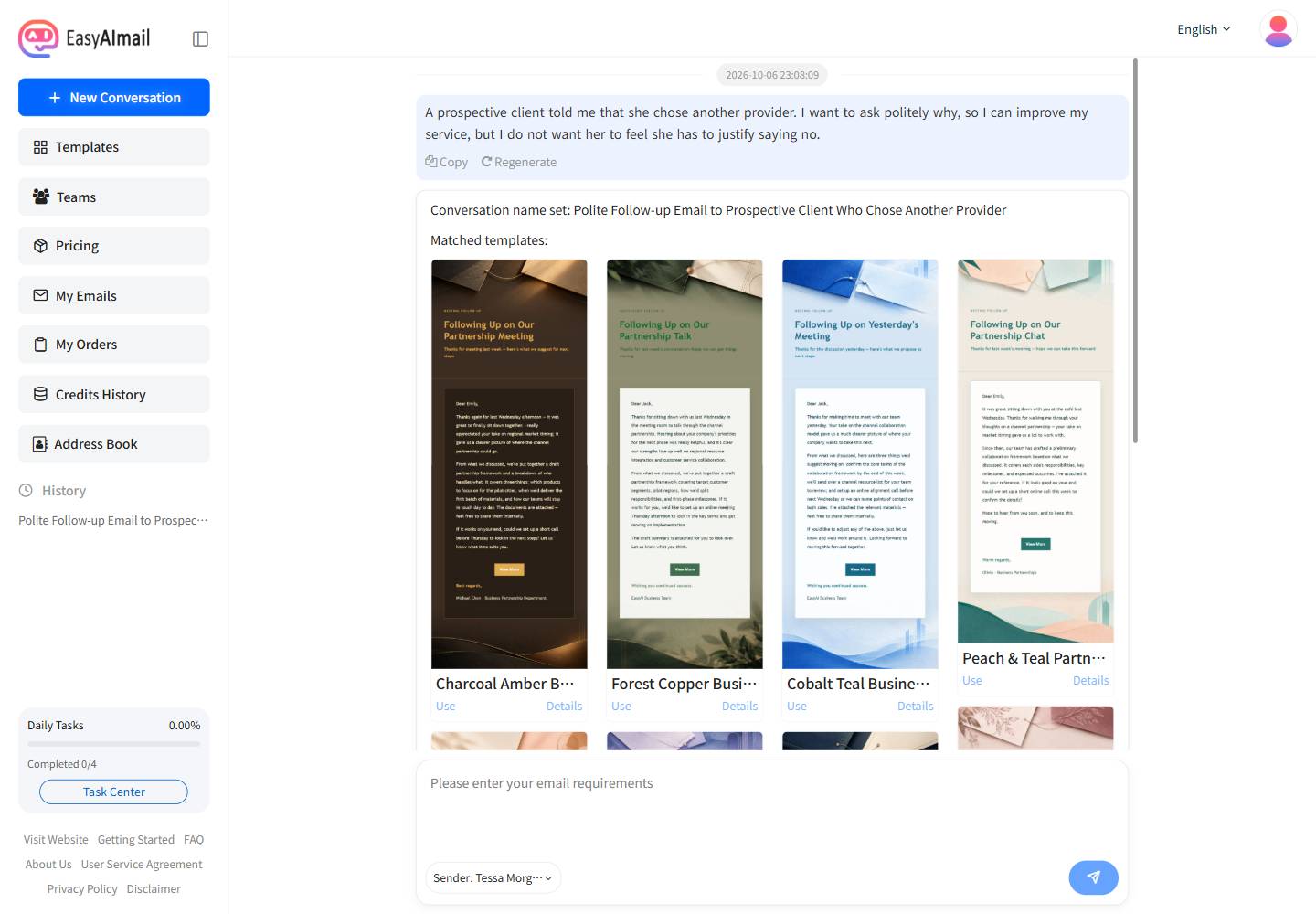
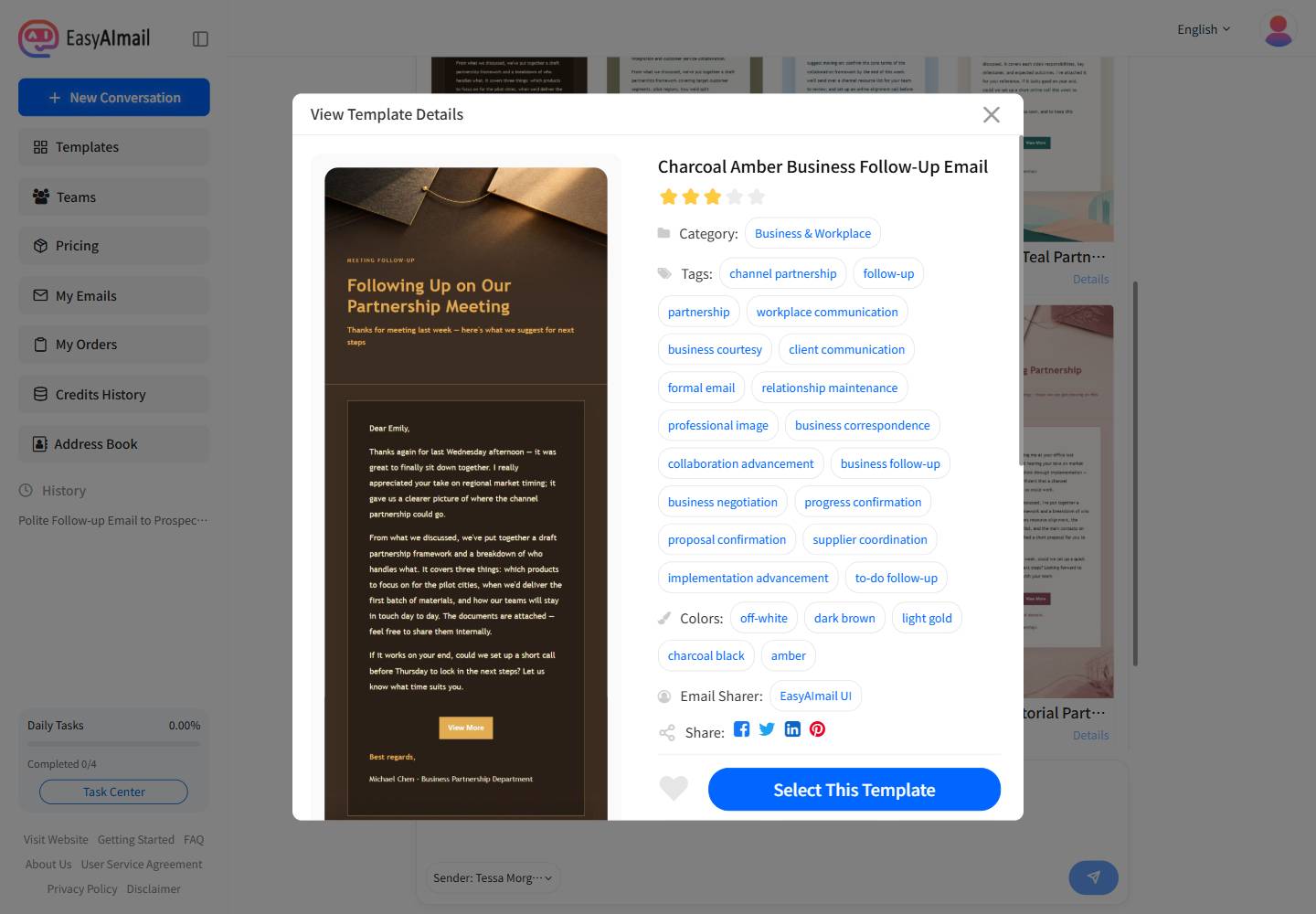
The AI recommends templates, while you make the final choice after reading the details. For this English scenario, we chose Charcoal Amber Business Follow-Up Email. Its client communication, business courtesy, relationship maintenance, and professional follow-up tags suit a restrained message after a decision.
After a lost deal, the most valuable signal is not how hard you try to win the client back. It is how gracefully you handle a no.