A client said last week that they wanted to move forward. You sent the proposal and quote, then heard nothing. The agreement may feel long, the payment process may need internal review, or they may simply not have decided how to proceed.
It is tempting to conclude that you have not followed up firmly enough. Usually, that is not the problem. A quiet client is often stuck on the effort of the next step. Reopening a long proposal, coordinating an approval, and understanding payment can turn a positive intention into a task that keeps sliding down the list.
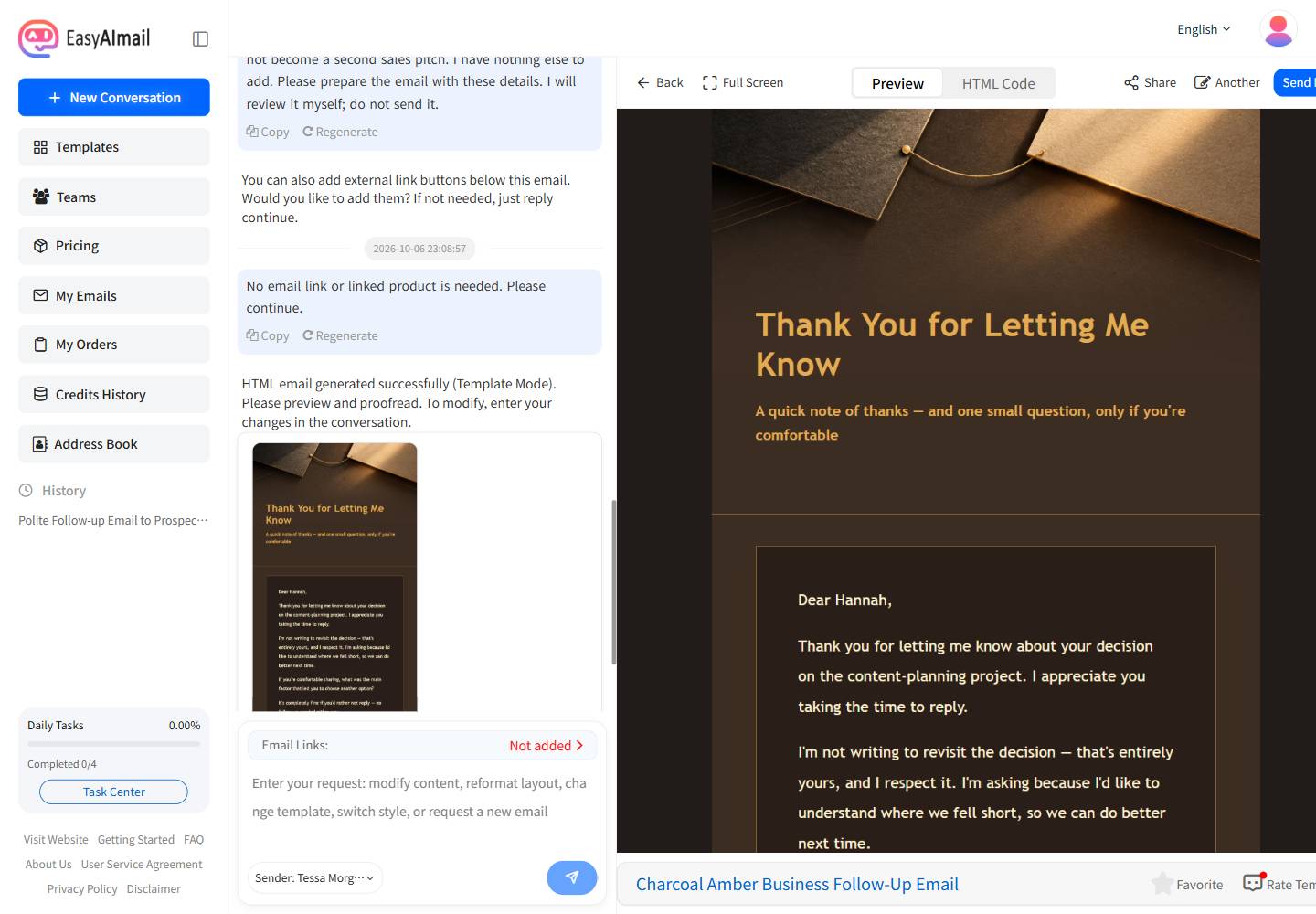
Your first follow-up should not re-sell the whole service. It should make the next step easier, ideally by doing half of the work for them.
Reduce the effort of the next step
Give the client one action only. Instead of asking, “Have you had a chance to review the proposal and confirm?” offer something smaller: “I can send a one-page project summary and a shortened agreement for your internal review.”
The first request asks them to return to a full decision. The second removes reading, forwarding, and explaining work. You are not asking them to do more; you are reducing the work required to keep moving.
First follow-up example:
> Dear Claire, > > I wanted to briefly check in on the brand strategy project we discussed last week. You mentioned that the contract and payment process still needed internal review, and I understand that can take coordination. > > To make the next step easier, I can put together a one-page project summary and a shortened agreement that you can forward internally. If that would help, simply reply “yes” and I will send both over. > > There is no need to make a final decision now. I just wanted to make the next step lighter on your side. > > Naomi Price > Northshore Brand Studio | Independent Strategy Consultant
There is only one action here: say yes to the shorter materials. Do not also ask for signature, start date, payment confirmation, and a new meeting in the same email.
Set a time boundary in the second email
If the first follow-up gets no response, the second can add a calm time boundary. A boundary is not “Reply by Friday or else.” It is an honest explanation of how you need to plan your own work, paired with an easy way for the client to pause.
For example:
> Dear Claire, > > I wanted to check whether the project is still something you would like to move forward with. To plan my availability for the next two weeks, I will keep the proposed slot open until Friday. > > If the timing is not right at the moment, that is completely fine. A quick reply is enough, and I can pause the project until you are ready to revisit it.
Do not add “final reminder” or “this offer expires.” The point is not to manufacture urgency; it is to make your schedule visible without making the client defensive.
Close the loop without closing the relationship
If there is still no response after the second note, a final close-the-loop message lets you stop carrying an open task in both inboxes.
Close-the-loop example:
> Dear Claire, > > I will close out this round of follow-up so that I do not keep adding to your inbox. If your internal timing changes, or if you would like to restart with the one-page summary, you can reply to this email at any time. > > Thank you again for the conversation, and I hope the project goes well.
This leaves a door open without leaving an endless tail of reminders. Do not end with “What is holding you back?” If the client wants to explain, they have room to do so; if not, you have ended the current thread respectfully.
When to stop following up
Do not keep building a reminder sequence after a client has clearly declined, asked not to be contacted, or repeatedly made commitments without any engagement. Update your pipeline and return attention to active opportunities.
Also, do not assume silence means a price objection. When you do not yet know the reason, lowering the effort of the reply is usually more useful than immediately offering a discount.
Draft the follow-up with EasyAImail
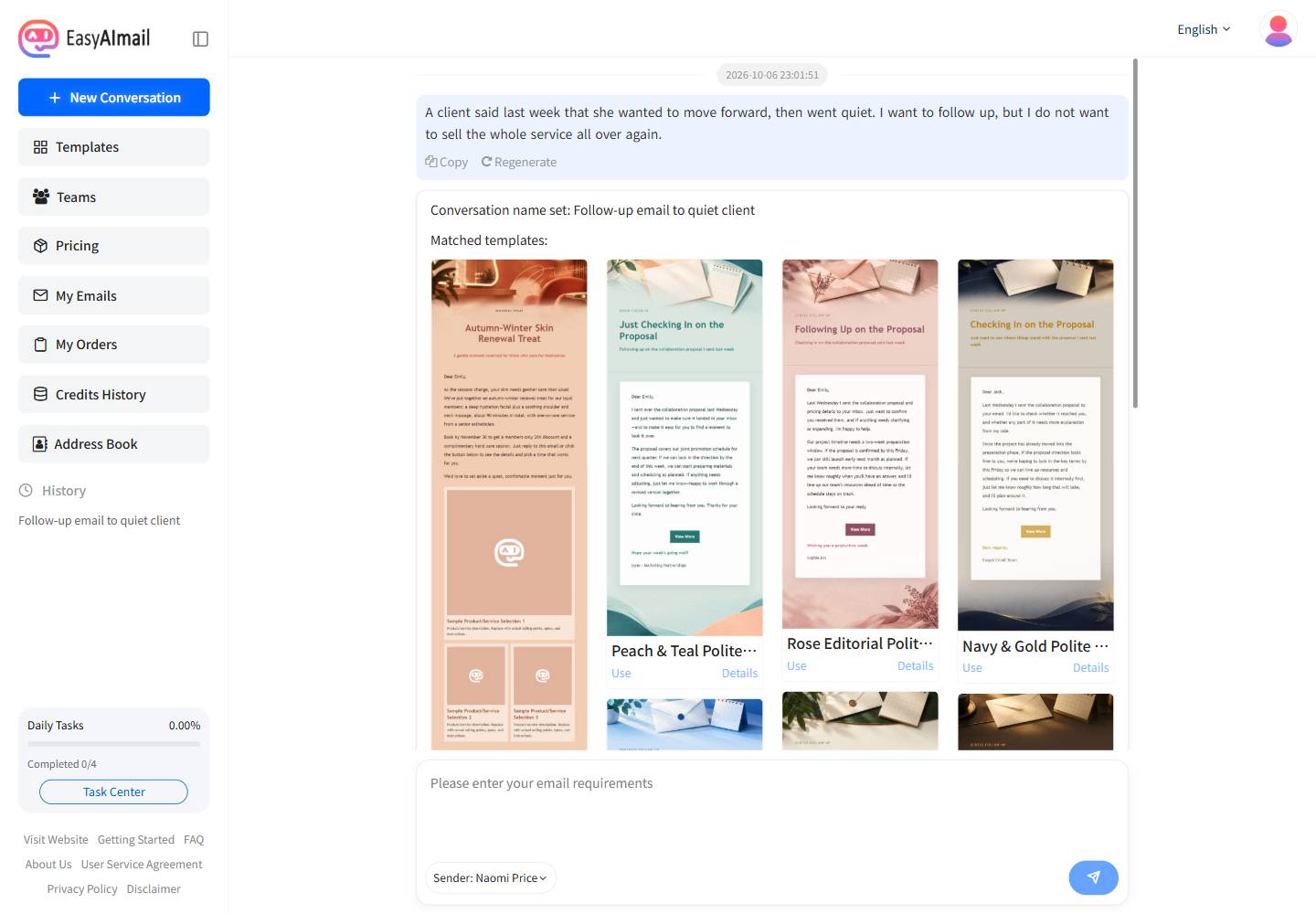
In EasyAImail, begin with the real friction: “My client said she wanted to proceed, but the contract and payment process are slowing the next step. I do not want to sell the service again.” The conversation then gathers the recipient, background, single offered action, and tone in stages.
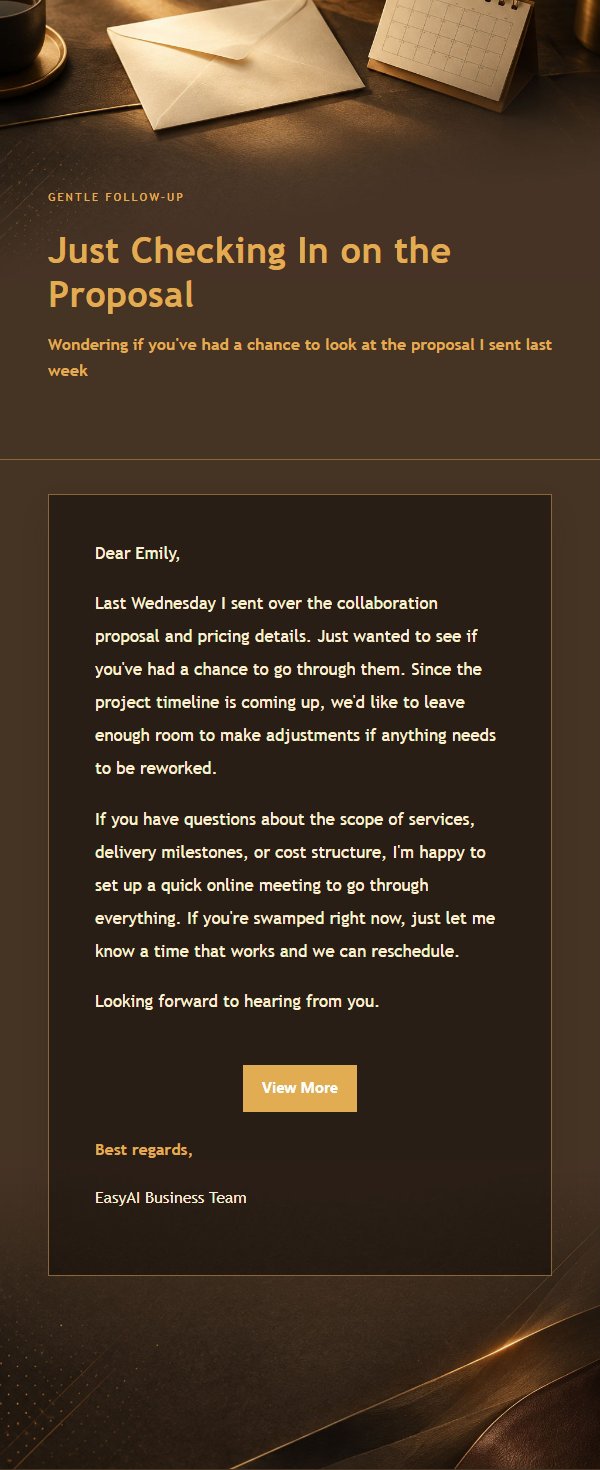
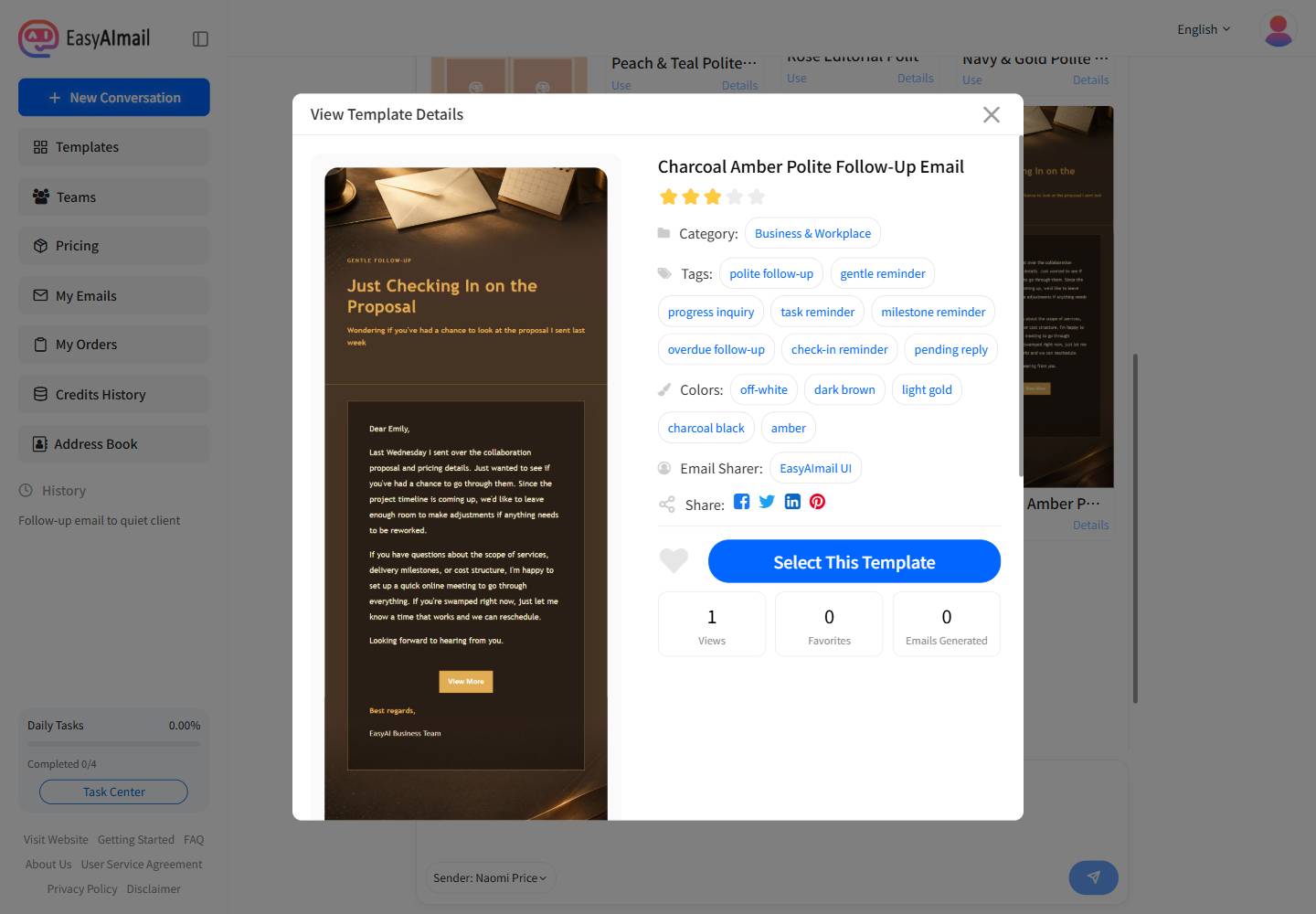
The AI recommends templates, but you review the details and make the final selection. For this English scenario, we chose Charcoal Amber Polite Follow-Up Email. Its polite-follow-up, progress-inquiry, and pending-reply tags fit a message that needs to be clear without becoming pushy.
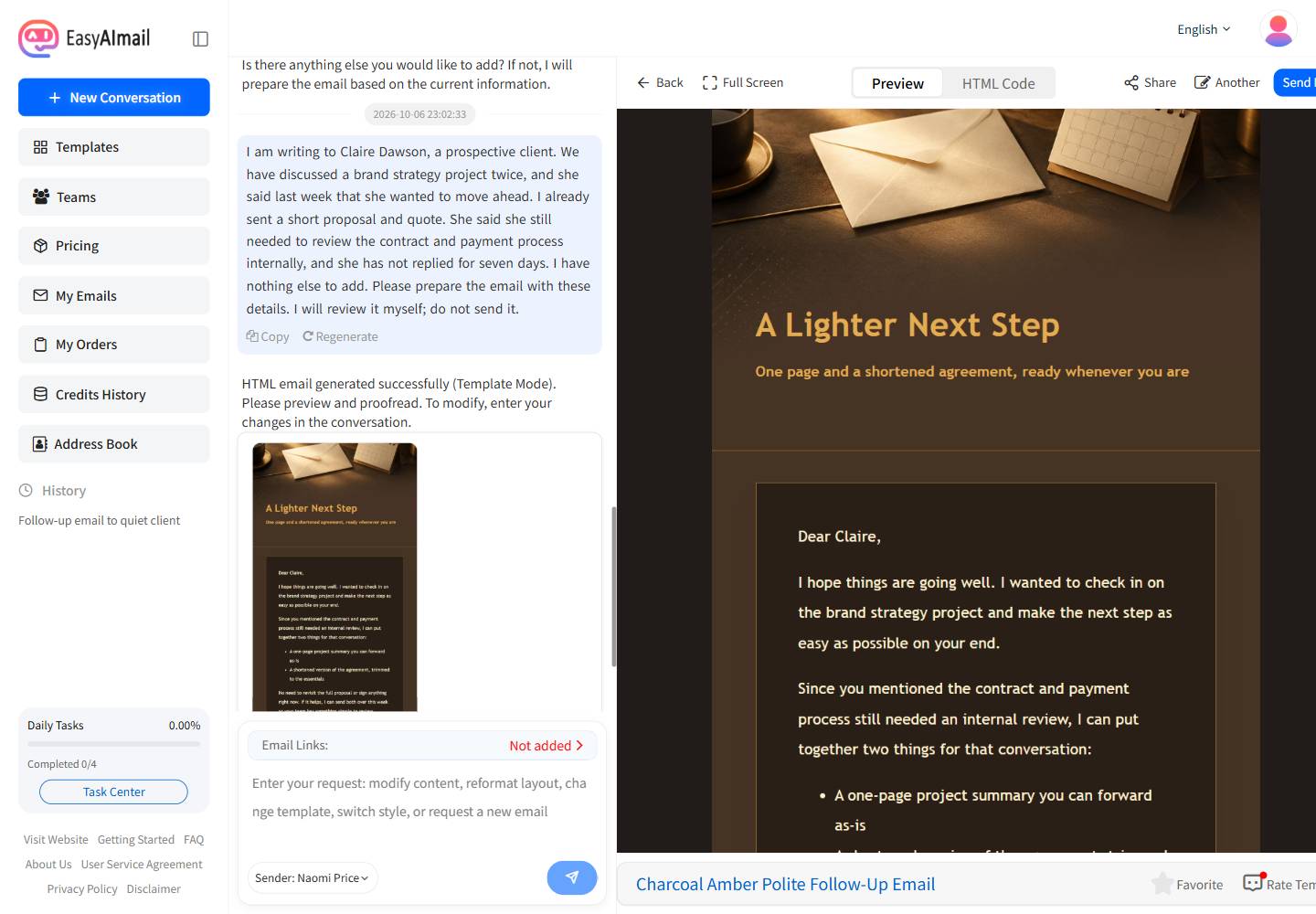
A better follow-up is not louder. It makes “what happens next?” easier to answer.