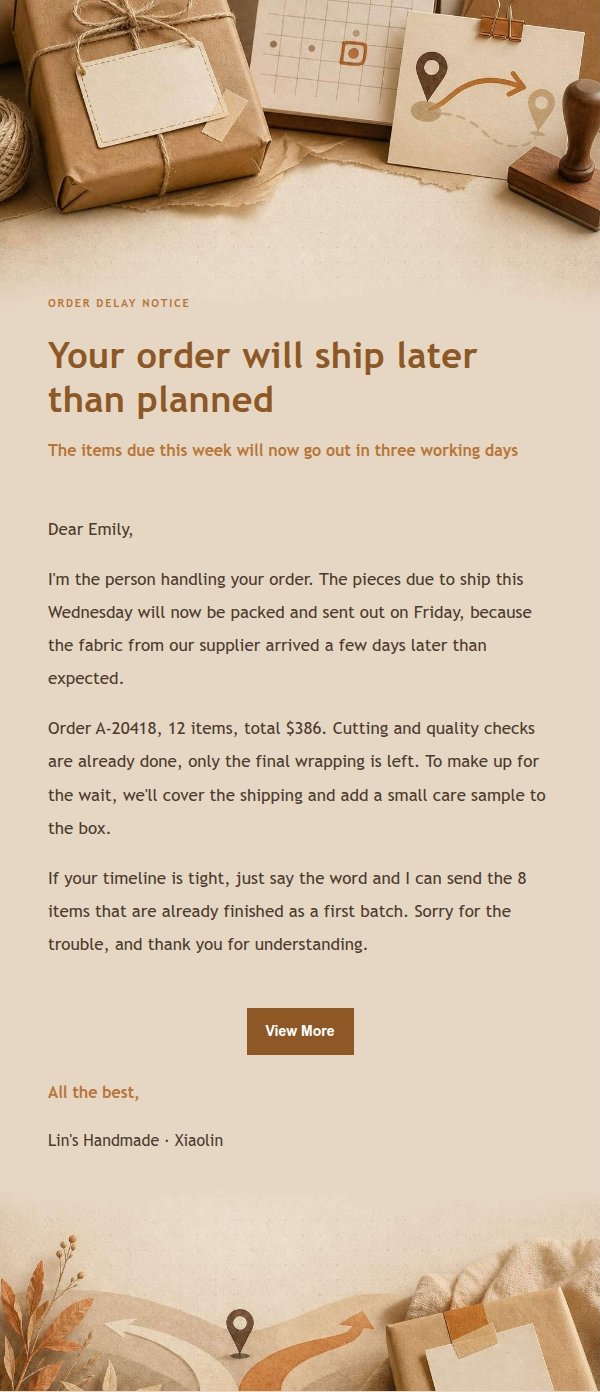
On the fifth day after ordering, a customer writes: “I want a refund.” The tempting response is to explain the carrier delay immediately, or to send a refund policy before saying anything else.
That usually misses the real concern. Before delivery, a refund request is often another way of asking, “Is this order legitimate?” A customer who has seen no progress may be wondering whether the order was missed, whether the item was actually sent, or whether they made a mistake trusting the store.
Start by acknowledging that concern. Then give three things they can use: the real status, an estimated date, and a way to check the shipment themselves. Cancellation should remain an available choice, not the outcome you steer them toward.
Acknowledge the worry before explaining shipping
The first paragraph does not need to be elaborate. It simply needs to show that the customer’s concern makes sense.
Avoid “Please be patient” or “The carrier is responsible for the delay.” Neither line adds useful information. A stronger order is: recognize the uncertainty, then state the facts you can verify.
For example, if the parcel was handed to the carrier two days ago, the latest scan says it is in transit, and the estimated delivery is two days away, say those three facts plainly. Do not replace them with a vague “We are handling it as soon as possible.”
Write differently for an unshipped order and a shipped order
The right reply depends on where the order is in the process. Treating both cases the same makes your promise unclear.
When the order has not shipped
For an unshipped order, give the customer a direct and practical choice. Confirm that it has not entered delivery yet; if they want to cancel, explain that you can process the cancellation and confirm the expected refund timing. Do not pressure them to keep the order, and do not make waiting their only option.
Example:
> Dear Sophie, > > Thank you for getting in touch. It is completely understandable to want reassurance when an order has been waiting without an update. > > I checked your order and confirmed that it has not yet been handed to the carrier. If you would prefer to cancel, I can arrange that now and confirm the refund timing once it is processed. If you would rather keep the order, I will send the shipping details as soon as it leaves. > > Please reply with the option you prefer, and I will take care of the next step. > > Mara Ellis > Cedar Home Workshop | Customer Experience Specialist
When the order has already shipped
Once a parcel is in transit, do not promise an immediate refund or imply that interception is guaranteed. Explain that the parcel has shipped, state its latest known status and estimated delivery, and include a tracking reference or order page. If the customer still wishes to cancel, invite a reply so you can check whether interception or another next step is possible.
Example:
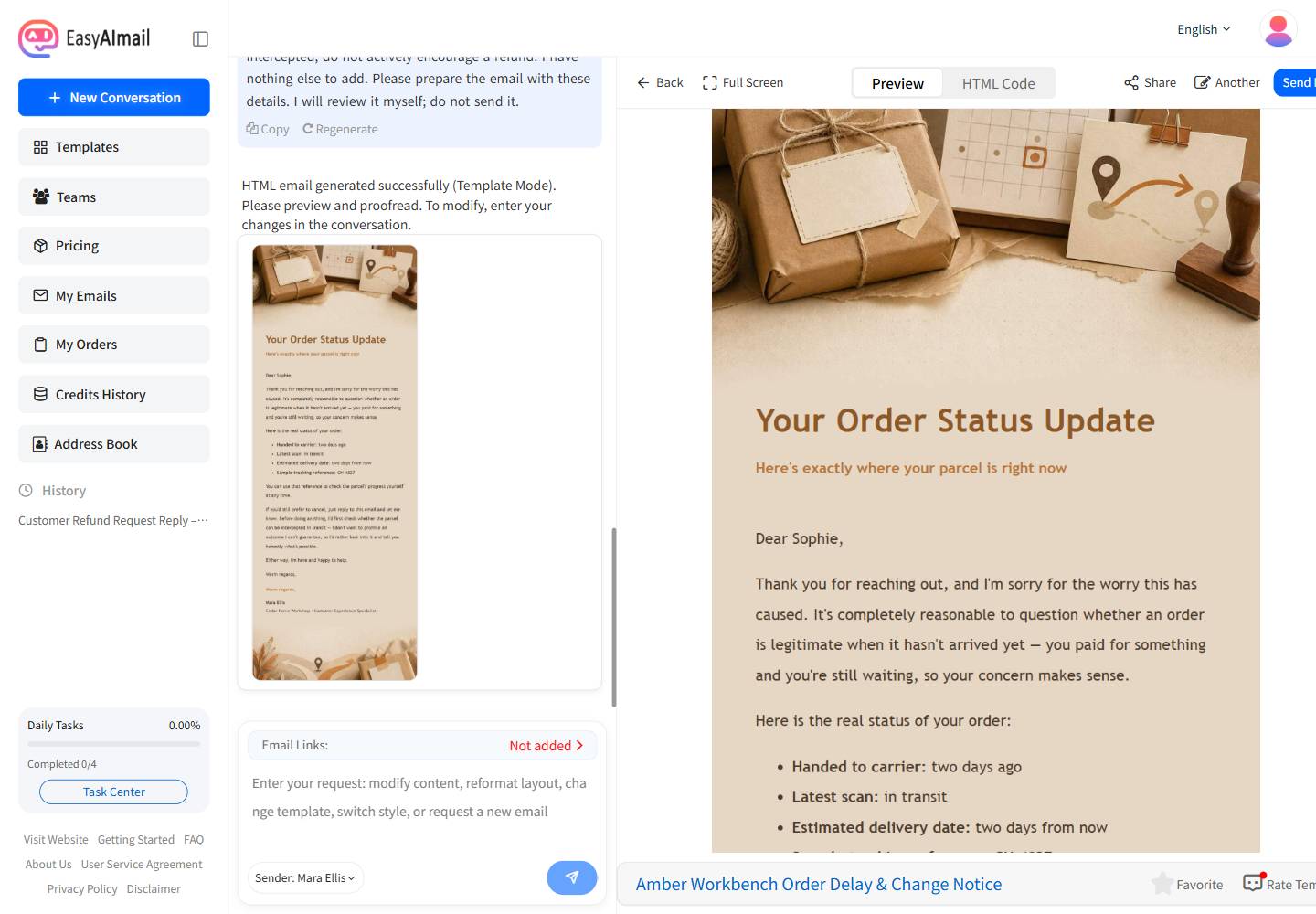
> Dear Sophie, > > Thank you for reaching out. I understand why you are concerned: waiting five days without a delivery can make anyone question whether an order is on track. > > I have checked the order. The parcel was handed to the carrier two days ago, the latest scan shows that it is in transit, and the current estimated delivery is two days from now. You can check the latest update with tracking reference CH-4827. > > If you would still prefer to cancel, please reply to this email. I will first check whether the parcel can be intercepted and then explain the available options clearly. You do not need to decide right now. > > Mara Ellis > Cedar Home Workshop | Customer Experience Specialist
Make cancellation a choice, not a sales pitch for a refund
“If you would still prefer to cancel, please reply” is more useful than leading with “We can refund you.” The first phrasing returns control to the customer while leaving room for the order to continue. The second can make it sound as though you have already accepted that something went wrong.
Avoid three promises that create more trouble later:
- “It will definitely arrive tomorrow,” unless you can truly guarantee it.
- “The carrier is not our responsibility.” The customer bought from you, and responsibility language does not create reassurance.
- “Please do not request a refund.” That turns a reasonable concern into a confrontation.
Give the customer a way to verify the update
A tracking reference is not there to decorate the email. It gives the customer one less reason to ask for the same status again. You can offer a tracking number, order number, carrier page, or a specific time when you will proactively check again. The information must be real and usable.
If there is no fresh scan, say so. For example: “The most recent carrier record is still Monday afternoon; I will check again tomorrow morning.” A clear boundary is more credible than an invented delivery date.
Shape a calm reply with EasyAImail
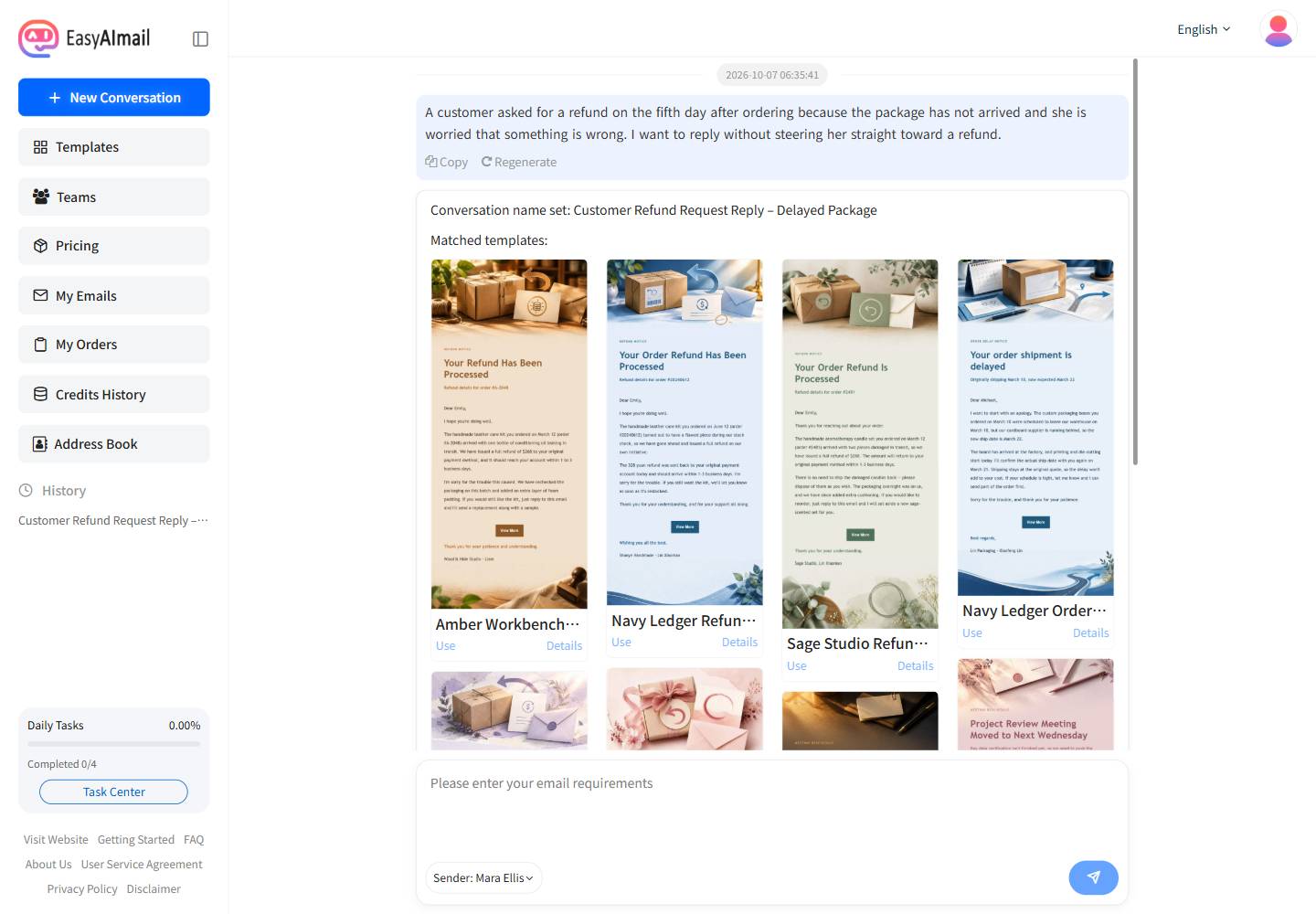
In EasyAImail, start with the human problem: “A customer wants a refund before delivery, and I want to reassure her without pushing a refund.” The conversation can then collect the recipient name, order status, delivery estimate, tracking reference, and tone one question at a time.
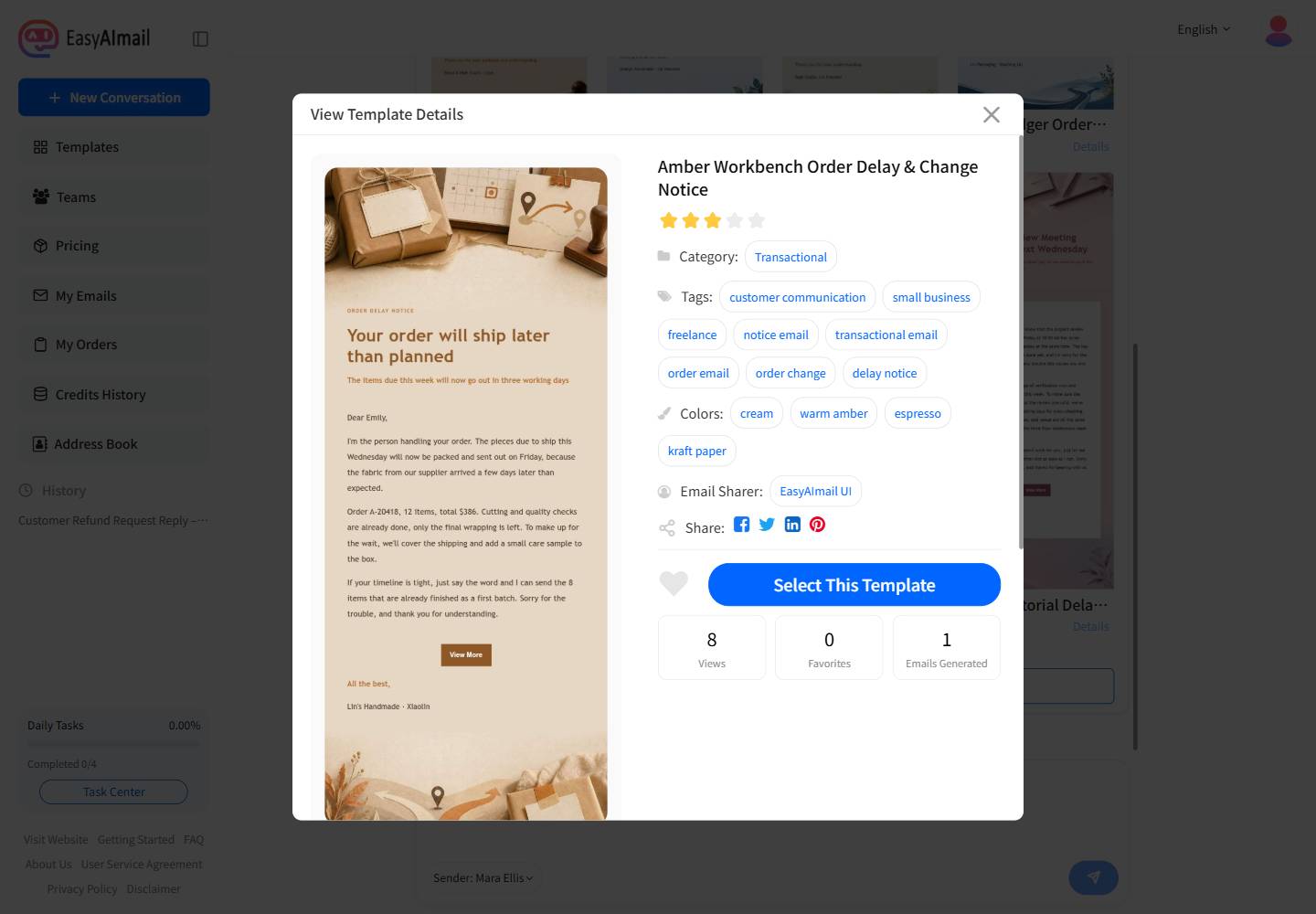
The AI recommends relevant templates, but you choose after reviewing the details. For this English scenario, we selected Amber Workbench Order Delay & Change Notice. Its order-change, delay-notice, customer-communication, and small-business context fits an update that needs facts without a cold system-message feel.
Before generating, check which facts are confirmed, which are only estimates, and which choices the customer genuinely has. That keeps the email honest and useful.
The goal is not to talk a customer out of a refund. It is to give them a clear, accountable reply they can trust.