
A supplier's promised delivery date has passed, and the hard part is not waiting one more day. It is planning everything after it with guesses: is production finished, has anything left the factory, when will there be tracking, and can the warehouse or launch still stay on schedule? Start by not asking only for a quick reply. Ask for current status, risk, and a revised timeline that someone can act on.
This is a buyer following up with a supplier after an overdue delivery. It is not a seller explaining a delay to a customer. You need facts that let you plan, without turning the first firm follow-up into an accusation.
Put the known timeline in order first
Before writing, list the purchase order number, promised date, today's date, whether a dispatch notice or tracking number arrived, and the next date on your own side that depends on the goods.
For example, an order was due last Friday, it is now Sunday, no dispatch notice has arrived, and the warehouse needs the goods next Wednesday. That timeline tells the supplier this is a concrete operational question, not a vague complaint.
Do not ask only for a quick reply
“Please reply as soon as possible” often produces “we are arranging it” or “it will go soon,” neither of which helps you plan. Break the update into useful questions:
- Is production complete?
- Have the goods left the factory?
- If not, when can a tracking number be provided?
- Is there any risk that could affect the revised date?
- When can the supplier send an actionable update?
That is not needless pressure. It turns an open-ended chase into delivery facts both sides can check.
Explain the impact without making it a threat
Your supplier needs to know why a clear update matters. A warehouse booking, launch date, customer commitment, or next production step may depend on it. You do not need to open with a cancellation threat.
“We need to hand the goods to our warehouse next Wednesday, so we need to adjust the downstream plan based on the actual status” is firm and factual. It explains the stakes without presuming bad faith.
Request a new timetable, not reassurance
A new date should connect to an action. “By noon tomorrow, please confirm production status, factory departure, expected tracking, and any risk to the revised date” is more useful than “please ship soon.”
If the supplier cannot yet give a final delivery date, ask for the next update point. Uncertainty may remain, but it becomes manageable when it has a named check-in rather than an empty promise.
The five parts of an overdue-delivery follow-up
- State the purchase order and original due date.
- Name the information you have not received.
- Ask for production, dispatch, tracking, and risk status.
- Explain the downstream date that needs this update.
- Set a reasonable, specific reply deadline.
Be direct, but give the supplier one doable task. Do not try to investigate fault, negotiate compensation, demand expedited shipment, change the order, and threaten cancellation in one first email unless those are already necessary and decided.
Supplier delivery follow-up email example
Subject: Please confirm the current delivery and dispatch plan for PO-NH-1048
Dear Daniel,
I am following up on purchase order PO-NH-1048. The agreed delivery date was last Friday, and we have not yet received a dispatch notice or tracking number.
We need to hand the scented glass jars to our warehouse by next Wednesday, so could you please confirm:
- Whether production is complete;
- Whether the goods have left the factory;
- When a tracking number can be provided if they have not shipped; and
- Whether there is any risk that could affect a revised delivery or dispatch date.
Please send an actionable updated timeline by noon tomorrow so we can adjust the next steps on our side. We would like to keep the plan aligned with the actual status.
Thank you,
Mara Fielding Northfield Home Goods | Procurement Operations Lead
The order, dates, product, and people in this example are fictional. Replace them with verified purchase records and the constraints that apply to your situation.
Use EasyAImail to build the follow-up one fact at a time
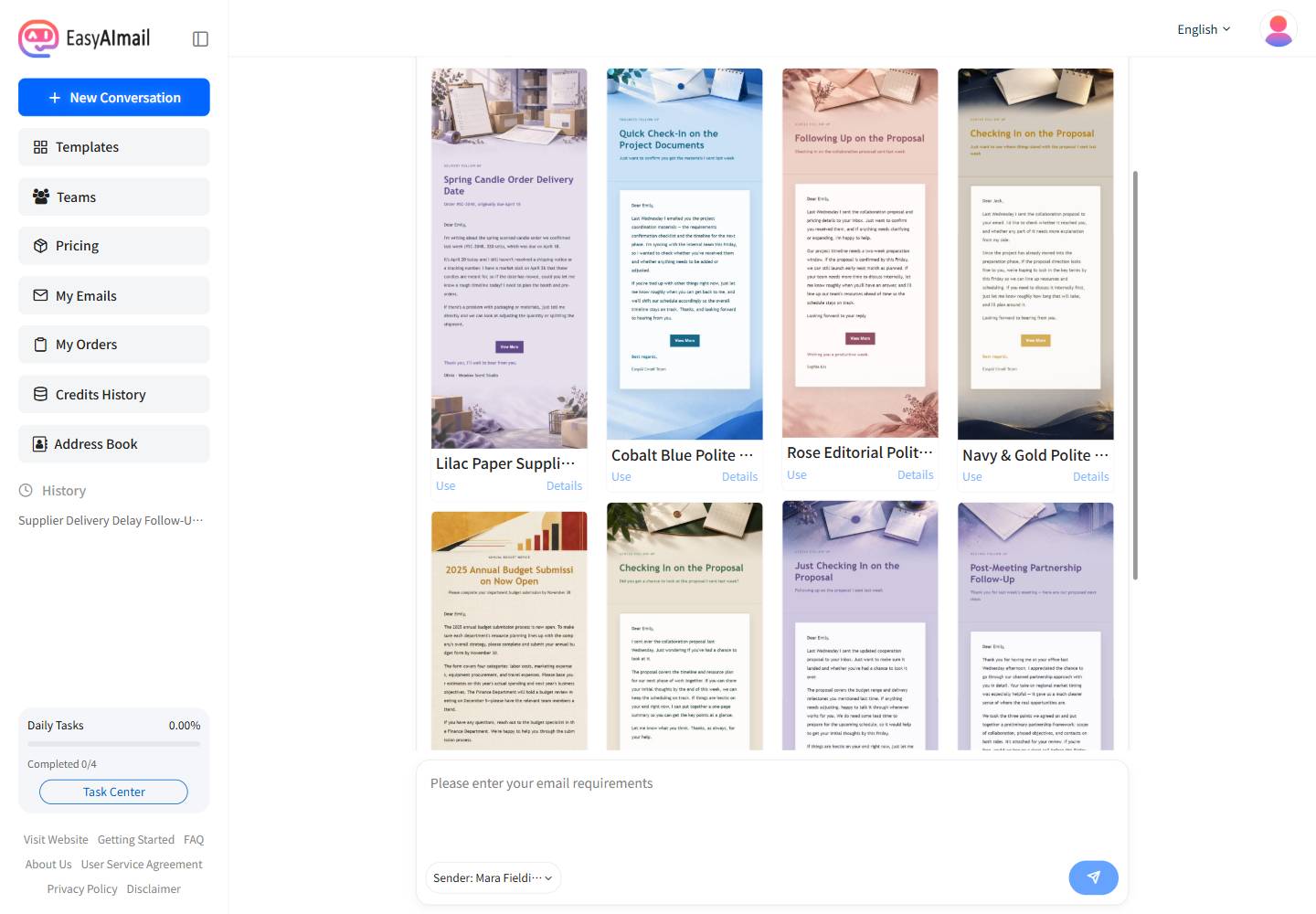
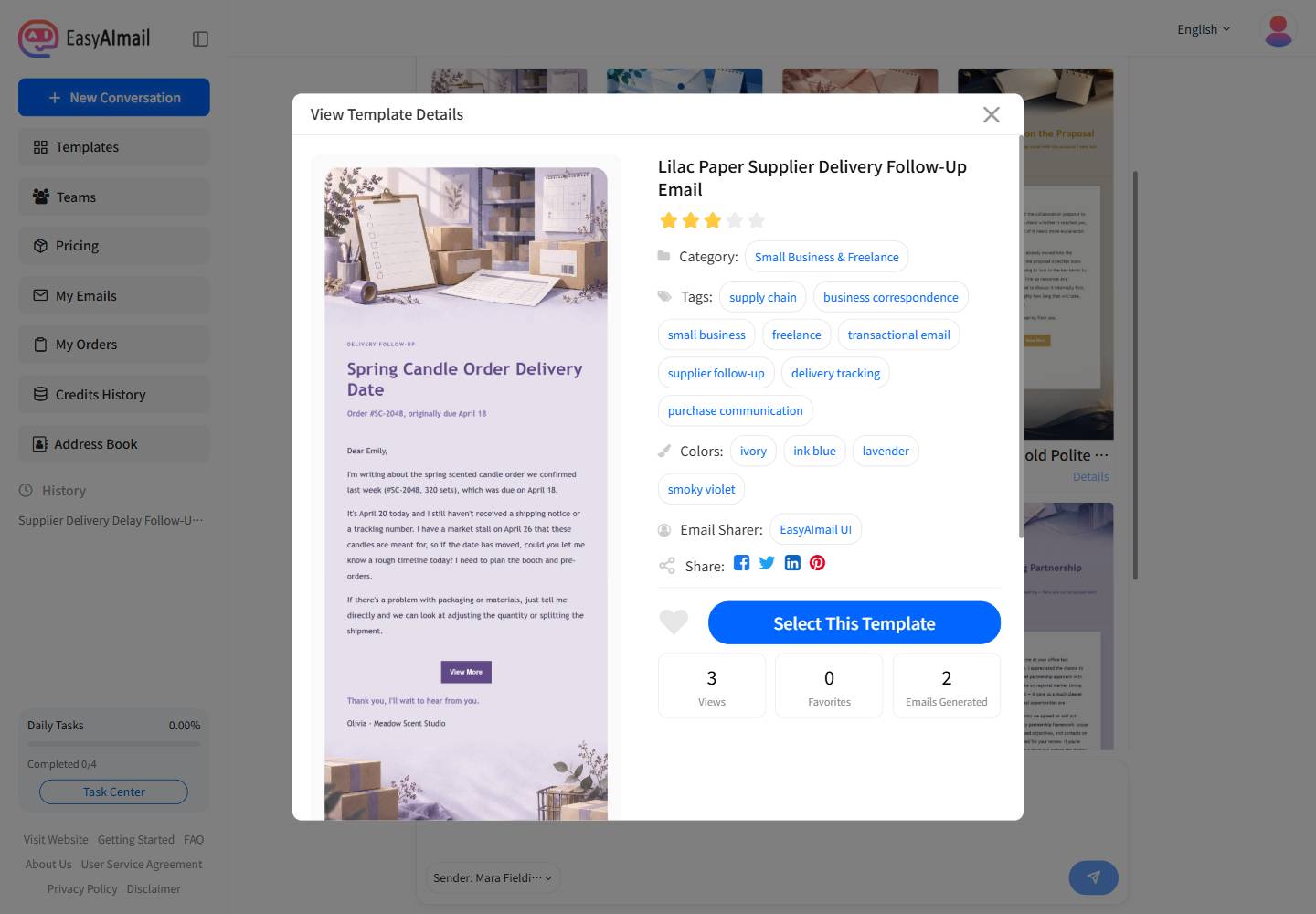
You can begin with the real concern: “The delivery date passed two days ago and I need the actual status and revised timing.” Then add the supplier relationship, order reference, dates, downstream impact, salutation, and tone as the conversation asks for them. EasyAImail recommends templates, but the user opens the details, reviews the purpose, tags, colours, and example, and chooses the template personally before inspecting the draft.
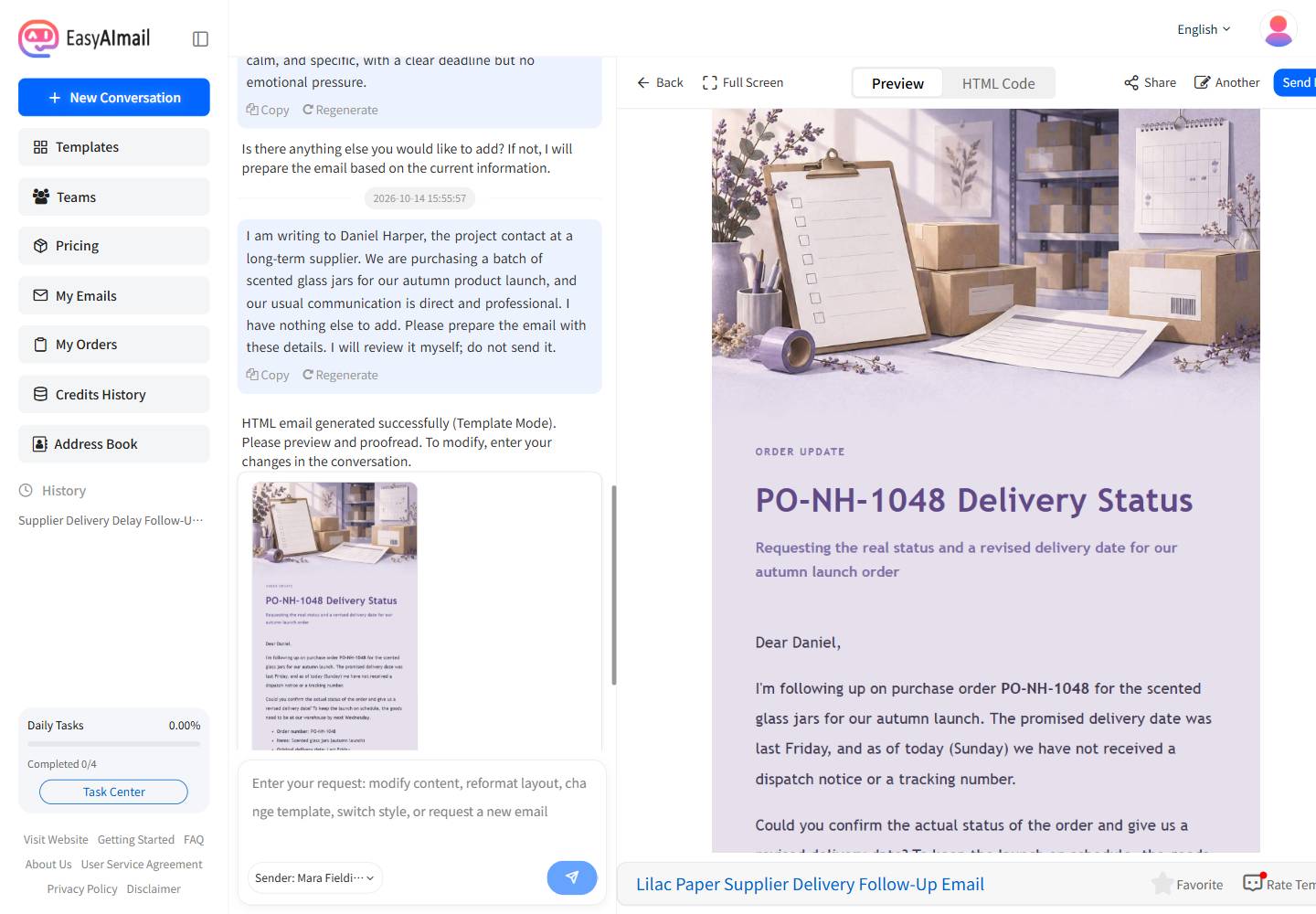
In this English-interface test, the user selected Lilac Paper Supplier Delivery Follow-Up Email. Its visible description is specifically for politely chasing late supplier deliveries, with space for the order number, promised date, and next step. The lilac paper, ivory, ink-blue, and smoky-violet layout kept the operational facts readable.
This test generated and reviewed the email only. No recipient address was entered and the Send Email action was not used. The fictional company and procurement role remained visible in the preview for a final signature check.
If the supplier's delay changes what you promised externally, use a separate client delay email to update your customer. Earlier in a purchase relationship, a clear quote and inquiry reply makes dates, responsibility, and next steps easier to confirm later.
Before you send
- Are the order number, original date, and current date correct?
- Have you asked about production, dispatch, tracking, and risk?
- Does the supplier understand the downstream impact without being threatened?
- Is the reply deadline realistic and clear?
- Does the requested timetable contain actions, not just “as soon as possible”?
FAQ
Should I write as soon as the date is one day late?
It depends on the order and prior agreement. If a dispatch notice was expected or your next schedule is tight, checking status early is usually more professional than waiting. Account for any agreed weekend or holiday schedule.
What if the supplier replies only that they are handling it?
Ask for a verifiable point: production completion, factory departure, or the expected time for a tracking number. Do not simply repeat the request for a quick reply.
When should I discuss compensation or cancellation?
Check the contract, purchase terms, and actual impact. The first factual follow-up is for getting the real status. If non-performance or material loss is confirmed, move to the formal options that your agreement supports.
Before you send it, make the next update easy to deliver. A specific request protects your schedule without turning an uncertain situation into an unnecessary fight.
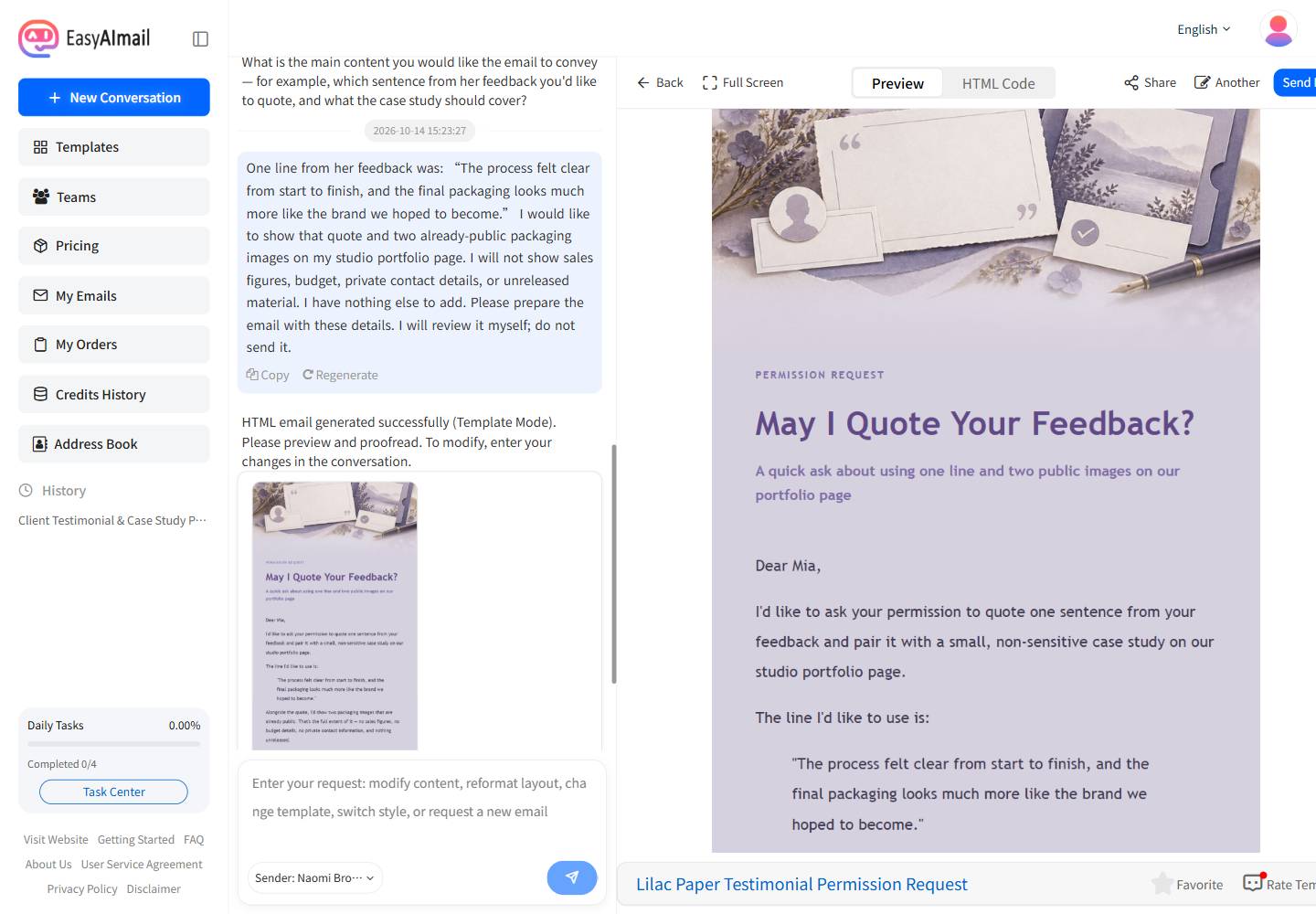
How to Ask a Client for Permission to Use a Testimonial or Case Study
Ask a client for permission to publish a testimonial or case study with a clear, respectful email that makes the scope and their choices explicit.
Read more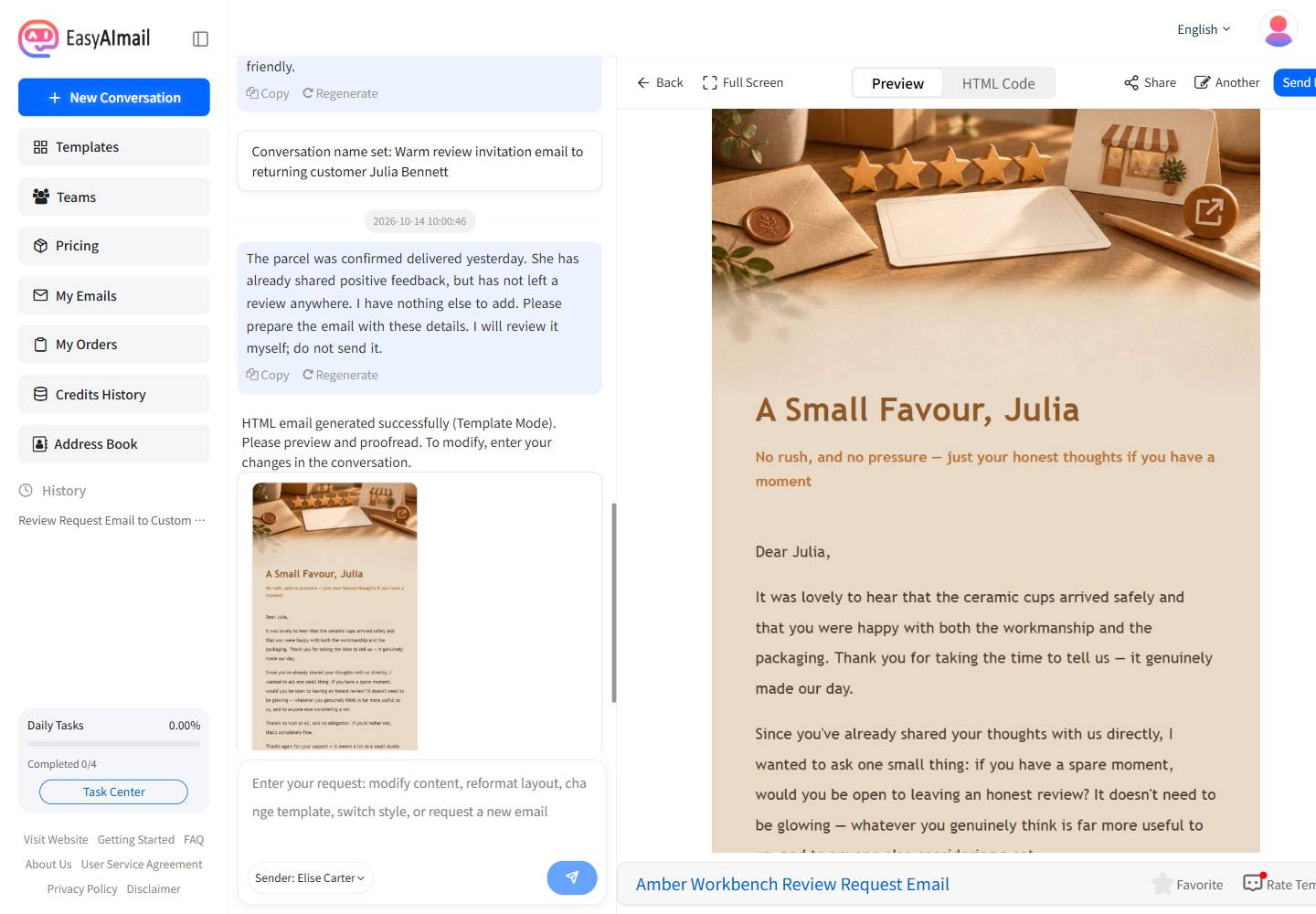
How to Ask a Happy Customer for a Review Without Sounding Pushy
Learn how to invite a satisfied customer to leave an honest review with a clear, low-pressure email that respects their time.
Read more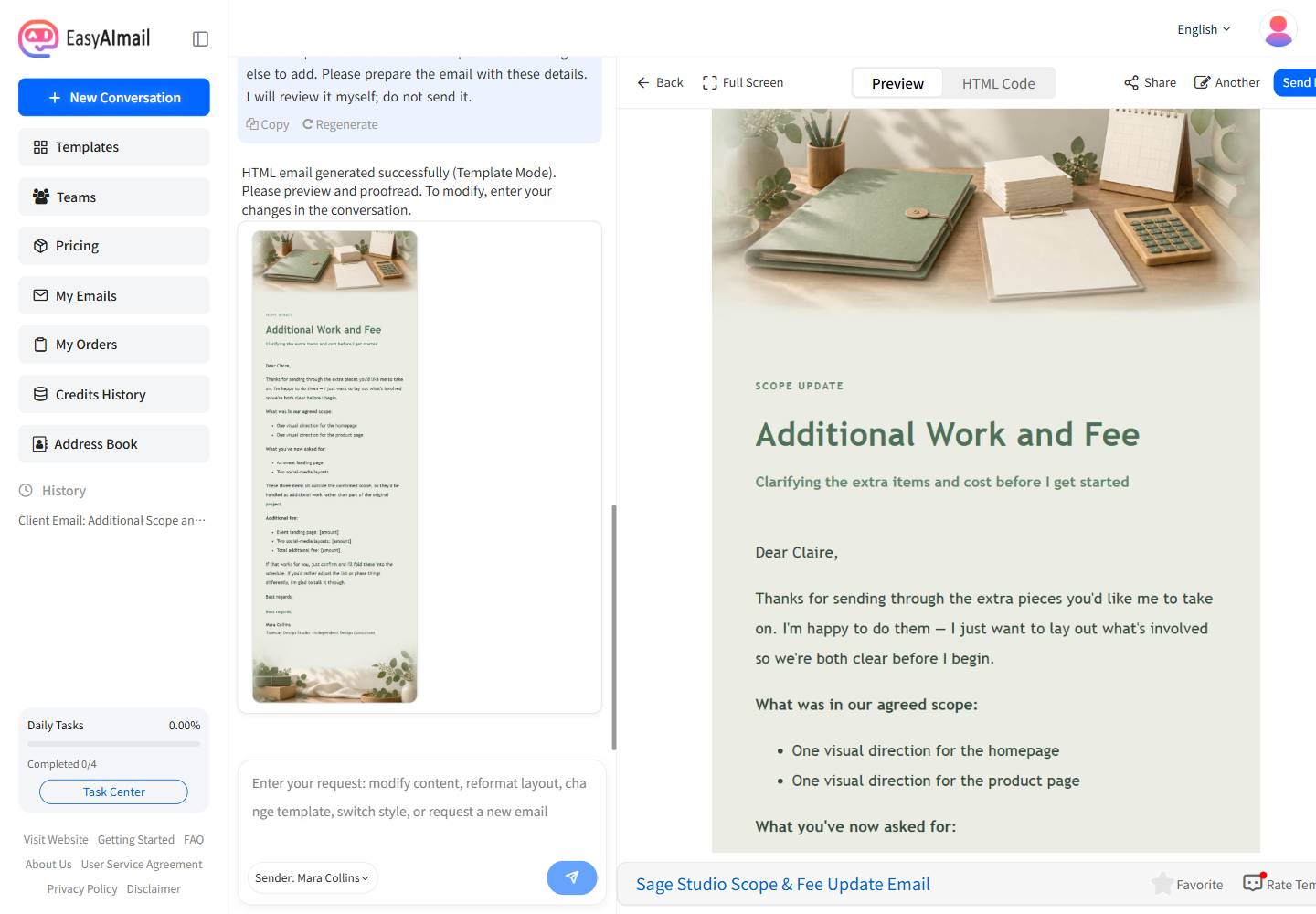
How to Tell a Client Extra Work Is Outside the Original Scope
Learn how to confirm added work, scope, fees, and timing with a client without sounding defensive or doing unpaid extra work.
Read more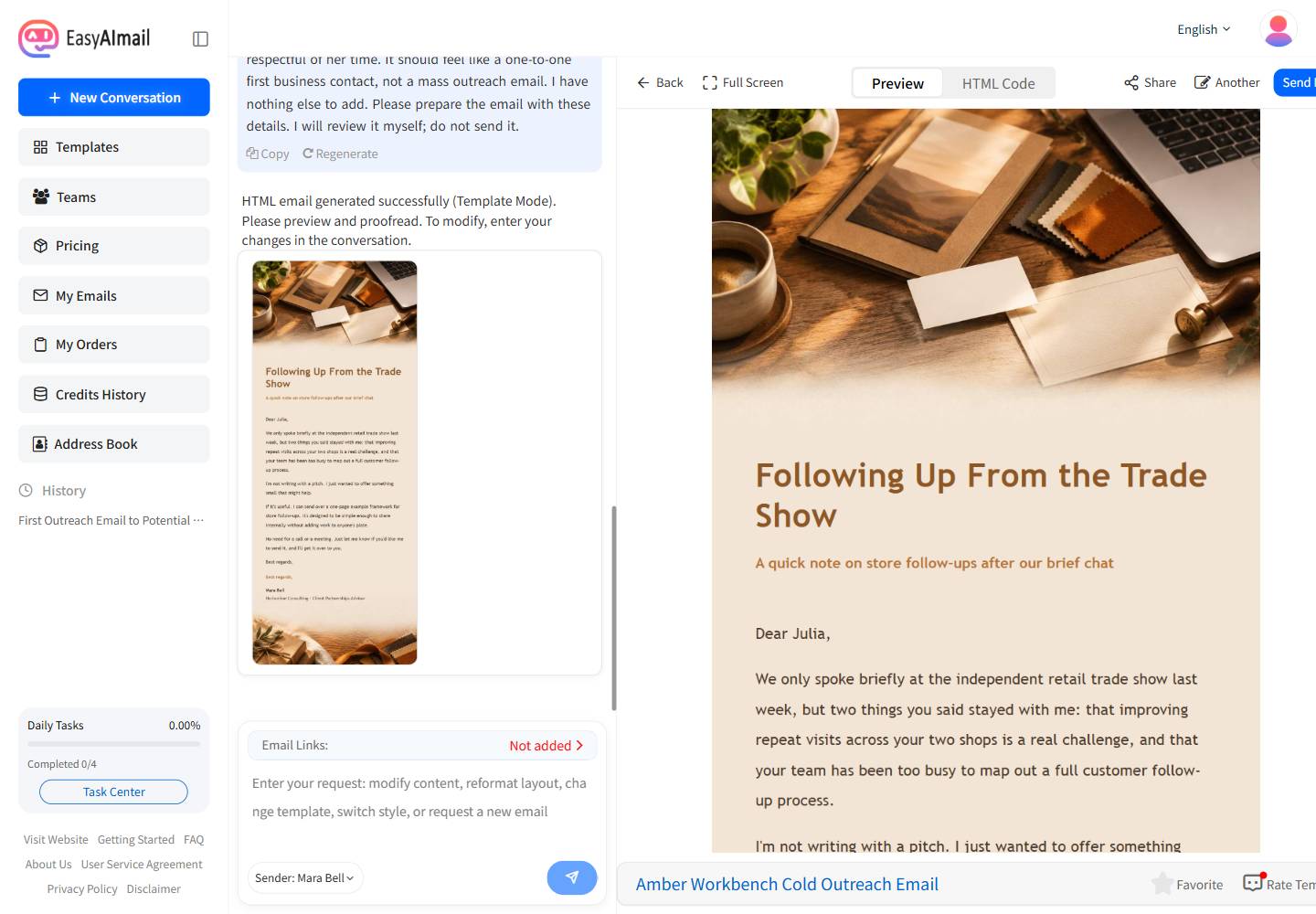
How to Write a First Email to a New Client Without Sounding Like a Sales Pitch
Learn how to write a first email to a new client with a relevant reason to reach out, a clear value, and a low-effort next step.
Read more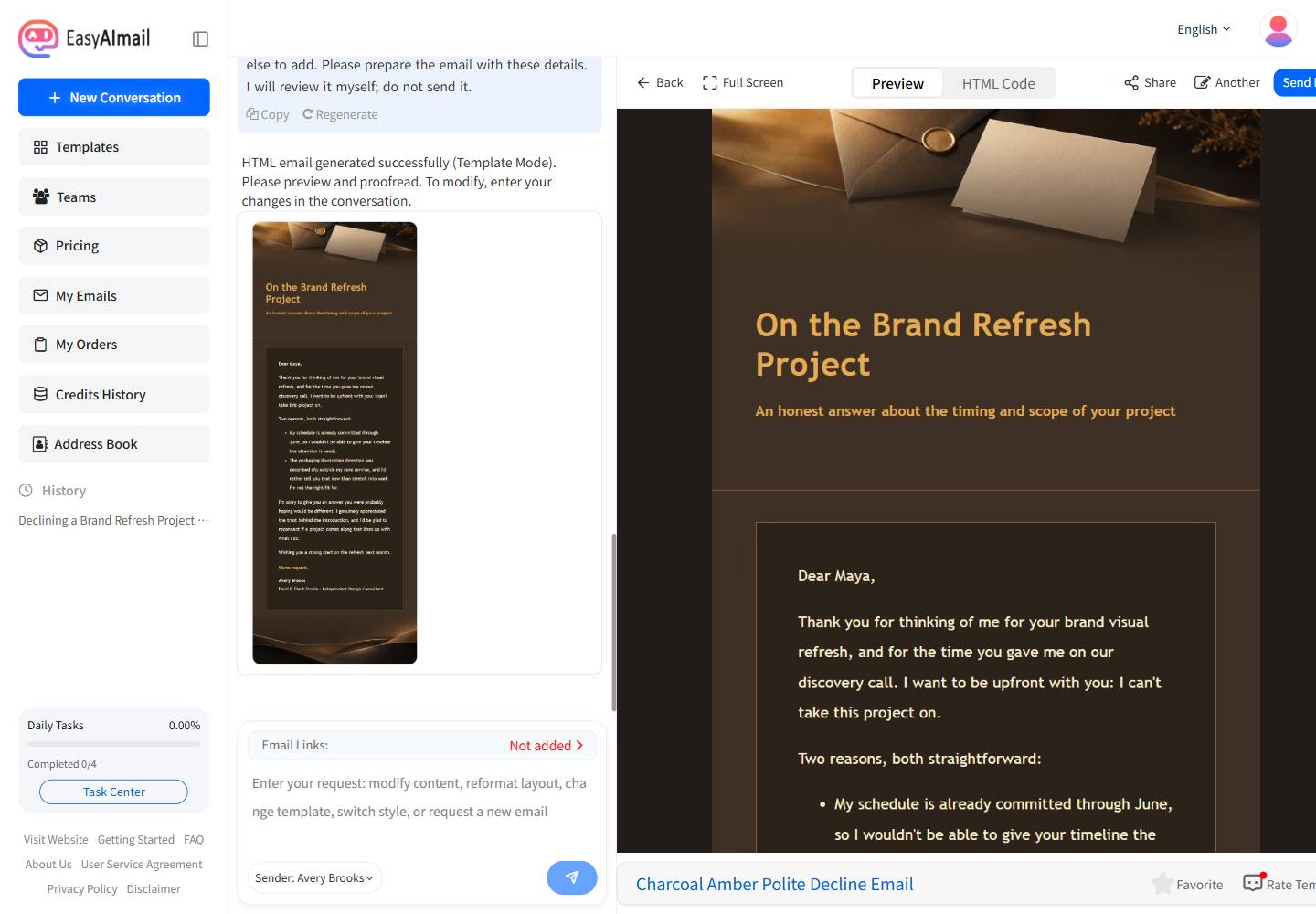
How to Politely Decline a Client Without Damaging the Relationship
Learn how to politely decline a client by stating the answer clearly, giving a brief real reason, and knowing when an alternative is useful.
Read more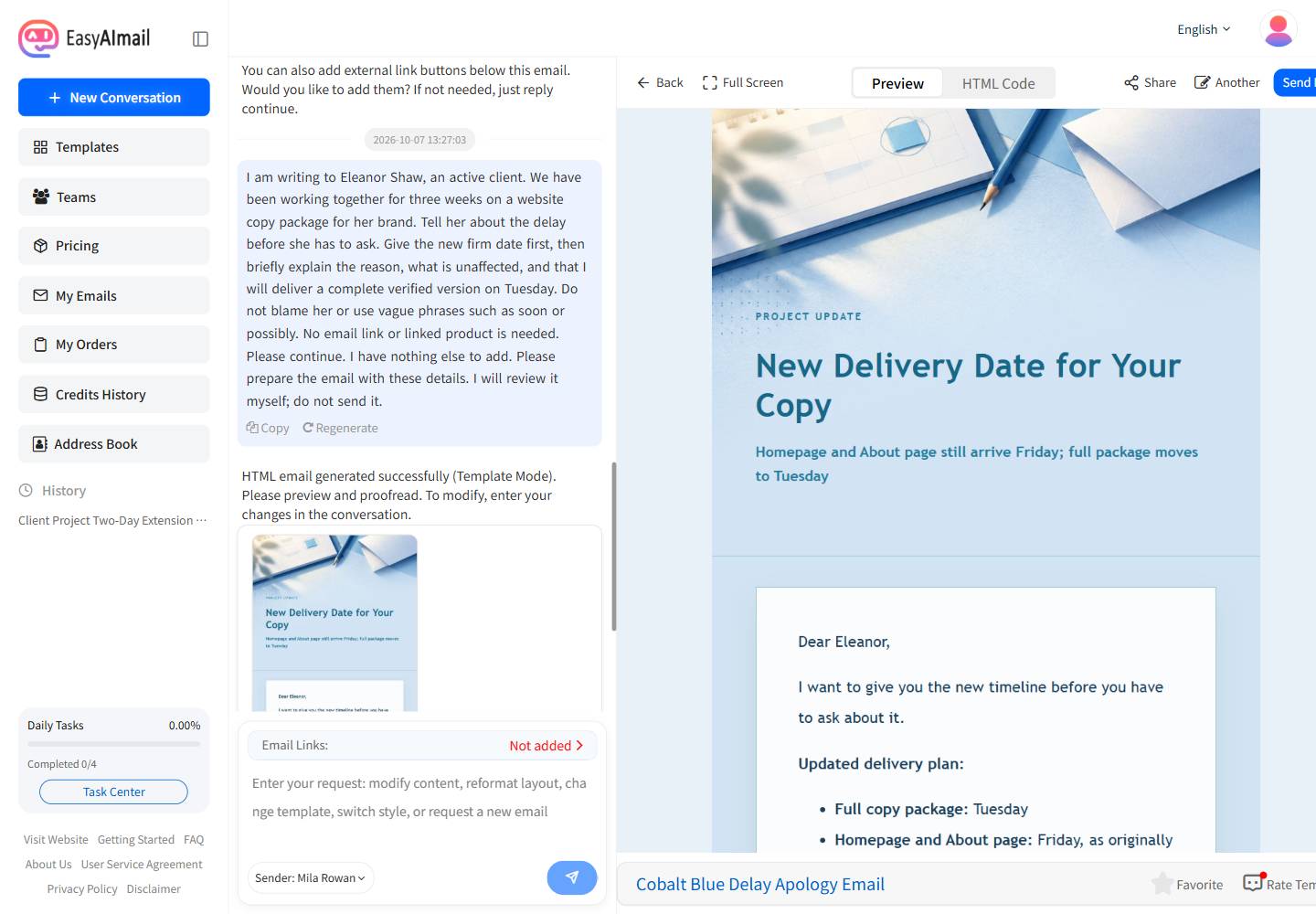
How to Tell a Client About a Delay Before They Have to Ask
Learn how to tell a client about a delay with a reliable new date, a brief reason, the affected scope, and a clear next step.
Read more