
A customer has just told you she loves the order. That is often the moment a small business owner hesitates: is it natural to ask for a review now, or will it turn a good experience into pressure for five stars? Start by thanking the customer for feedback they have already given, then invite an honest review when it is convenient. Do not ask for a rating or rush them.
The point is not to make the request more enthusiastic. It is to make the customer's choice feel safe. A useful review request gives someone room to say what was good, what could improve, or nothing at all.
Ask after a real experience, not after a transaction status
The best moment is usually after the customer has actually used the product or received the service. A delivery confirmation alone is not much evidence; a message saying that she liked the workmanship, packaging, or result is.
Hold off if the order is still in transit, a support issue is open, or the customer has not had enough time to form an opinion. A review email sent too early can make a business look more concerned with ratings than with the experience behind them.
Ask for an honest review, not a five-star review
“Please leave us five stars” is clear, but it makes the customer responsible for protecting your business. It also leaves little room for useful nuance.
An honest-review invitation is different. It says that a real account of the experience is valuable, whether it mentions a favourite detail or something that could have gone better. That is more credible to future customers and more useful to you.
Give the customer one small next step
One email should ask for one thing: a review, on one named platform, when the customer has time. Put the link where it is easy to find and keep the surrounding copy short.
Do not combine the request with a referral, a social follow, a photo submission, and another purchase. Those are different favours. A message that asks for too much makes even a willing customer postpone all of it.
Keep pressure out of the wording
Avoid language that suggests the customer owes you a review because you are a small business, or that a positive rating is the only acceptable outcome. Avoid pre-written praise, artificial deadlines, and rewards that depend on a favourable review.
You can say that feedback helps other people understand what you offer. Then make it equally clear that the customer does not need to fit it into a busy week. That is not weak wording. It is what keeps the ask human.
What a low-pressure review request includes
- A thank-you for feedback already shared.
- One specific reference to the order or service.
- An invitation to describe the experience honestly.
- A clear review link.
- Permission to decline or do it later.
Specificity matters more than length. One sentence about a handmade cup set, a completed design project, or a repaired item tells the recipient that you remember the interaction.
Review request email example
Subject: Thank you for your kind note about your ceramic cups
Dear Julia,
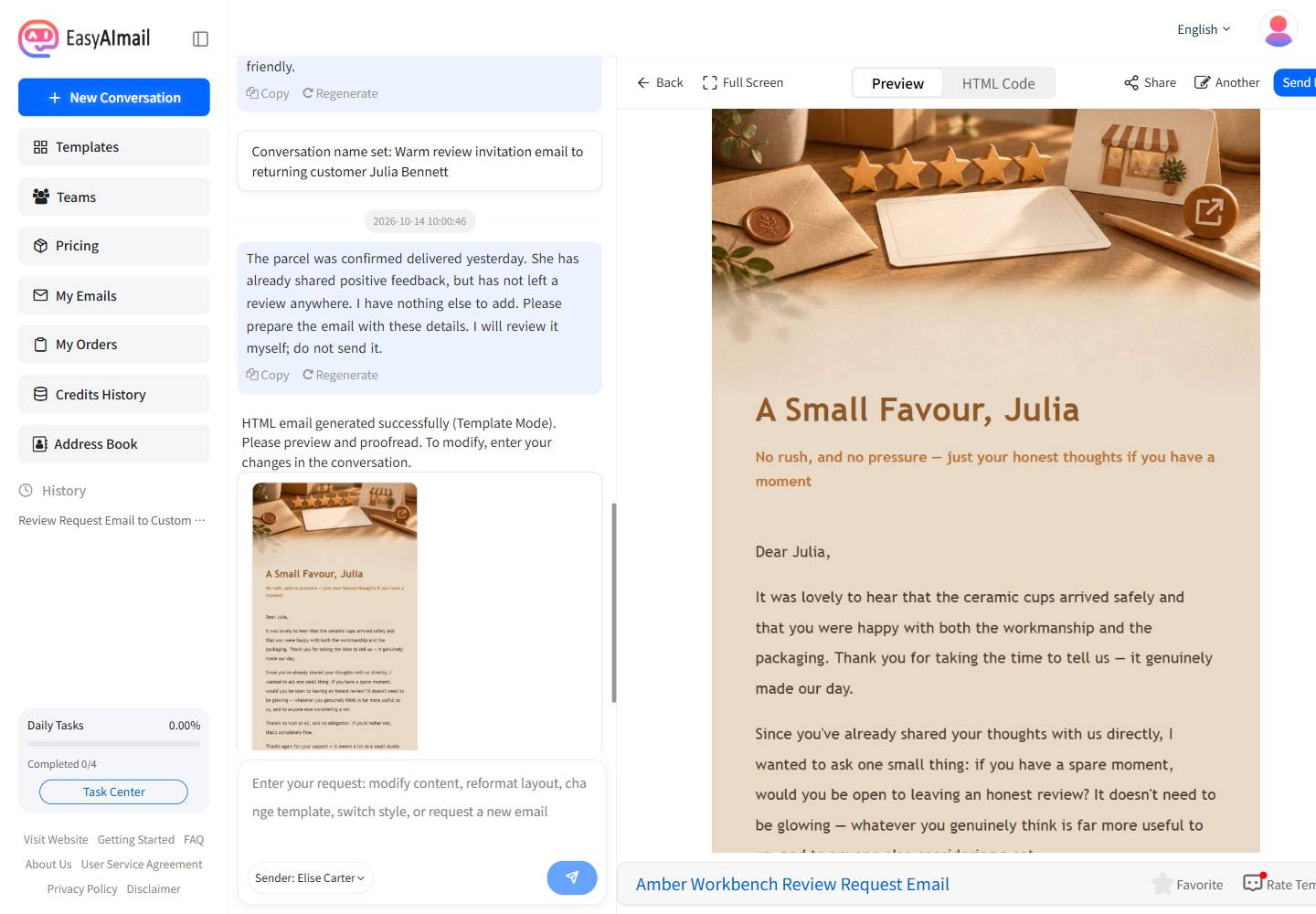
Thank you for taking the time to tell us that you loved the workmanship and packaging of your ceramic cup set. It meant a great deal to hear that.
If it feels useful and you have a moment, would you be open to sharing an honest review on our review page? A few words about your experience, including anything we could improve, would be genuinely helpful.
[Add review link here]
There is no rush at all, and no need to do this if now is not a good time. Thank you again for choosing us.
Warmly,
Elise Carter Willow Hearth Studio | Customer Relations Advisor
The people, business, and order in this example are fictional. Replace the link and details with facts from the actual customer relationship.
Use EasyAImail to keep the request personal
You do not need to draft the whole note before you start. Tell EasyAImail what happened, then answer the follow-up questions about the relationship, delivery, salutation, and tone as they come up. The AI recommends templates; it does not choose one for you. You can open the details, inspect the purpose, tags, colours, and example, choose a template yourself, and review the generated message.
In this English-interface test, the user selected Amber Workbench Review Request Email. Its visible description is for small shops and independent professionals asking for public feedback, and its amber paper treatment was designed to feel more like a considered note than a system notification.
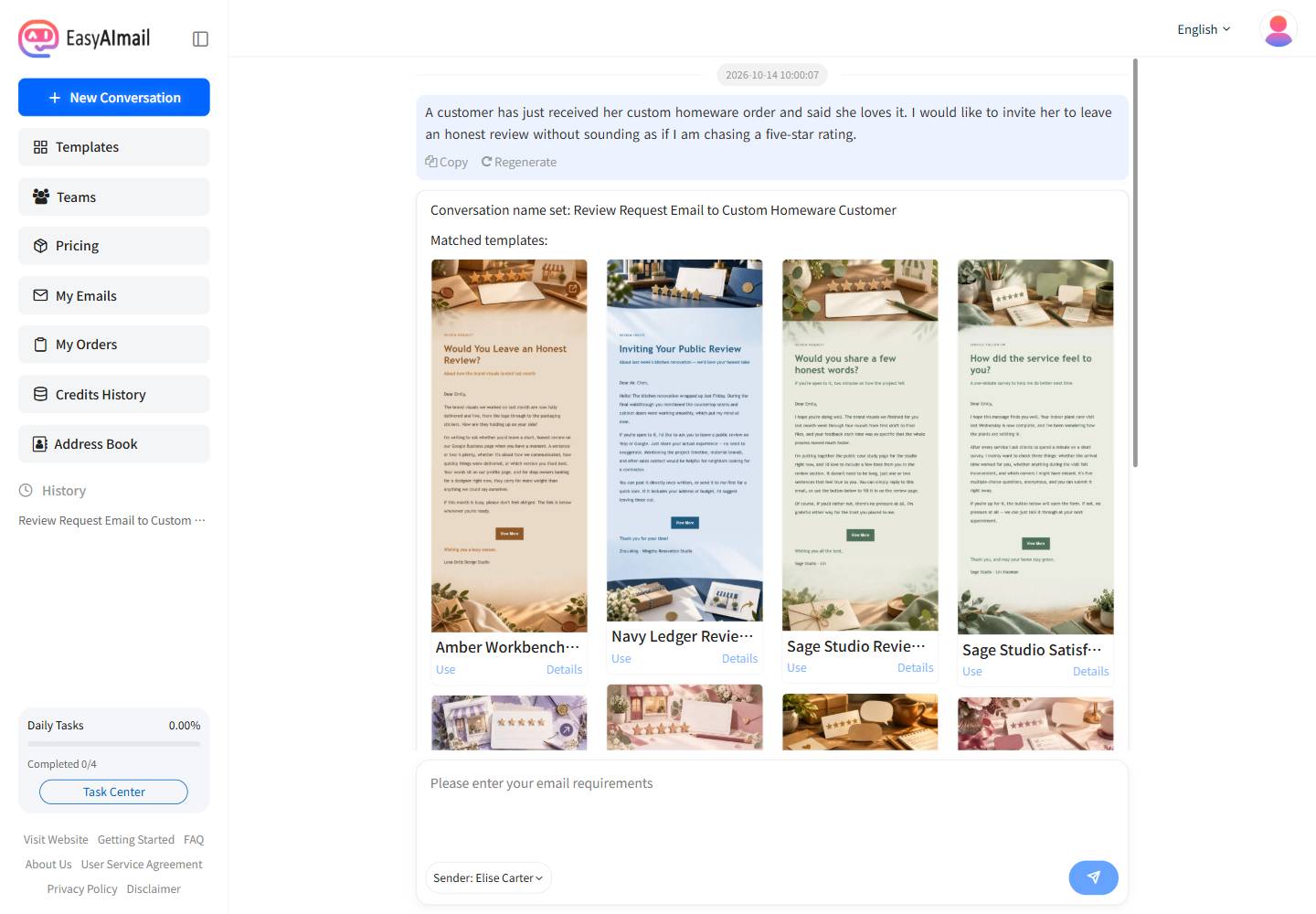
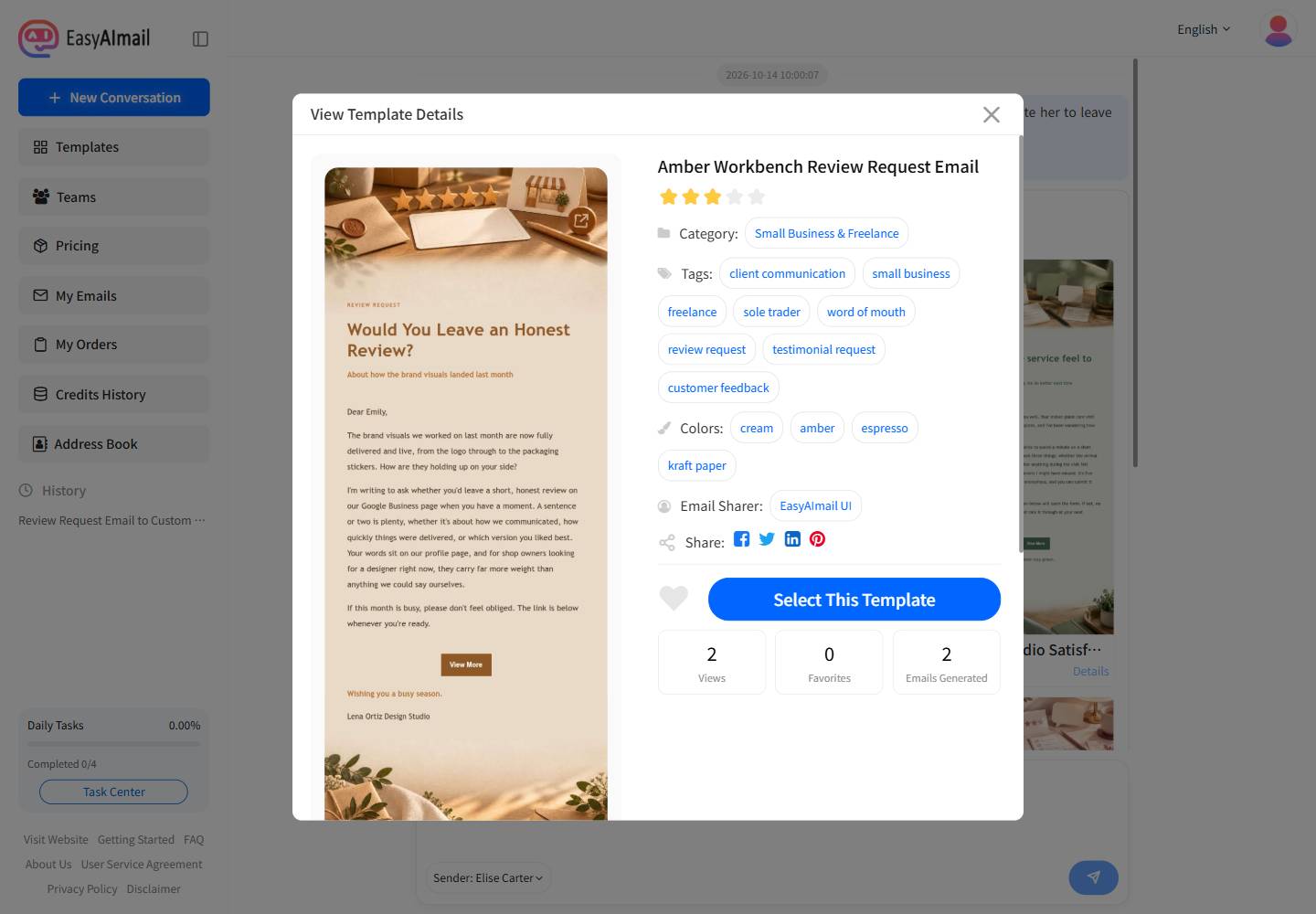
This test generated and reviewed the email only. No recipient address was added and the Send Email action was not used. The preview kept the fictional business name and role visible so the signature could be checked.
Once a customer has chosen to leave feedback, a referral request email is a separate, later conversation. Earlier in the relationship, a clear quote and inquiry reply makes a later request for feedback feel less abrupt.
Before you send
- Has the customer had enough time to experience what they bought?
- Does the email invite an honest opinion rather than a particular score?
- Is there only one main action and one working link?
- Would the message still feel respectful if the customer never replied?
- Does the wording sound like it belongs to this customer, not a campaign list?
FAQ
Should I ask every customer for a review?
Not automatically. Prioritise customers who have completed the experience and are not waiting on a problem to be fixed. A smaller number of well-timed requests is better than a blanket message at the wrong moment.
Can I offer a discount for a review?
Check the rules of the platform first. More importantly, do not make a benefit conditional on a positive review. The request should leave room for an honest opinion.
Should I ask for a referral in the same email?
No. A review asks someone to describe their experience. A referral asks them to introduce you to someone else. Those are different commitments and work better as separate messages.
Before you send it, make the request feel optional. The review is more valuable when the customer can say yes freely, and the relationship is better protected when they can say nothing without consequence.
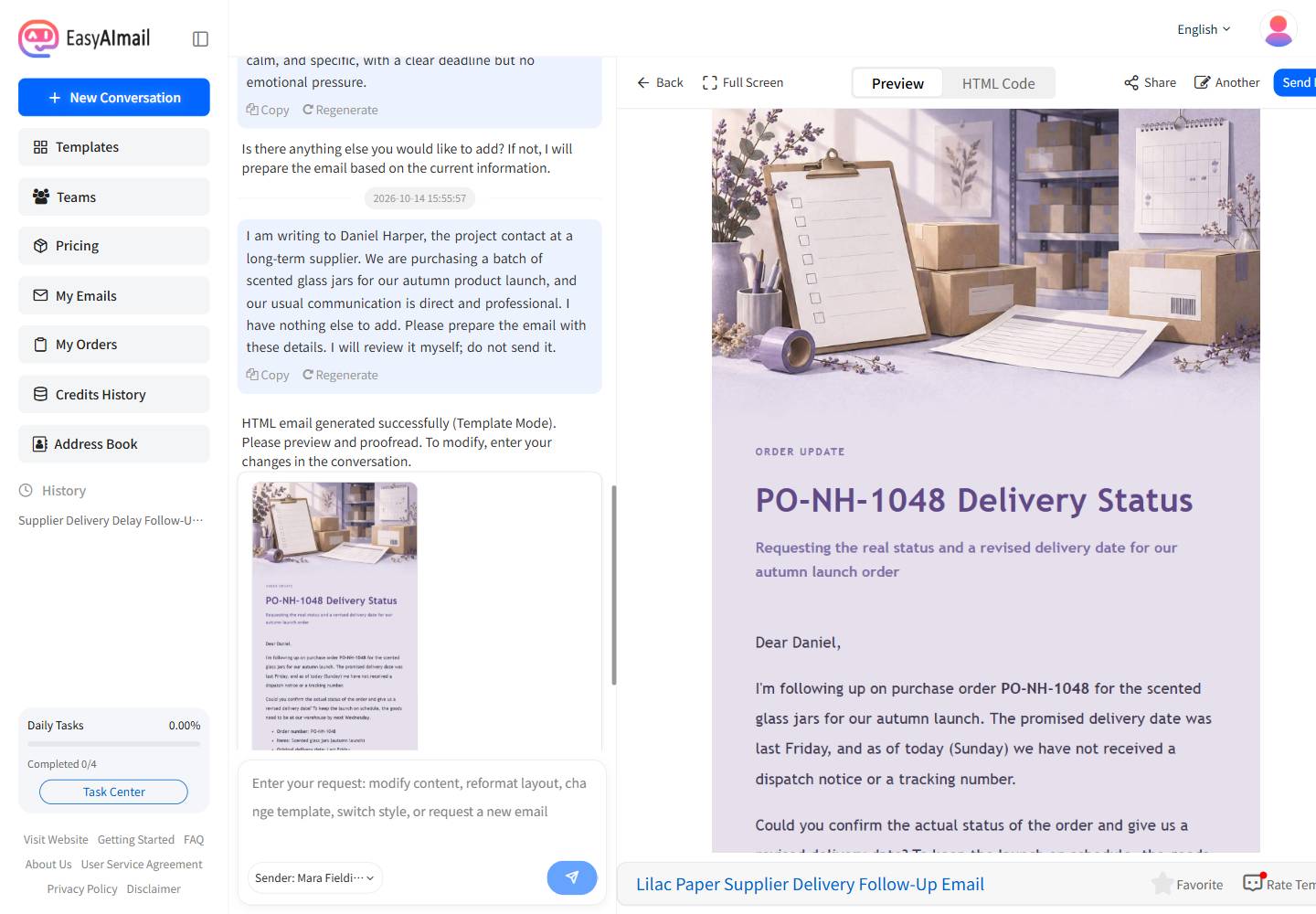
How to Follow Up With a Supplier When a Delivery Date Has Passed
Learn how to request a factual production and shipment update from a supplier after a promised delivery date has passed, without vague or hostile wording.
Read more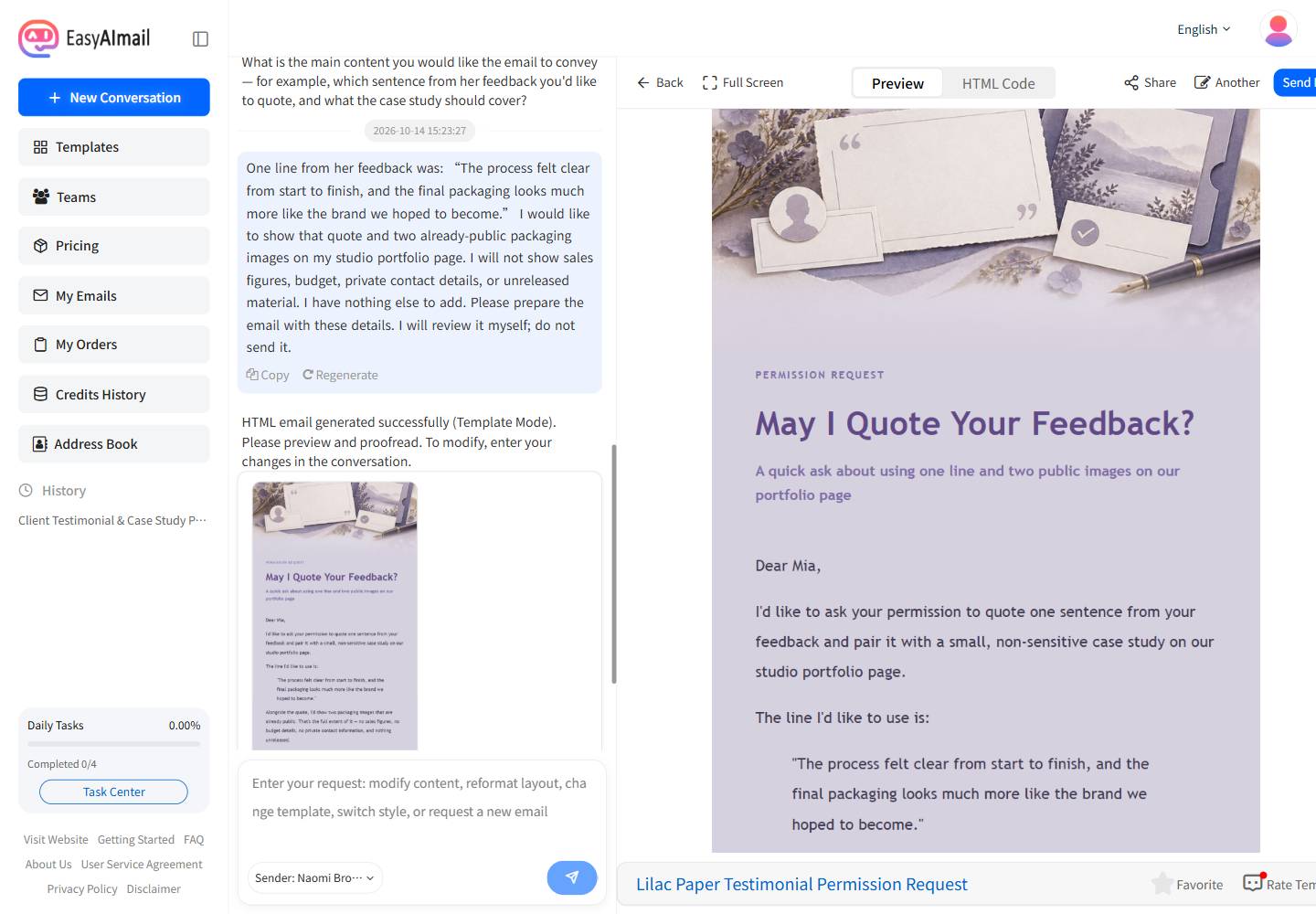
How to Ask a Client for Permission to Use a Testimonial or Case Study
Ask a client for permission to publish a testimonial or case study with a clear, respectful email that makes the scope and their choices explicit.
Read more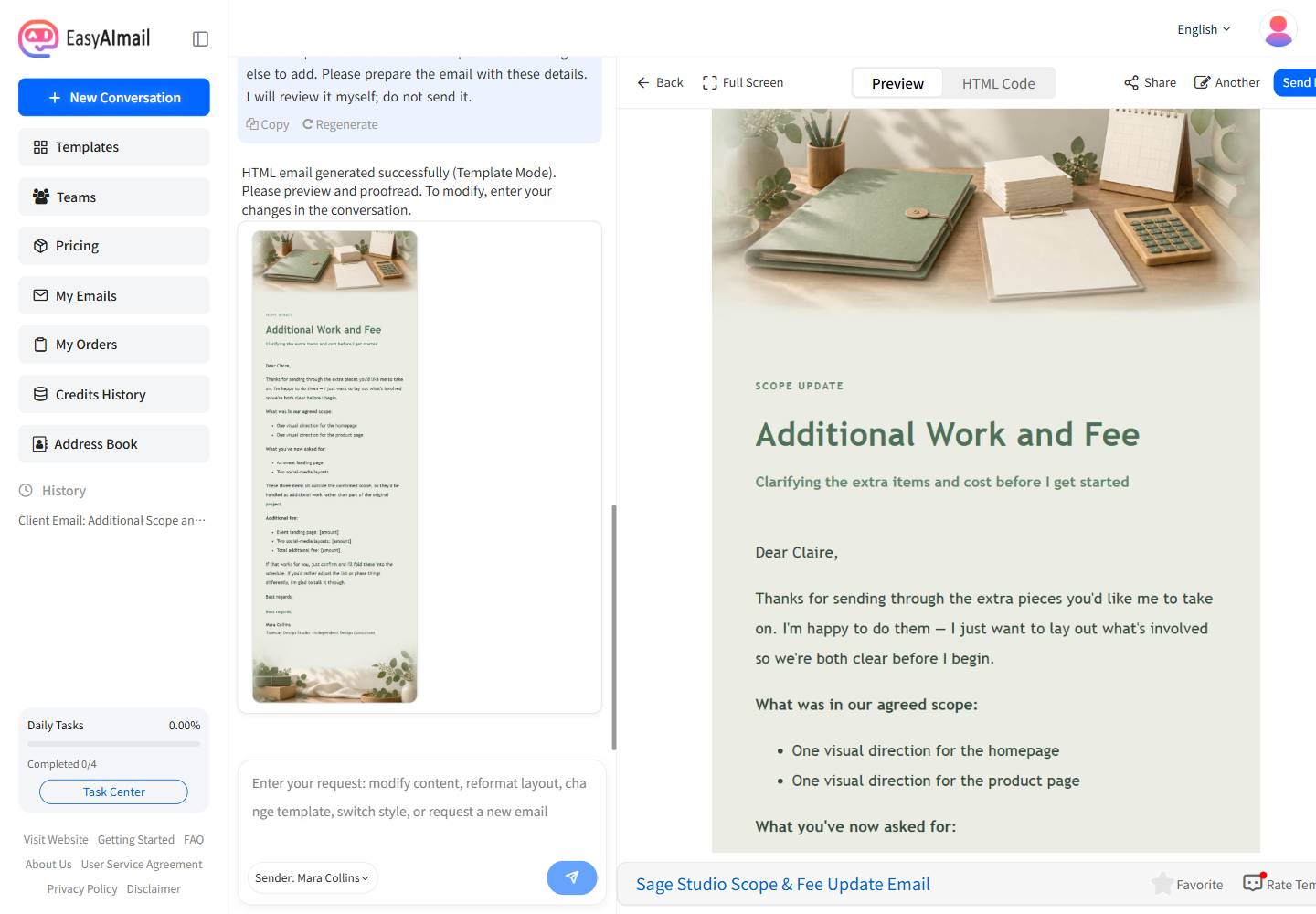
How to Tell a Client Extra Work Is Outside the Original Scope
Learn how to confirm added work, scope, fees, and timing with a client without sounding defensive or doing unpaid extra work.
Read more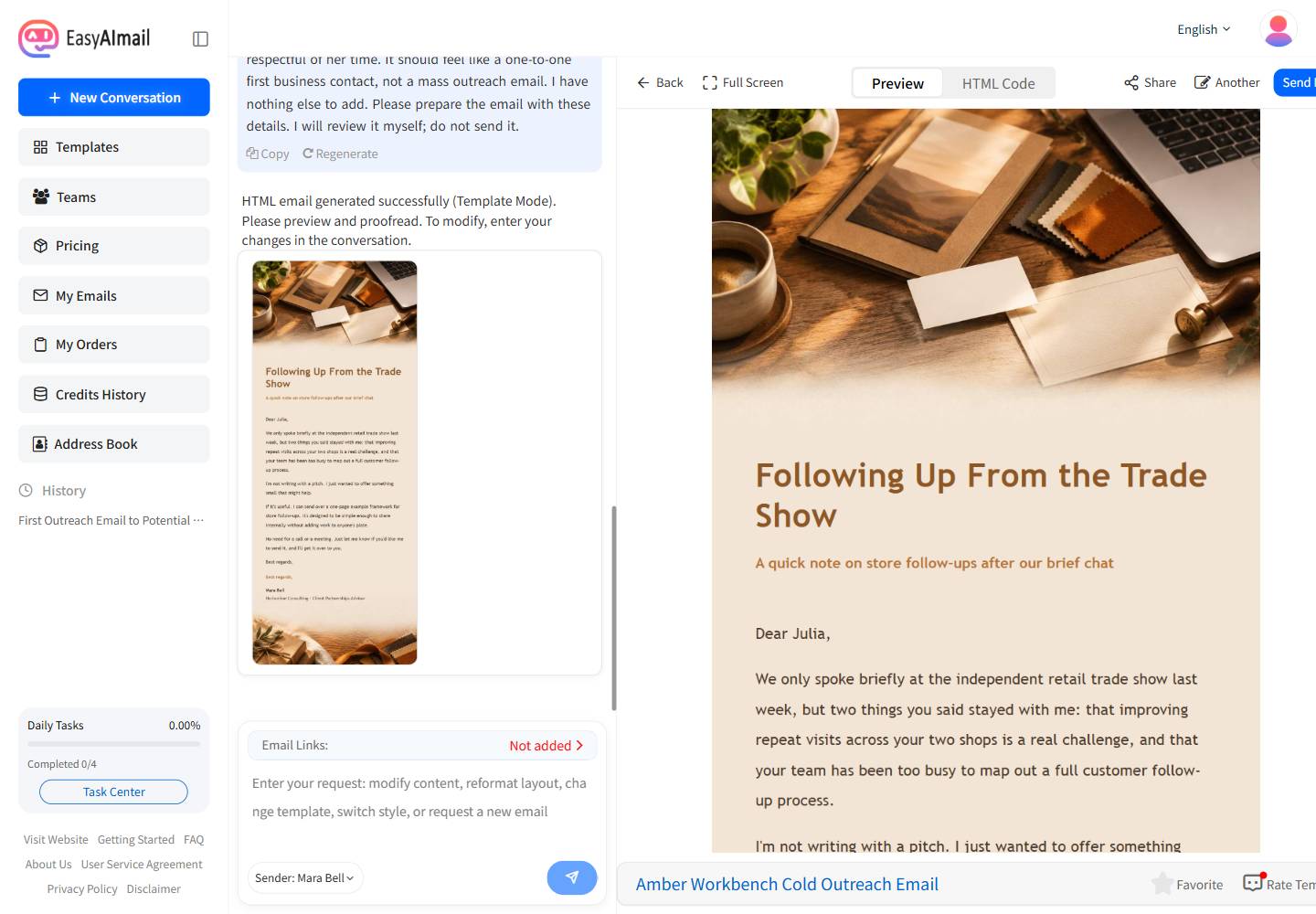
How to Write a First Email to a New Client Without Sounding Like a Sales Pitch
Learn how to write a first email to a new client with a relevant reason to reach out, a clear value, and a low-effort next step.
Read more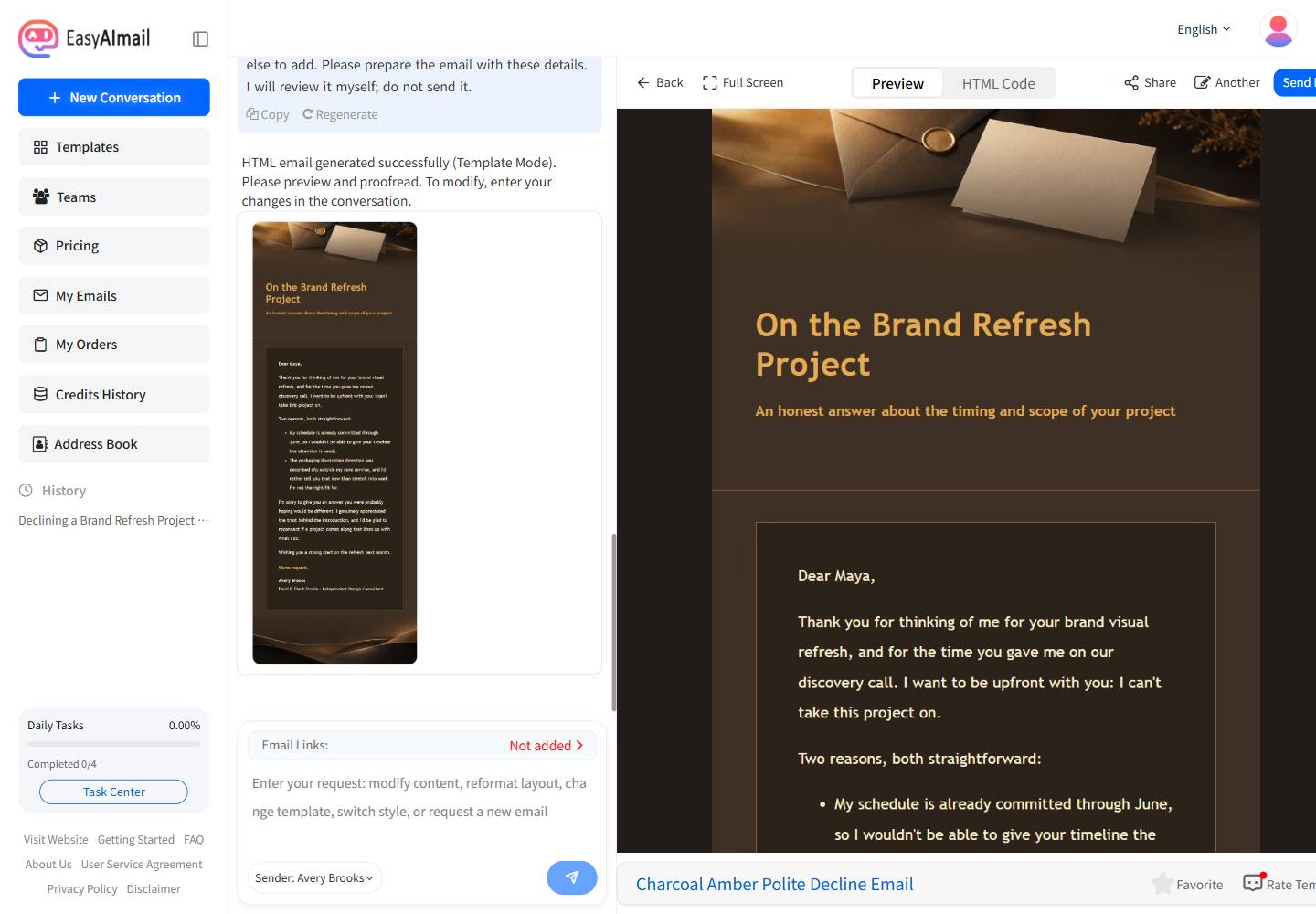
How to Politely Decline a Client Without Damaging the Relationship
Learn how to politely decline a client by stating the answer clearly, giving a brief real reason, and knowing when an alternative is useful.
Read more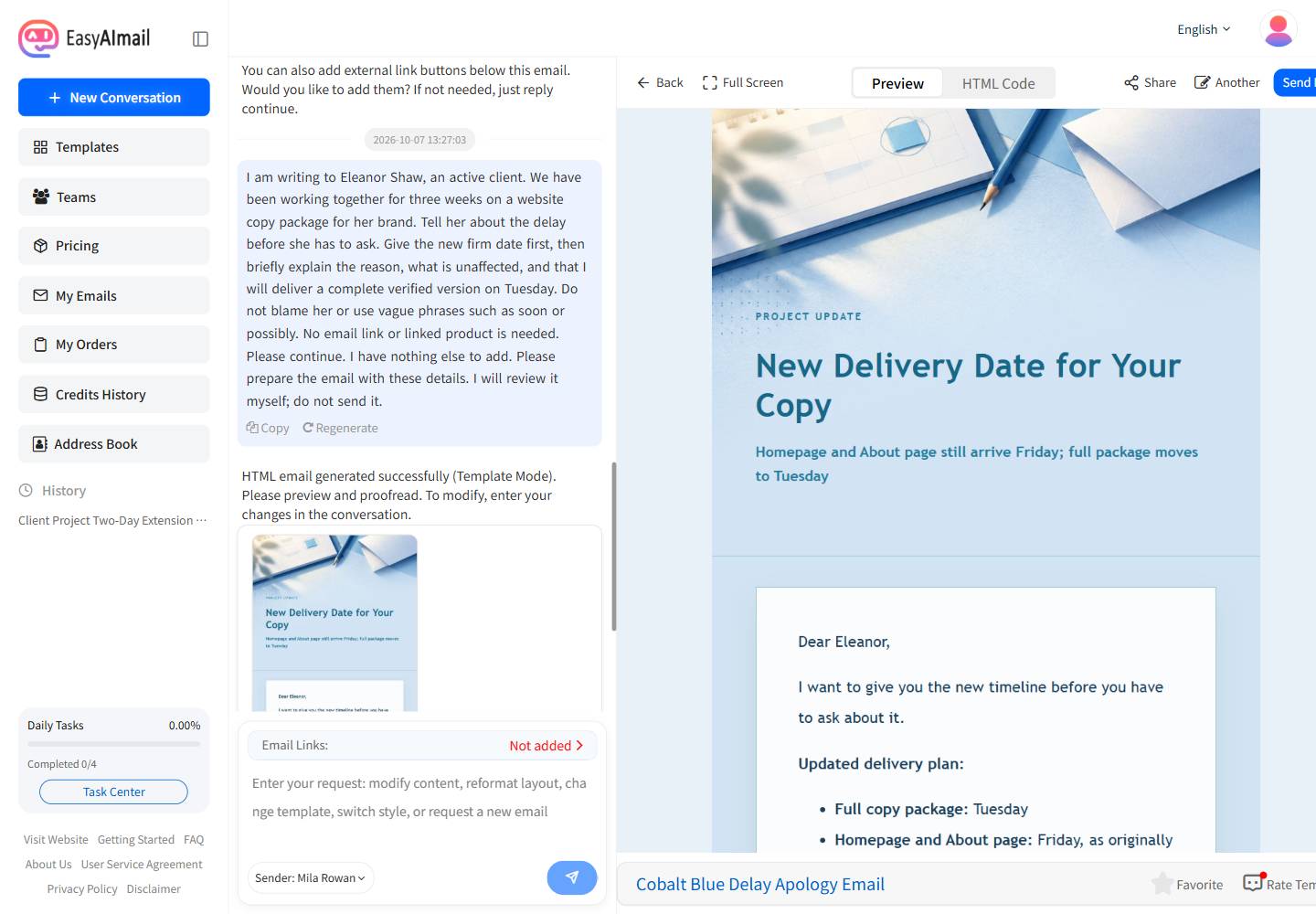
How to Tell a Client About a Delay Before They Have to Ask
Learn how to tell a client about a delay with a reliable new date, a brief reason, the affected scope, and a clear next step.
Read more