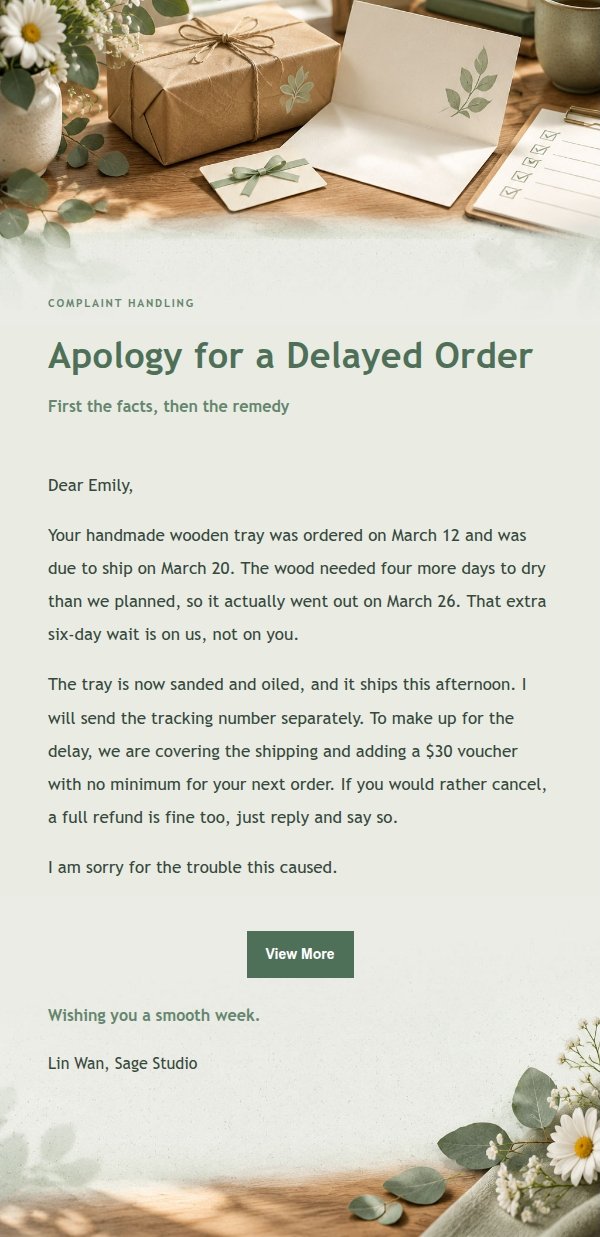
When a customer complains, the risky part is not failing to say “sorry” enough. It is leaving them unsure whether you understood the problem, whether anything will happen today, and how much more work they will have to do. Start by naming the specific thing that went wrong, then offer a remedy you can actually deliver and one clear reply action.
An apology email does not need a long defence of your process. Its job is to move the customer from “I have been left with this” to “I can see how this is being handled.”
Acknowledge each problem, not one vague inconvenience
Many complaints have two parts. An item may arrive damaged, and a customer may also have waited a day for a reply. “Sorry for any inconvenience” blurs those two experiences into one generic line.
Name them separately. Say what was wrong with the item and acknowledge the delayed response. Do not begin with the courier, a busy inbox, or an internal explanation. The customer needs to know you have heard what happened first.
Do not lead with an explanation of fault
Shipping can cause damage and support queues can be real. But those explanations, placed first, can sound like an argument before the customer has been offered help. Take responsibility first; add only the background that changes the next step.
If you are still investigating, say so plainly. Do not pretend to know more than you do. The remedy and the customer's options matter more in this moment than a complete internal narrative.
Offer a remedy that is already possible
A useful remedy is concrete. Depending on the situation, that could be:
- Sending a replacement part at no cost.
- Arranging a return and refund.
- Re-performing the affected service or correcting the work.
- Confirming an action already taken, such as checking stock.
Do not promise a delivery date you cannot control. And do not frame the ordinary fix for your own error as a special favour. The customer needs a workable option, not a conditional gesture.
Ask the customer to make one easy choice
End with one decision: would they prefer a replacement or a return and refund? If you need a new address or a photo, ask for it after they choose the path, unless it is essential to deciding the remedy.
That reduces back-and-forth. It also shows that you have already done your part of the work instead of sending the customer a form to complete before anything happens.
Common mistakes and better repairs
Mistake: one generic apology
Better: name the damage and the slow reply separately, so the customer sees their actual experience reflected.
Mistake: explanation before accountability
Better: apologise first, then state the next step. Context can follow, but it should not hide the remedy.
Mistake: making the customer prove everything before you act
Better: offer the action you can already take. Request only the information needed to complete the chosen option.
Mistake: promising a date you cannot guarantee
Better: say what you can do today, such as dispatching a replacement when the customer confirms.
Customer complaint apology email example
Subject: Resolving the lampshade scratch and our delayed reply
Dear Sophie,
I am sorry that your table lamp arrived with a visible scratch on the edge of the lampshade, and I am also sorry that you had to wait a day for our reply after getting in touch. You should not have had to deal with either issue.
We have checked our stock and can send a replacement lampshade at no cost on the day you confirm. If you would prefer to return the item, we can also arrange a return and refund.
Please reply to let us know which option is easier for you: a replacement lampshade or a return and refund. Once we have your choice, we will proceed straight away.
Again, I am sorry, and thank you for bringing this to our attention.
Best,
Clara Whitmore Cedar Home Workshop | Customer Experience Lead
The people, product, and remedy in this example are fictional. Confirm stock, returns policy, and timing before you make a similar promise.
Use EasyAImail to separate facts from defensiveness
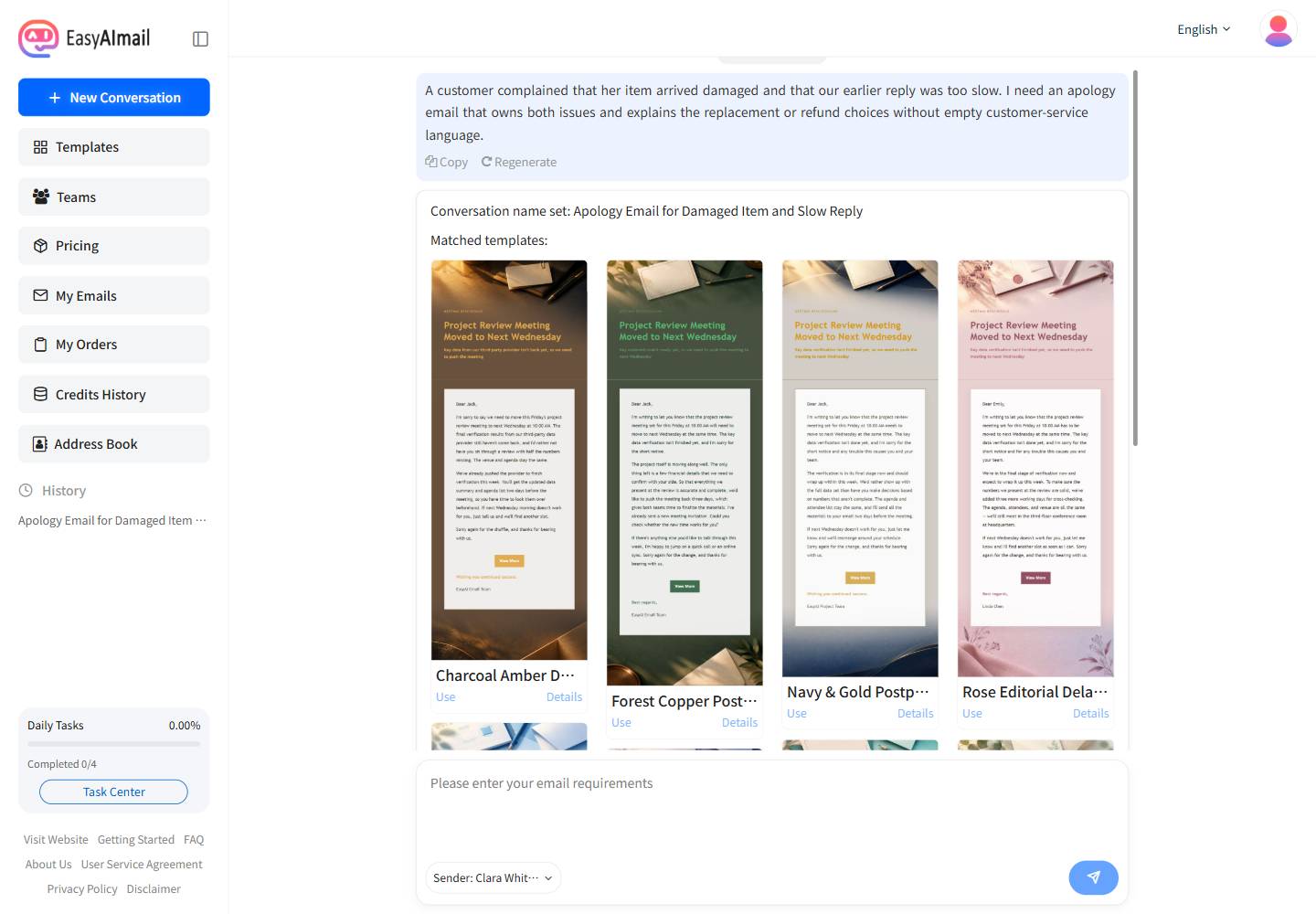
When a complaint arrives, it is easy to put every explanation into the first draft. With EasyAImail, you can start with the real issue, then answer the follow-up questions about the damage, delayed reply, verified remedy, recipient, and tone. The AI recommends templates only; you inspect the visible details, choose the template yourself, and check the facts in the generated email.
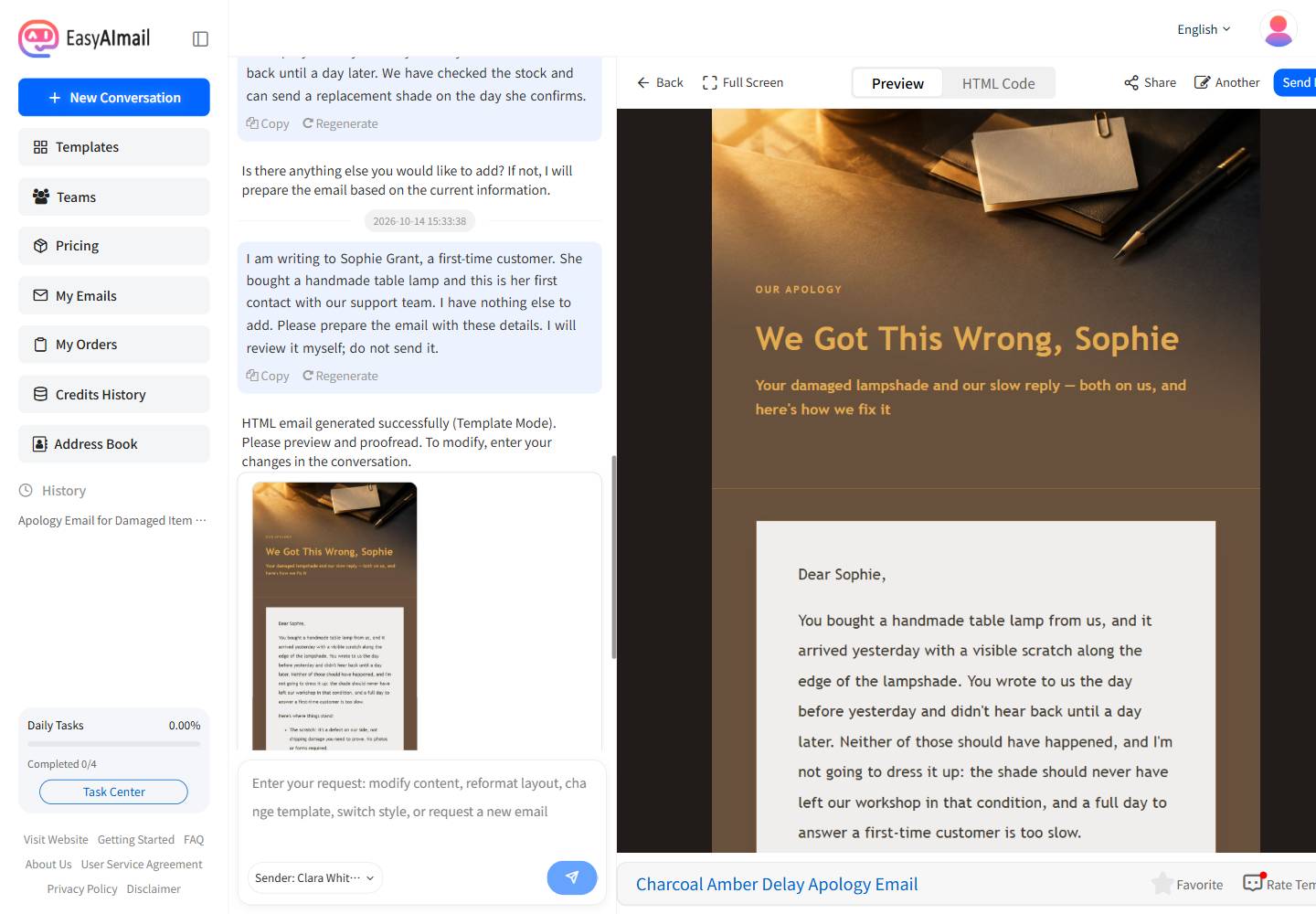
In this English-interface test, the user selected Charcoal Amber Delay Apology Email. Its visible description focuses on a clear, dignified apology with background, impact, and next steps in a stable reading layout, which suited a service-recovery message without a promotional feel.
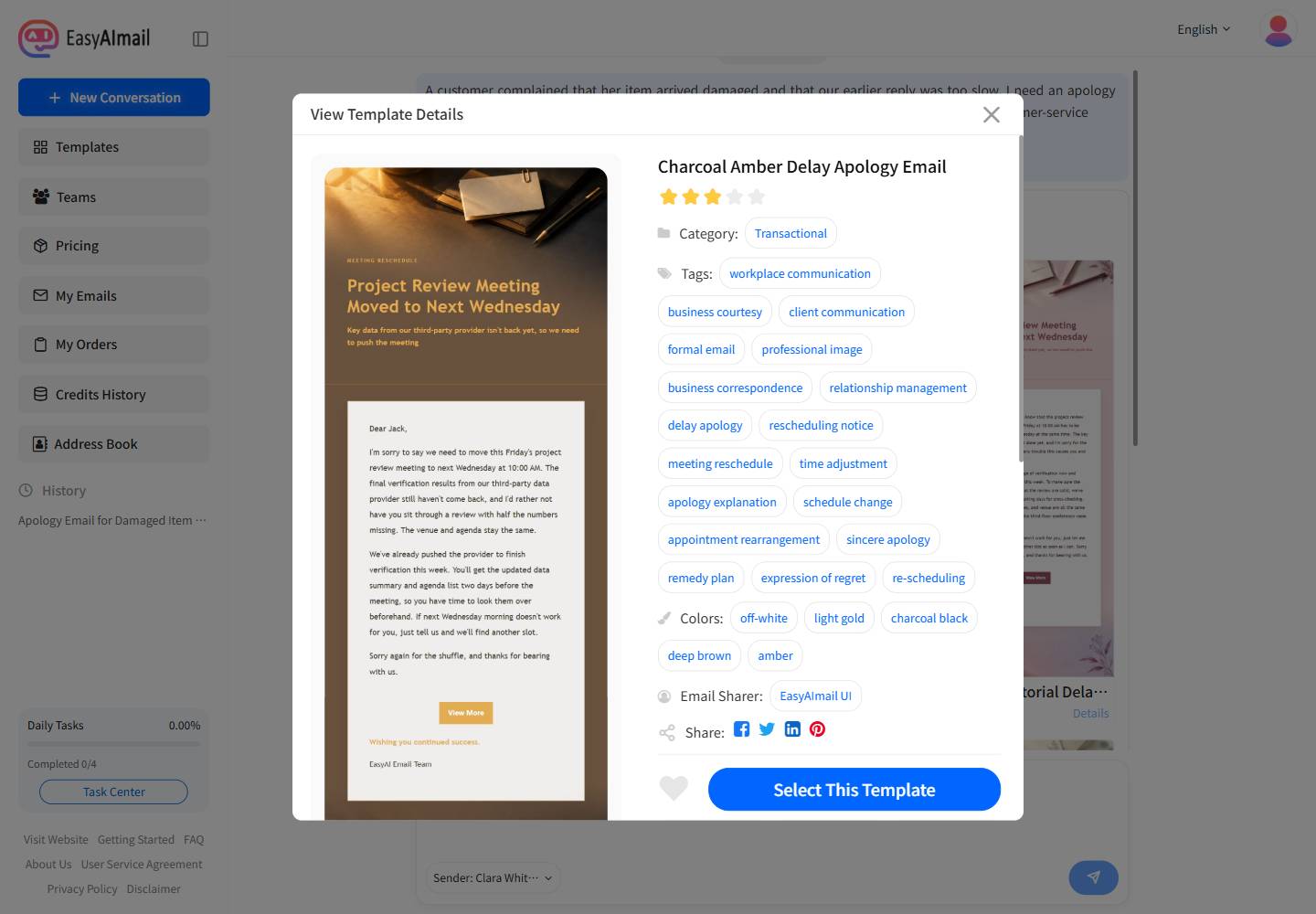
This test generated and reviewed the email only. No recipient address was entered and the Send Email action was not used. The preview kept the fictional business name and job title so the sender identity could be checked.
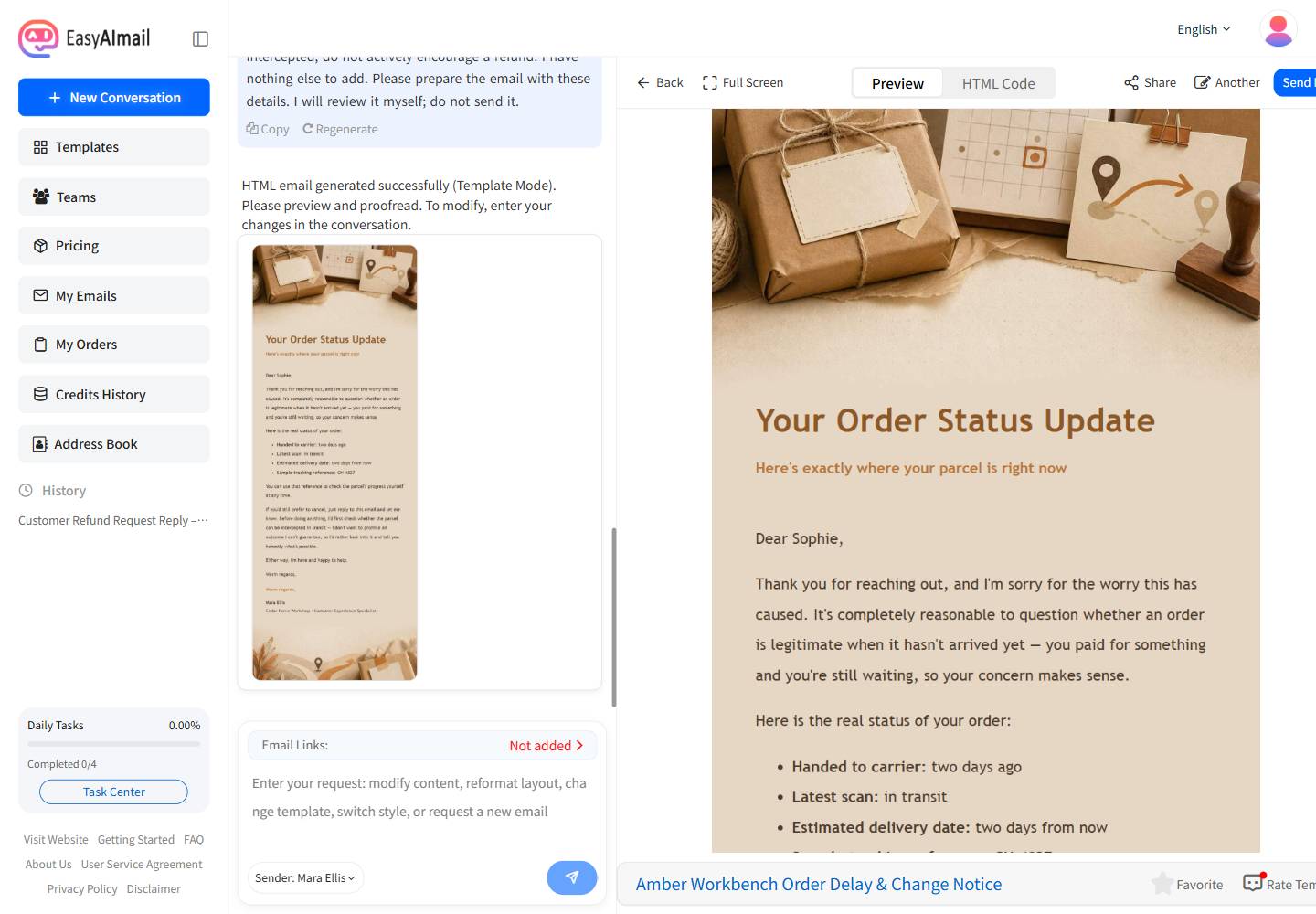
When a customer is anxious before delivery, the approach for how to respond when a customer asks for a refund before delivery also depends on concrete status and real choices. A timely client delay email can prevent a delay from growing into a complaint in the first place.
Before you send
- Have you named every specific issue the customer raised?
- Does the apology arrive before the explanation?
- Is the remedy verified and ready to start?
- Does the customer have one simple decision to make?
- Have you avoided dates or outcomes you cannot guarantee?
FAQ
Should the email be longer when the customer is very upset?
Not necessarily. Strong emotion calls for clarity. A complete acknowledgement, a workable remedy, and one next step do more than several paragraphs of regret.
Can I offer only a discount code?
If the product or service failure affects the customer's basic purchase, a discount code is rarely a substitute for the real remedy. Fix the central issue first, then consider whether an additional goodwill gesture is appropriate.
What if the customer does not reply?
After a reasonable period, send a short follow-up that restates the options. Do not assume a choice, dispatch an item, process a refund, or close the issue without confirmation.
Before you send it, make sure the remedy is real. The customer does not need a perfect apology; they need to see that the next step is already organised.