
Declining a new inquiry is one thing. Pausing or ending work with a client who has trusted you for months is another. The hard part is not sounding polite enough. It is making sure the client knows exactly when service ends, what you will still finish, and how the handover will work.
A good closing email lets the client feel considered while making your boundary real.
Settle these three points before you write
- Your final service date. Use a date, not “soon” or “later this month.”
- The work you will still complete. Include only committed items you can genuinely deliver.
- The handover plan. A shared folder, source-file locations, and a short list of open items often provide more reassurance than a long explanation.
Without these answers, even a warm email leaves the client holding uncertainty.
You do not need to over-explain, but do not disappear
You can say that you need to reduce your workload, adjust your service schedule, or stop taking new monthly work for a period. The reason does not need to become a personal memo, and it should not imply that the client caused the change.
What matters is completing the sentence after “I cannot continue.” For example: two confirmed learner emails and a first calendar draft will be delivered this month; the shared folder will be organized in the final week; new monthly content tasks will stop after a stated date. That is direct without being abrupt.
Freelance client service pause email example
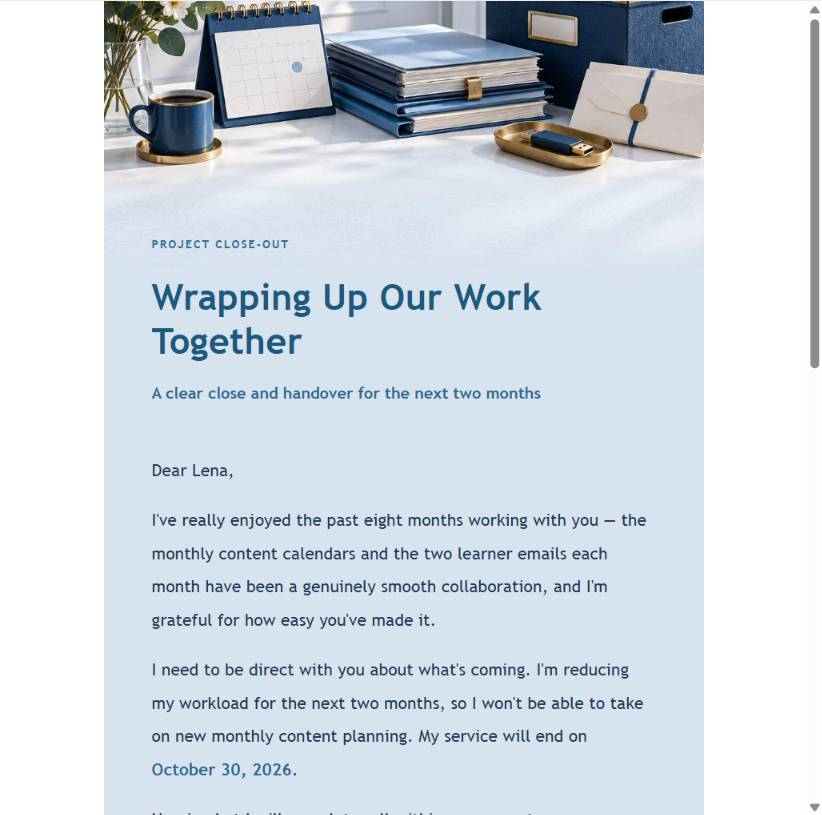
Subject: This month’s service plan and handover
Dear Lena,
Thank you for the past eight months of working together on your content calendar and learner emails. Over the next two months, I need to reduce my workload, so I will not be able to continue with new monthly content planning.
To close out the current work clearly, I will continue through the 30th of this month and complete the two agreed learner emails and the first draft of this month’s calendar. I will not take on new monthly content tasks after that date.
During the final week, I will organize the shared folder, note where the source materials and documents live, and send a short handover email with any remaining open items.
This is a change in my own capacity, not a reflection on our work together. Thank you for your understanding and for the trust you have placed in me.
Maya Hart
Riverside Content Studio | Independent Content Consultant
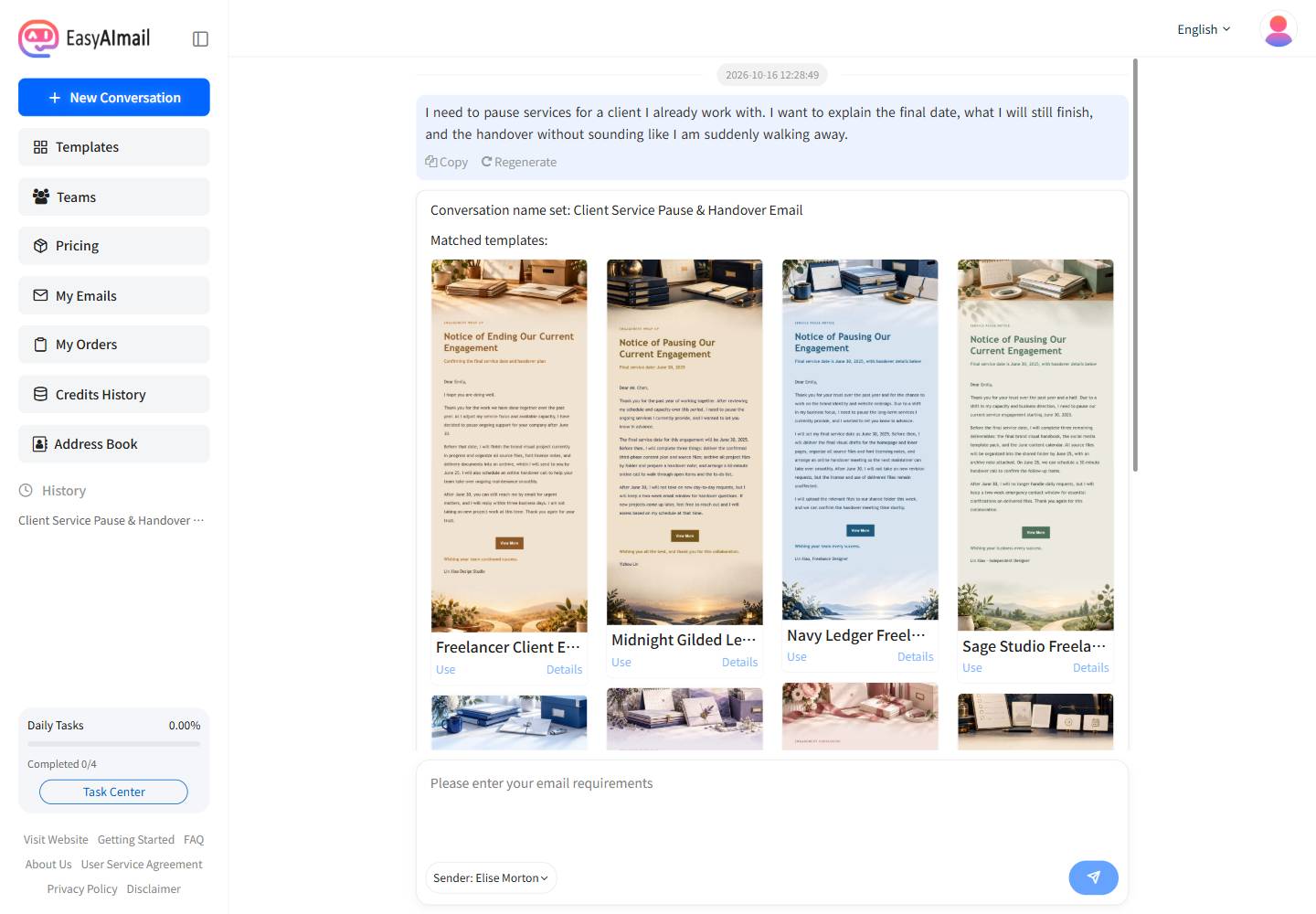
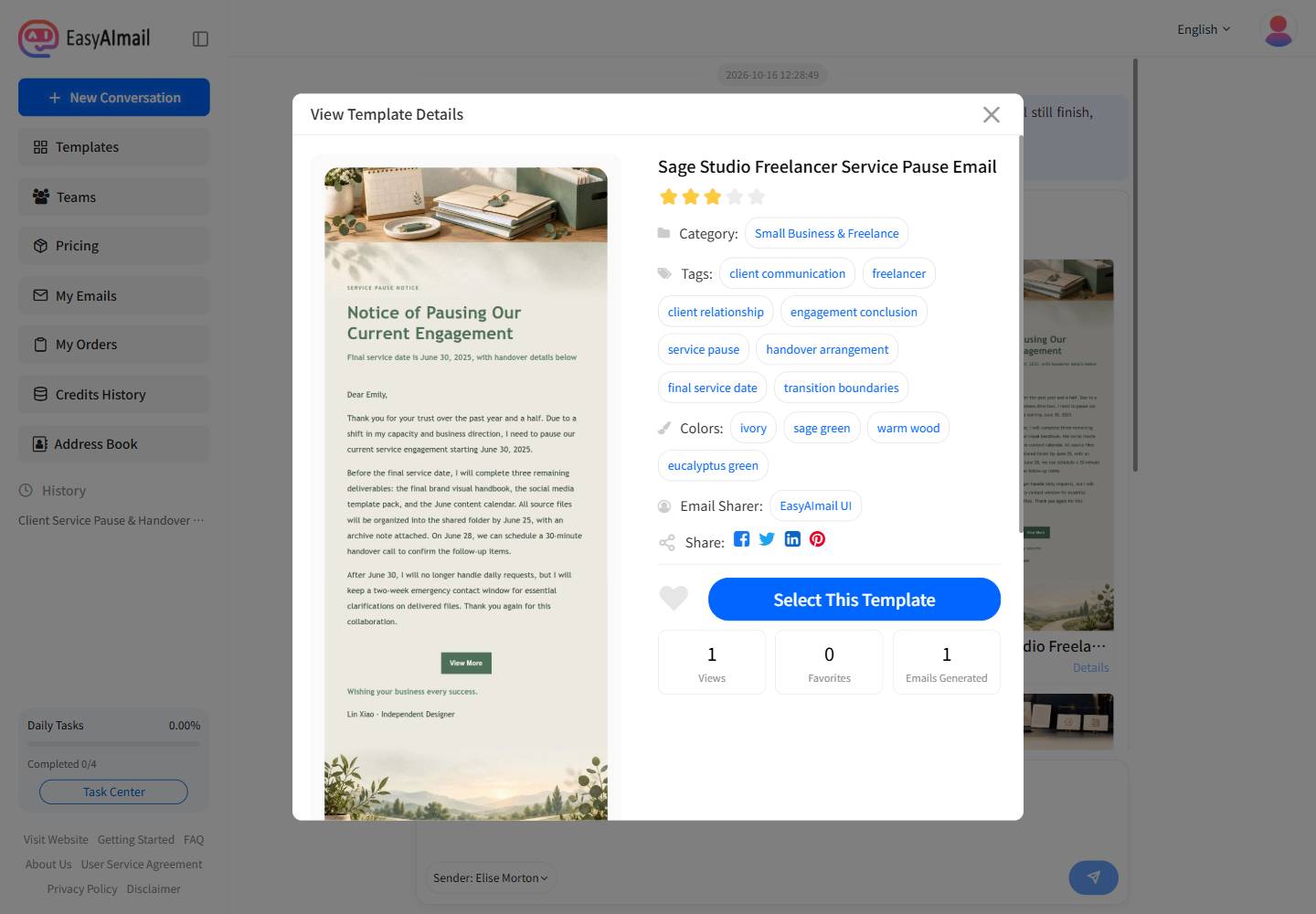
For this kind of message, an AI recommendation should not become an automatic choice. In the simulation, the user opened the template details and checked that it could carry a final date, agreed deliverables, and a handover before deciding to use it.
The facts stay the same; the presentation can change
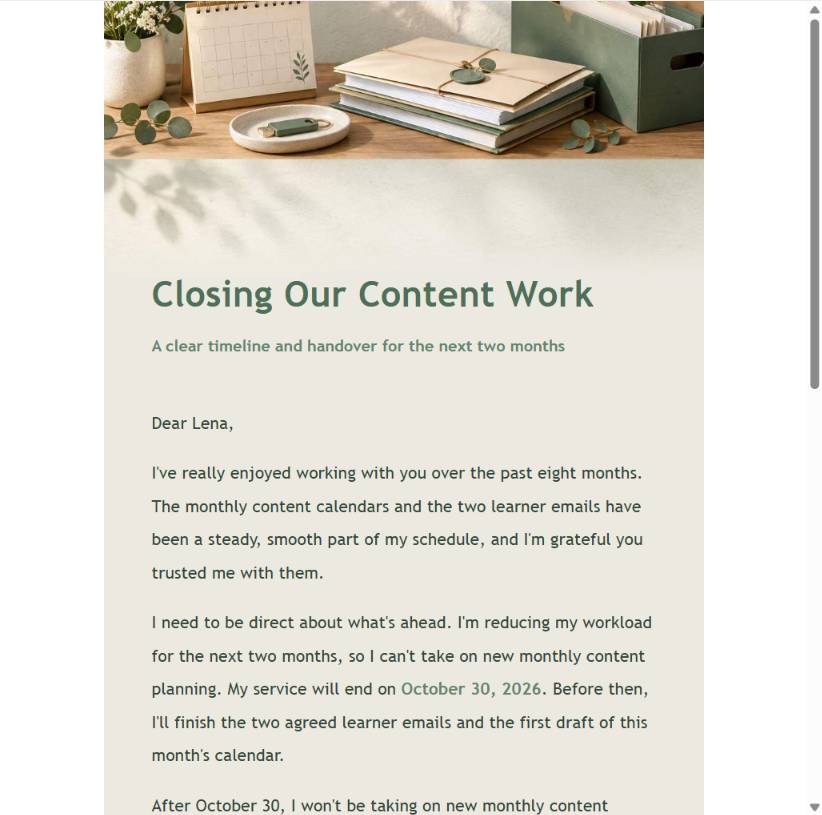
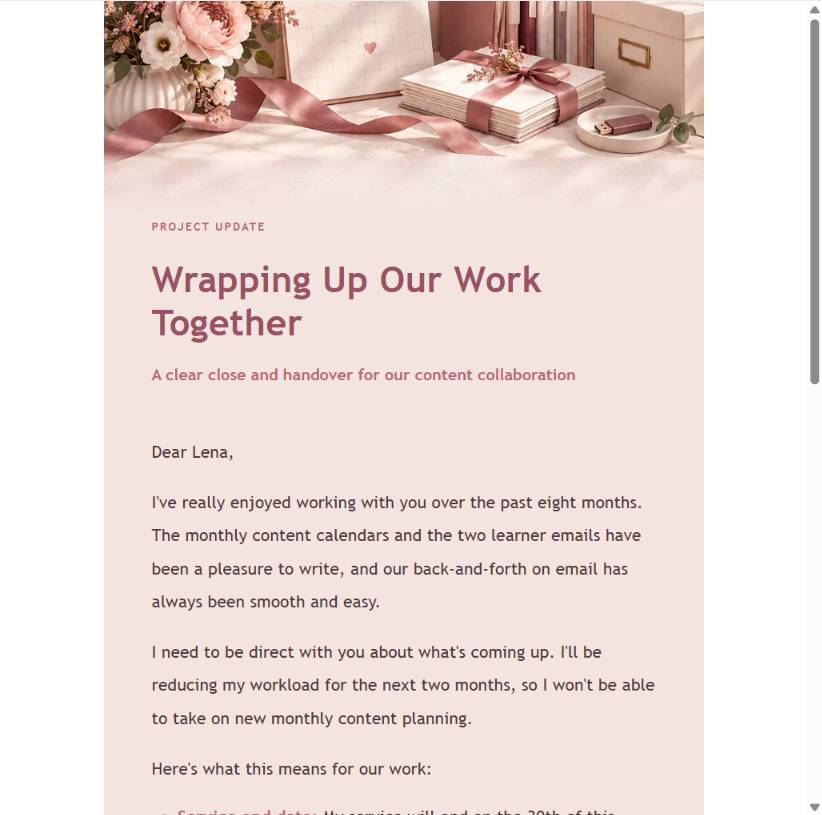
The content has to be sound before visual style matters. For the same service-pause situation, a softer treatment can preserve the warmth of a long relationship. An editorial treatment can make the note feel lighter to read. A more structured presentation helps when the client needs to keep or forward dates, deliverables, and handover details.
Use EasyAImail to clarify the awkward parts first
Start in EasyAImail with a plain request such as, “I need to pause services for an active client and explain the final date, remaining work, and handover.” The AI may recommend templates, but you can open the details and choose the one that feels right for the relationship.
After that, it asks for the greeting, final deliverables, date, and tone in smaller steps. That gives you a chance to check what you are actually prepared to promise. Once the draft is generated, review the final date, the handover wording, and the statement that new work will not be accepted.
Before you send
- Is the final service date specific?
- Are the remaining deliverables already agreed and genuinely achievable?
- Does the handover say when and how it will happen?
- Have you accidentally promised a referral or ongoing support that you do not intend to provide?
Should I call this a pause or an end?
Use a pause when you have a real, stated plan to resume and want to leave that possibility open. If you do not have a return date, saying that the current service ends on a specific date is usually clearer and fairer to the client.
Do I need to give the real reason?
No. A brief explanation that you are adjusting capacity or service commitments is usually enough. Your client needs a reliable work plan, not your private details.
> All people, companies, dates, and email copy in this article are fictional examples. The email was generated and previewed only; it was not sent.
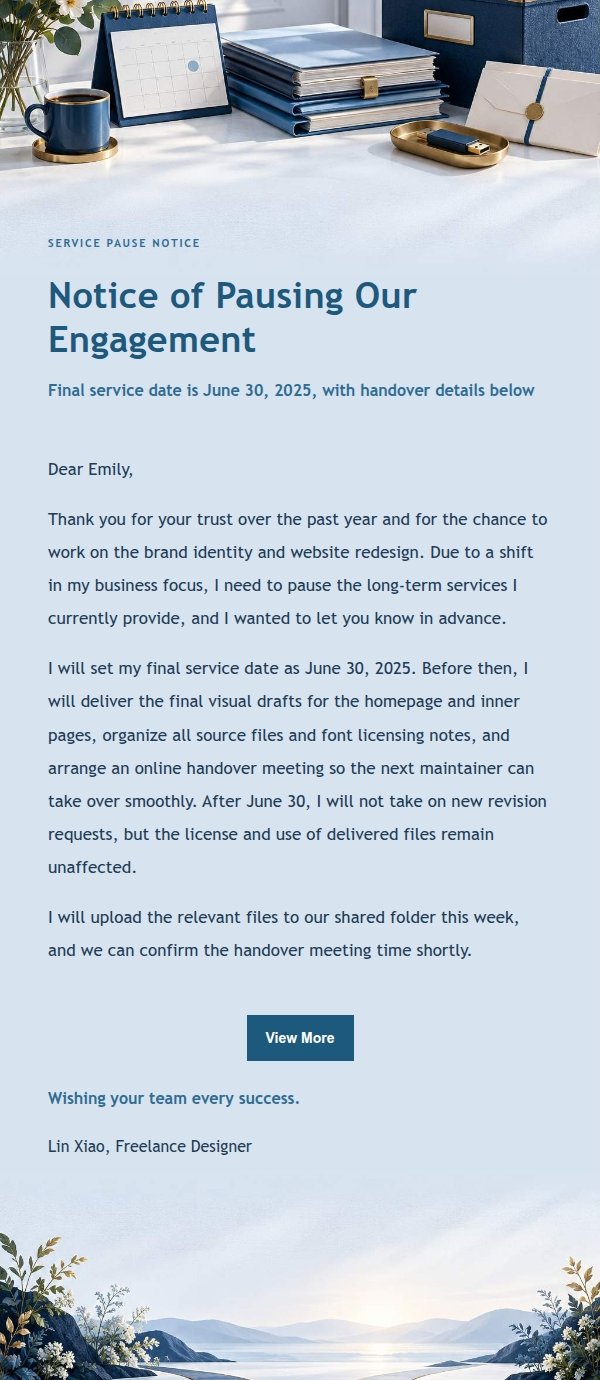
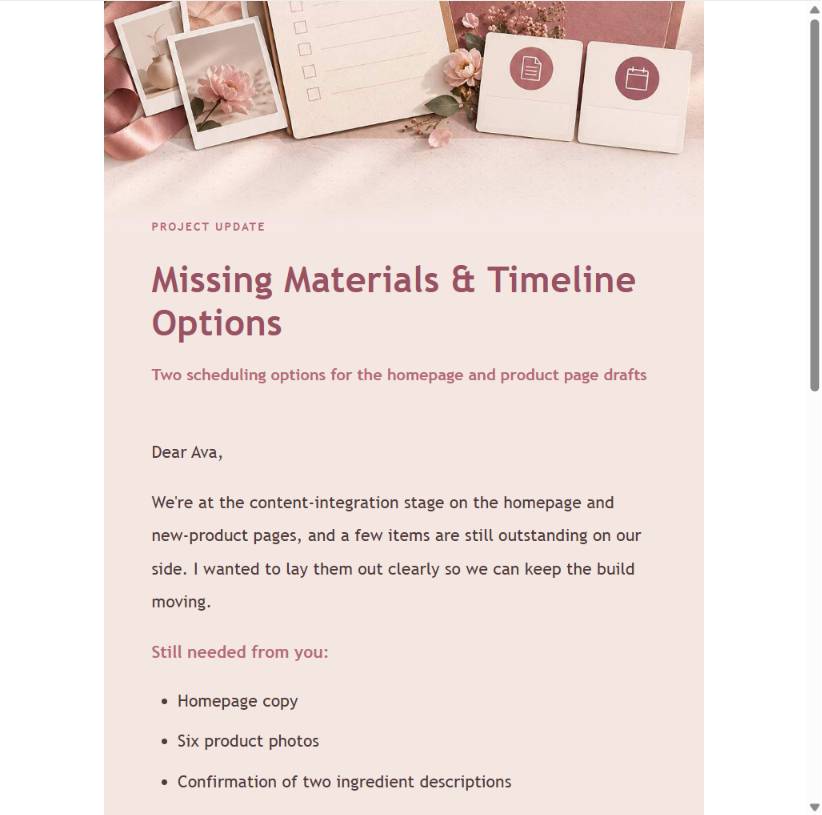
How to Email a Client About Missing Project Materials and Timeline Options
Write a clear, non-blaming email when a client has not sent the materials your project needs, including the timeline impact and practical options.
Read more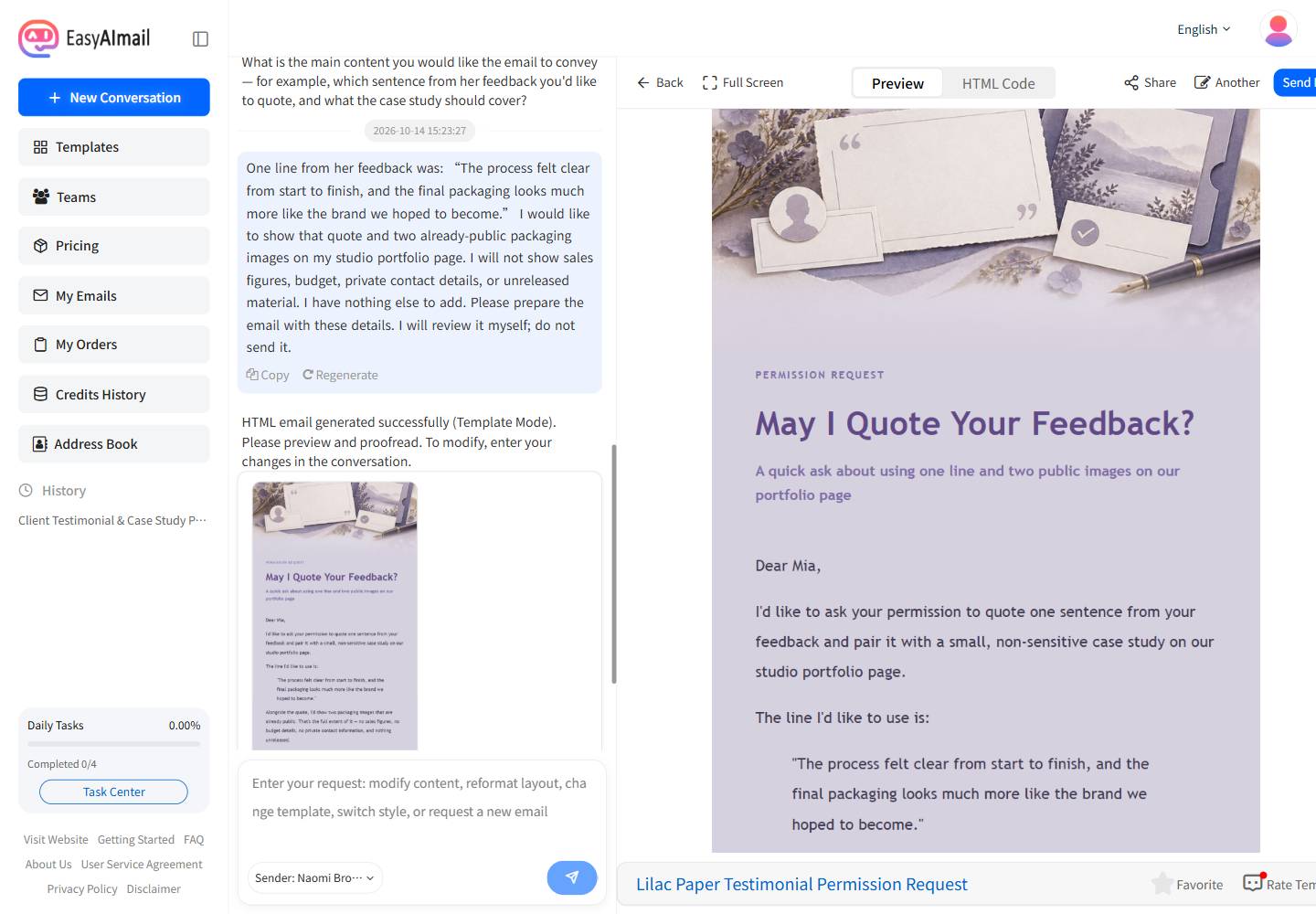
How to Ask a Client for Permission to Use a Testimonial or Case Study
Ask a client for permission to publish a testimonial or case study with a clear, respectful email that makes the scope and their choices explicit.
Read more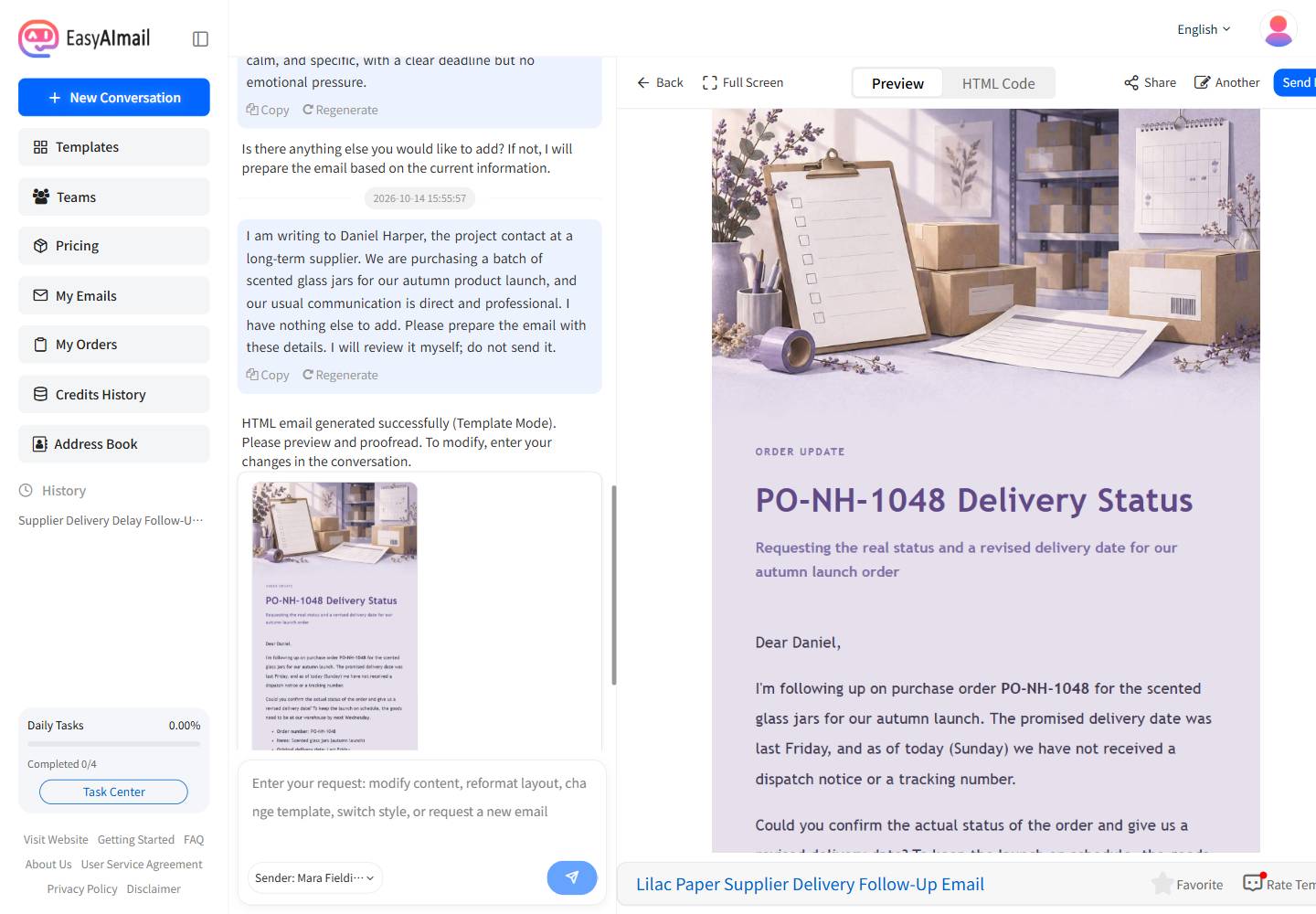
How to Follow Up With a Supplier When a Delivery Date Has Passed
Learn how to request a factual production and shipment update from a supplier after a promised delivery date has passed, without vague or hostile wording.
Read more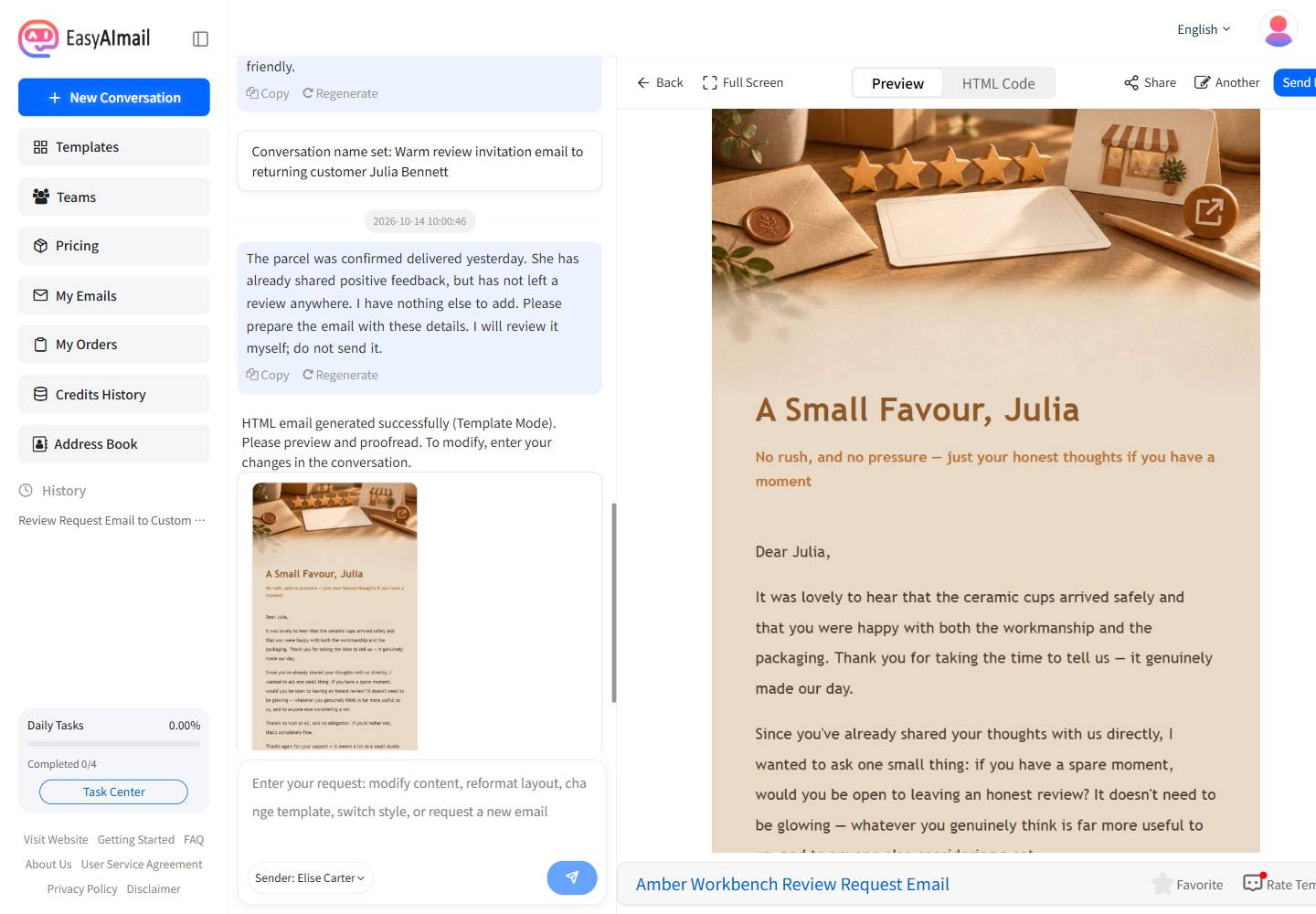
How to Ask a Happy Customer for a Review Without Sounding Pushy
Learn how to invite a satisfied customer to leave an honest review with a clear, low-pressure email that respects their time.
Read more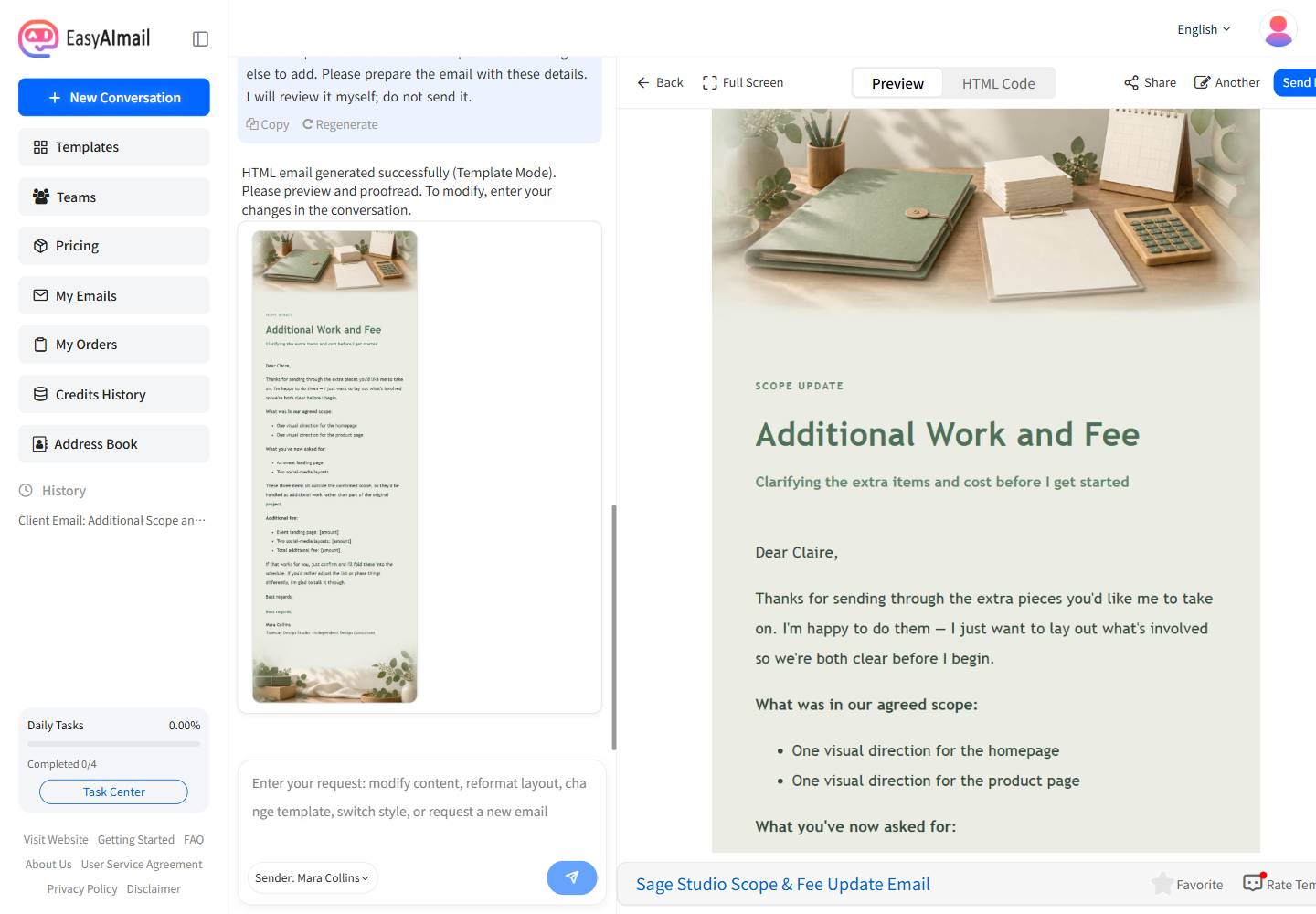
How to Tell a Client Extra Work Is Outside the Original Scope
Learn how to confirm added work, scope, fees, and timing with a client without sounding defensive or doing unpaid extra work.
Read more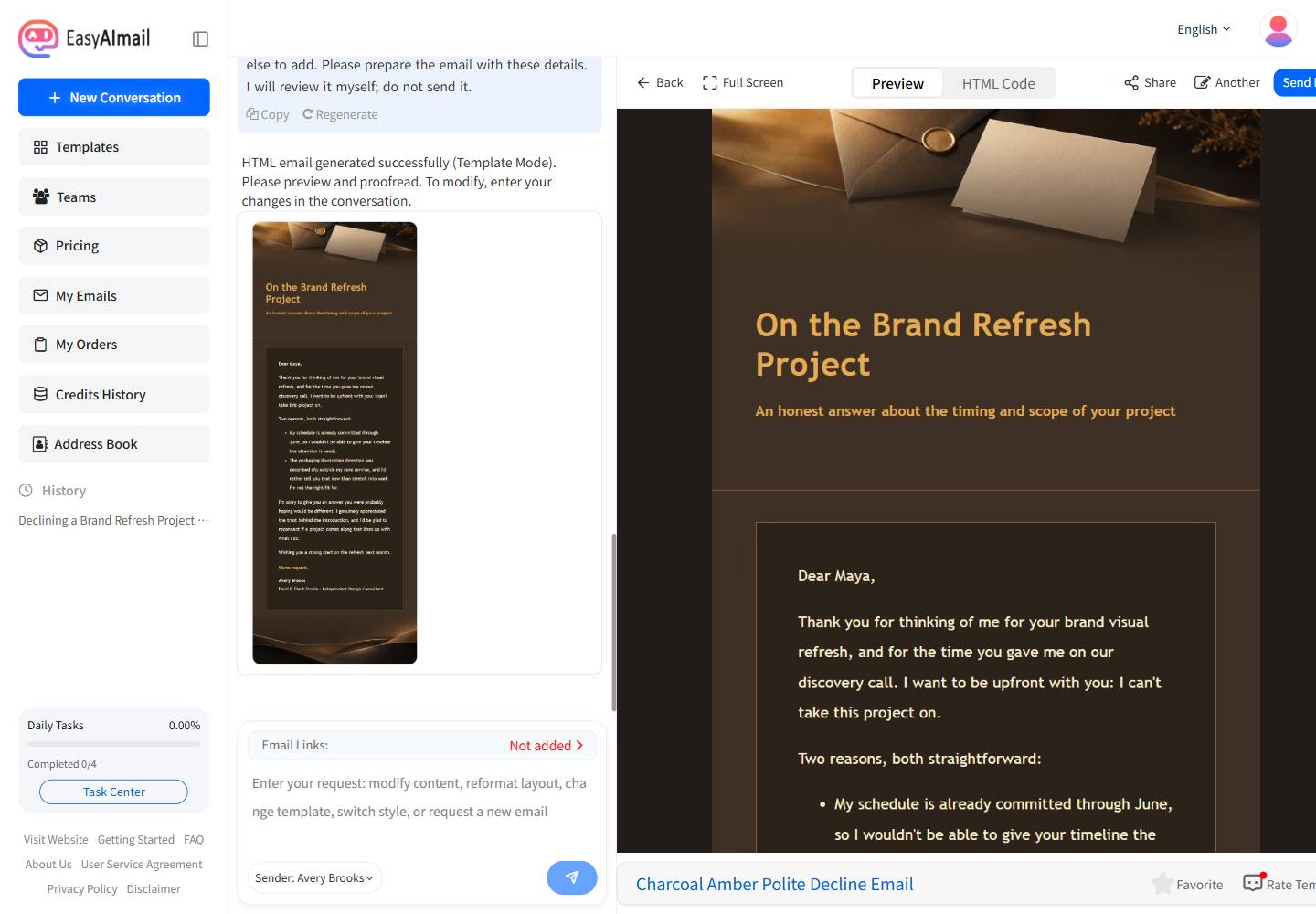
How to Politely Decline a Client Without Damaging the Relationship
Learn how to politely decline a client by stating the answer clearly, giving a brief real reason, and knowing when an alternative is useful.
Read more