
When a client has not sent the copy, images, or approvals a project needs, the awkward part is rarely the reminder itself. It is explaining the schedule impact without sounding like you are building a case against them. A useful email does not simply ask, “When can you send this?” It makes the situation easy to understand and easy to answer.
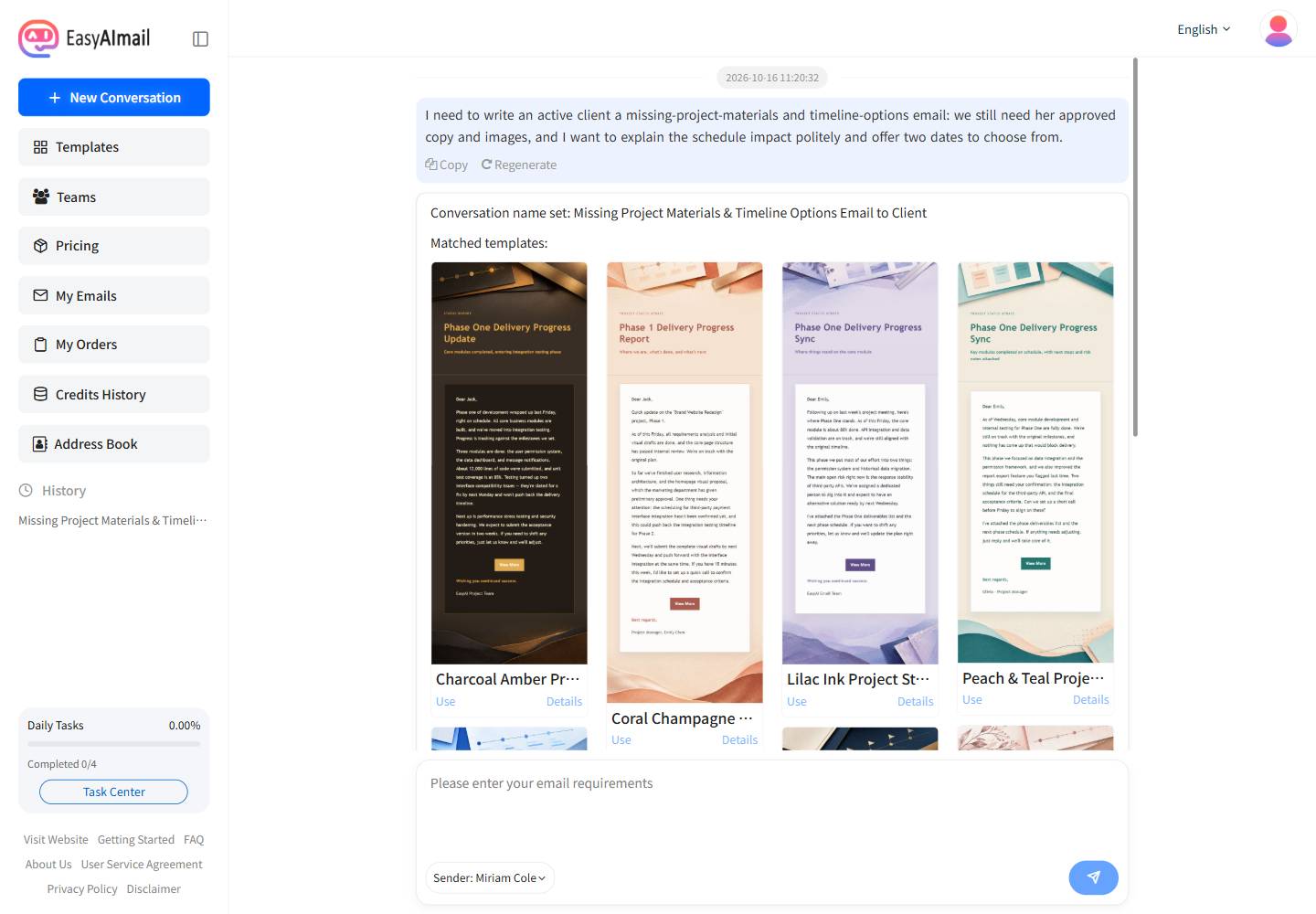
This is not a provider-delay email
An email about your own delay needs an explanation, a remedy, and a new update point. An email about missing client inputs has a different job. You cannot promise a delivery date on the client’s behalf, and you do not need to frame the wait as their failure.
Keep the message rooted in shared progress: identify the current stage, name the inputs still needed, and show what happens next under each realistic timeline.
Make the missing items actionable
“We still need a few assets” is easy to postpone because it leaves the client guessing. A short, concrete list is kinder to read and easier to forward internally. For example:
- final homepage copy
- six approved product photos
- confirmation of two ingredient descriptions
Then explain the dependency in plain language. “Design and development need these inputs before page integration can continue” is more useful than “We cannot finish without them.” It tells the client what is true without turning the note into a reprimand.
Offer choices that are genuinely workable
Silence is often a planning problem, not a relationship problem. Instead of asking for an open-ended date, offer two schedules you can really honor and leave room for the client to suggest another one.
For instance, you might keep a Friday first-draft date if the materials arrive by Tuesday noon, or move the first draft to the following Wednesday if that is not realistic. The point is not to create urgency for its own sake. It is to reduce the effort needed for the client to give you a useful answer.
Missing project materials email example
Subject: Confirming homepage materials and first-draft timing
Dear Ava,
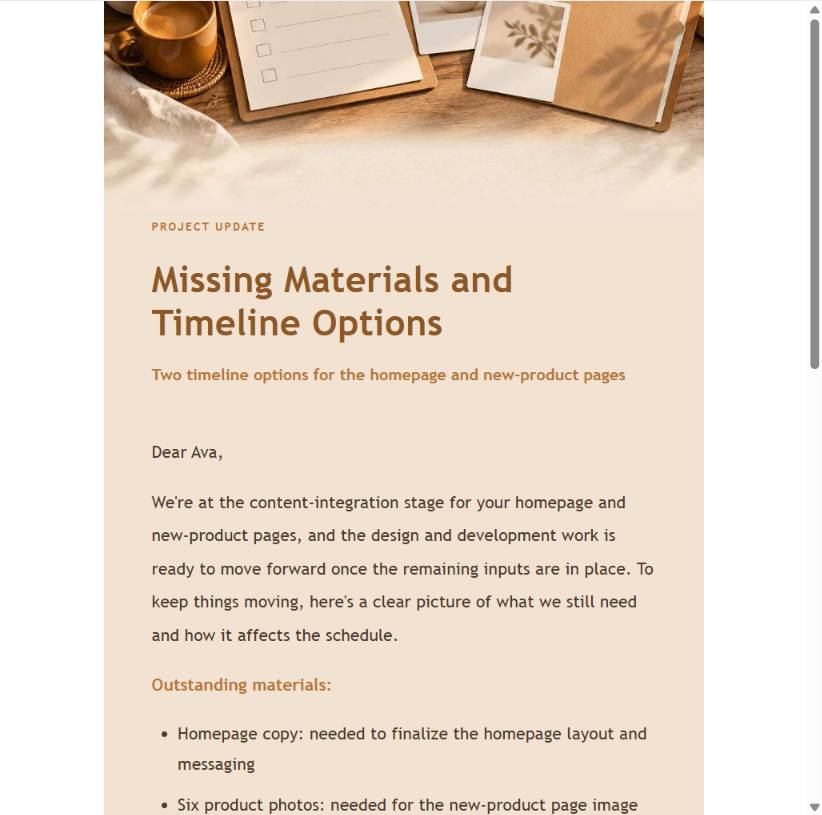
We are now bringing together the content for the homepage and new-product pages. Before we can move into the next design and development step, we still need the final homepage copy, six product photos, and confirmation of the two ingredient descriptions.
Our original plan was to share the first page draft this Thursday. Because these items feed directly into the page structure and product sections, we cannot reliably keep that date until the materials are confirmed.
To make planning easier, either option below works on our side:
- If you can send the complete materials by noon next Tuesday, we can keep next Friday for the first draft.
- If that timing is not comfortable, we can move the first draft to the following Wednesday and give the materials a little more room.
Please reply with the option that works best, or share a more realistic date for the materials and we will update the plan around it.
Thank you,
Miriam Cole
North Shore Studio | Project Strategist
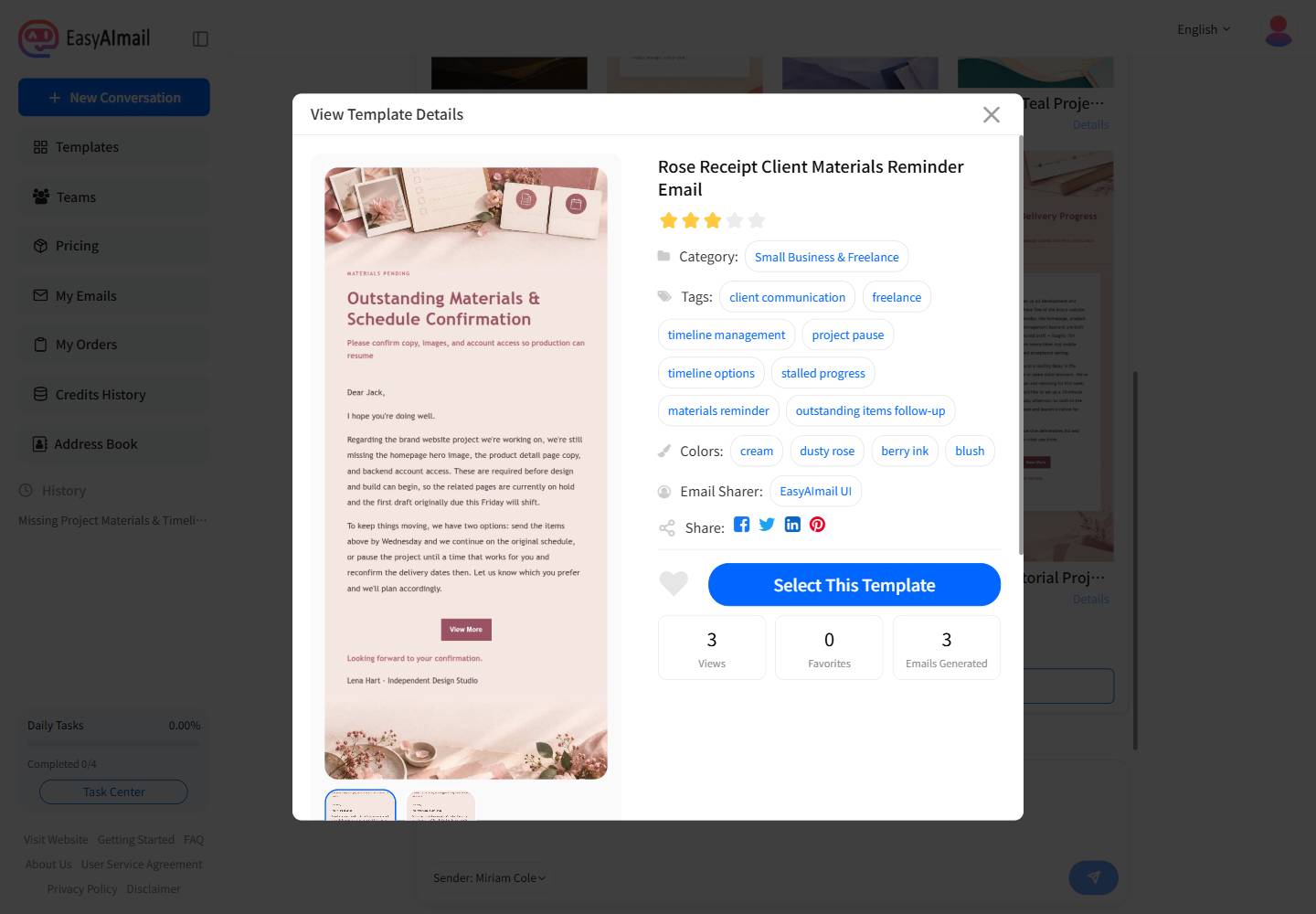
In this simulation, the user opened the recommended template details before deciding what to use. Its purpose, tags, sample content, and visual feel all needed to suit an active-client reminder with a timeline decision, not merely look attractive.
One message, different visual directions
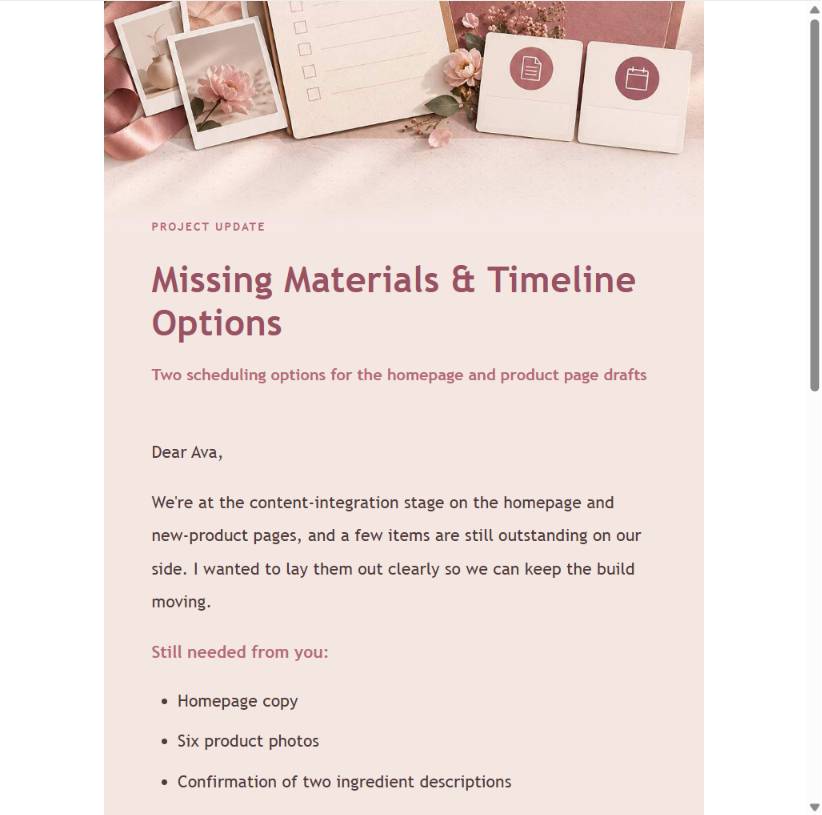
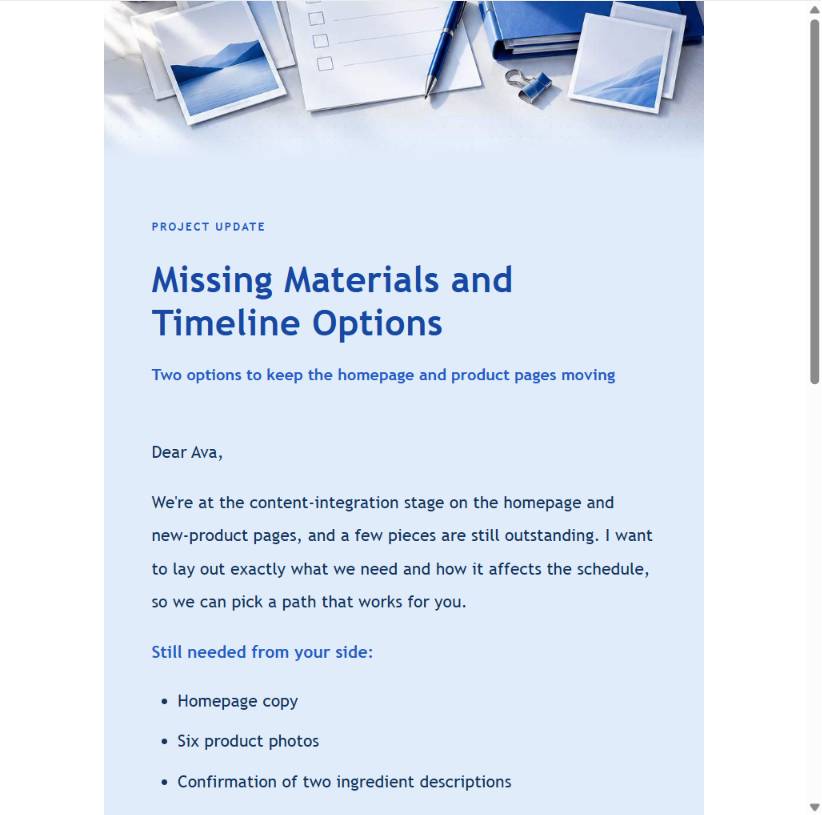
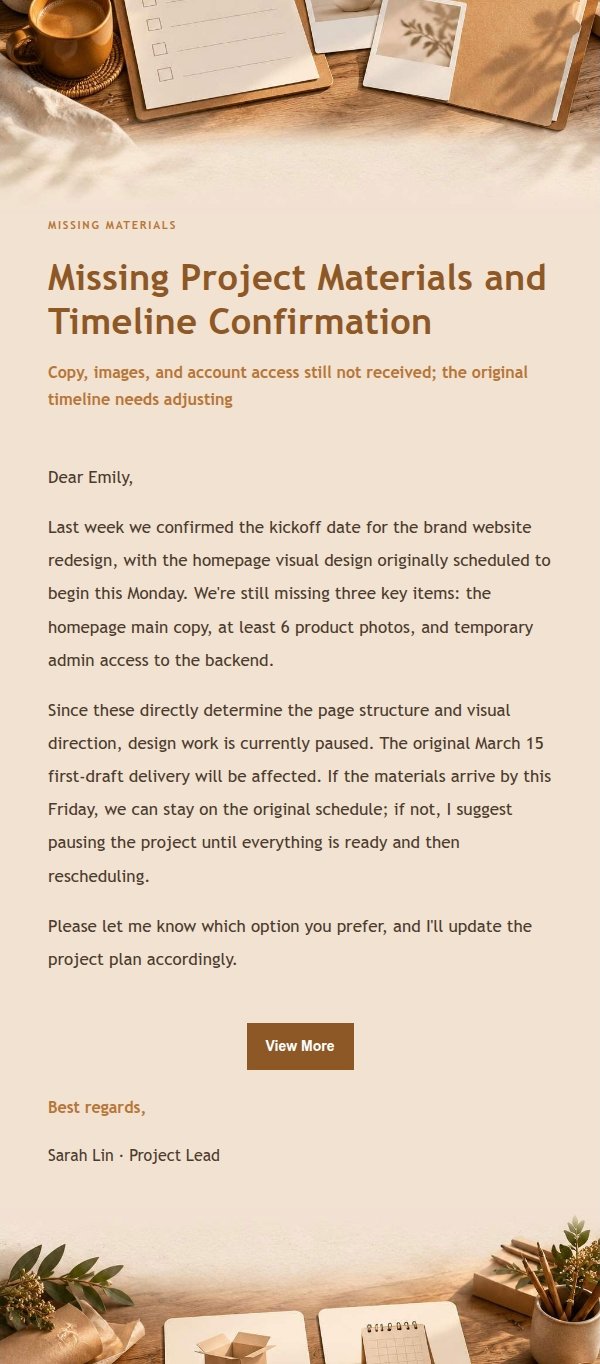
The wording should carry the decision; the design should support it. The previews below use the same situation and facts with different visual treatments. A softer layout can suit an established client relationship. A more editorial layout makes the decision points quick to scan. A structured layout is useful when the missing-item list needs to be forwarded to several people.
Build the email gradually in EasyAImail
In EasyAImail, you can start with the core need in your own words: “I need to remind an active client about missing copy and images, and give two timeline options.” The AI can recommend relevant templates, but you remain the person who opens the details and chooses the one that fits.
After that, it asks for the greeting, outstanding materials, timing, and tone in smaller turns. That keeps the conversation close to how people actually clarify a project update. Before you generate the draft, confirm that both dates are possible and that the client can tell, at a glance, what you need them to reply to.
Before you send
- Is every missing item specific enough to act on?
- Does the email say which deliverable is affected?
- Are both proposed dates genuinely possible?
- Have you made room for the client to offer a more realistic date?
How long should you wait before following up again?
Unless there is an immediate hard deadline, two business days is usually a reasonable pause. In the follow-up, repeat only the one confirmation you need next rather than pasting the whole email again.
Should you say the project will pause?
You can state that the work will remain at its current stage until the inputs arrive. Keep it factual: “We will continue page integration once the materials are confirmed” is clearer and less adversarial than language that sounds punitive.
> All people, companies, dates, and email copy in this article are fictional examples. The email was generated and previewed only; it was not sent.
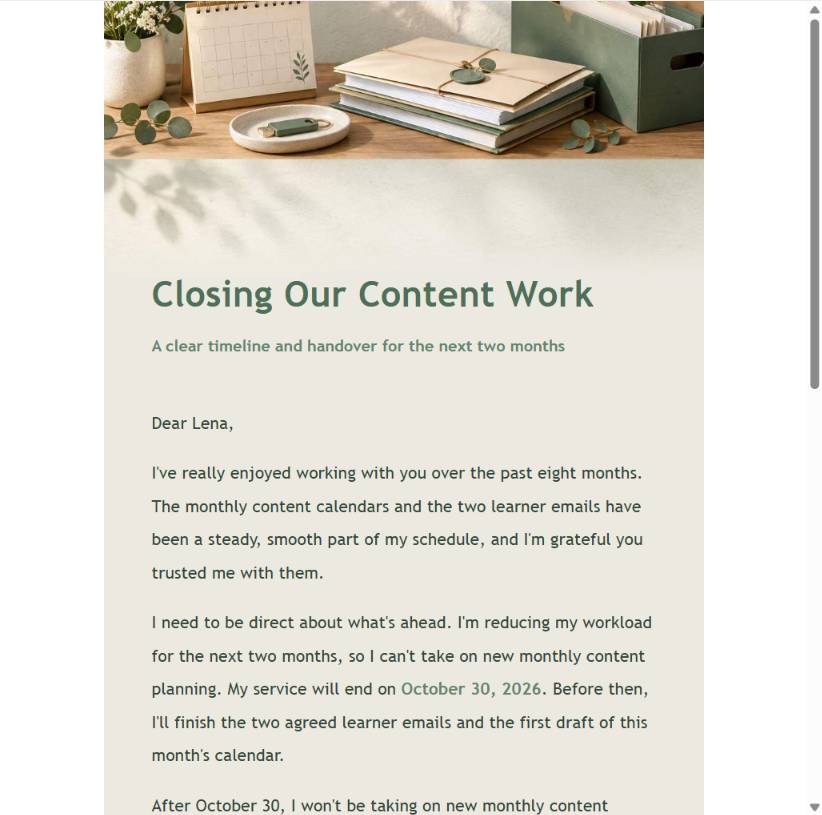
How to Pause or End Services With an Existing Freelance Client
Learn how to tell an existing freelance client about a pause or end of service with a clear final date, remaining work, and handover plan.
Read more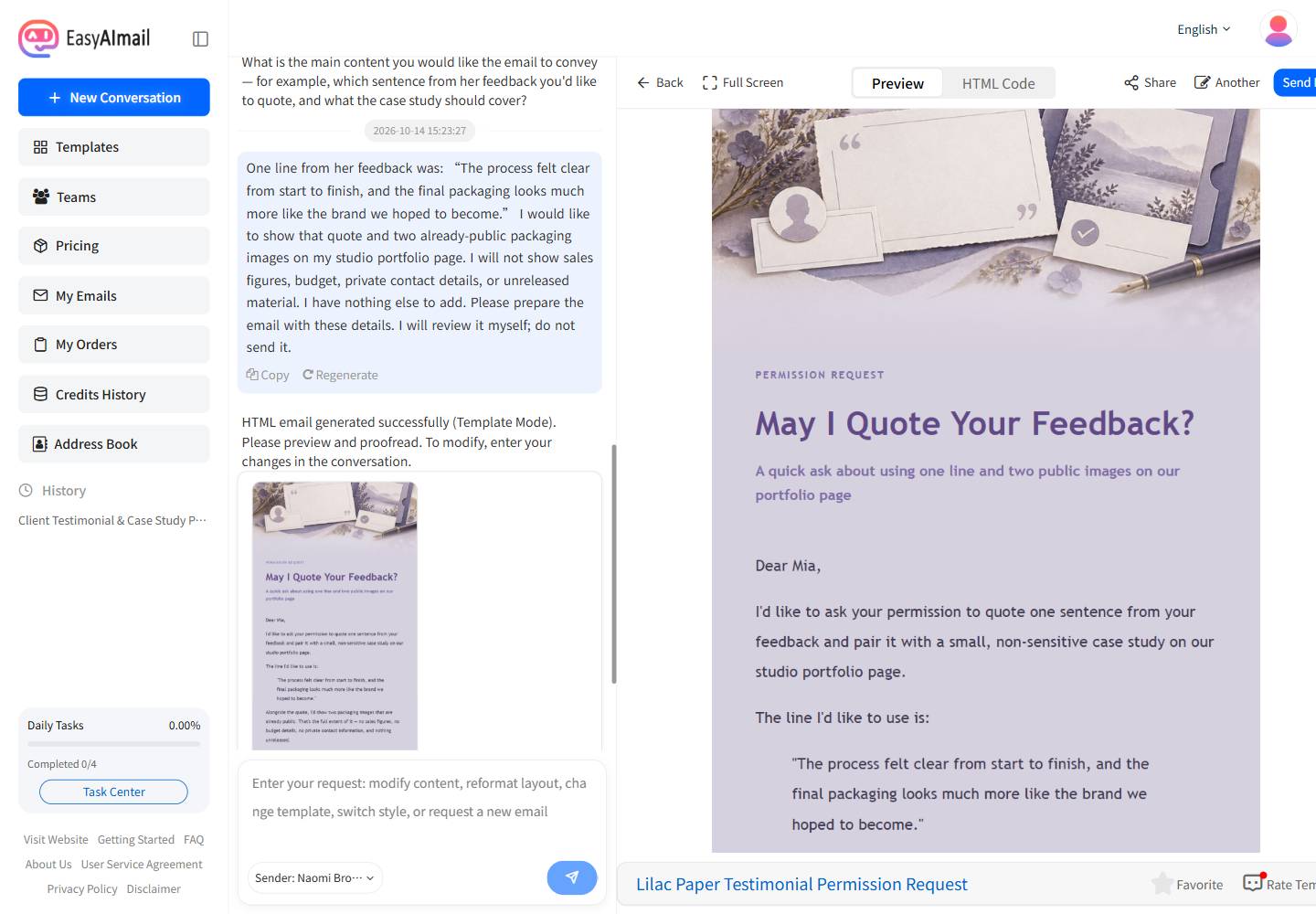
How to Ask a Client for Permission to Use a Testimonial or Case Study
Ask a client for permission to publish a testimonial or case study with a clear, respectful email that makes the scope and their choices explicit.
Read more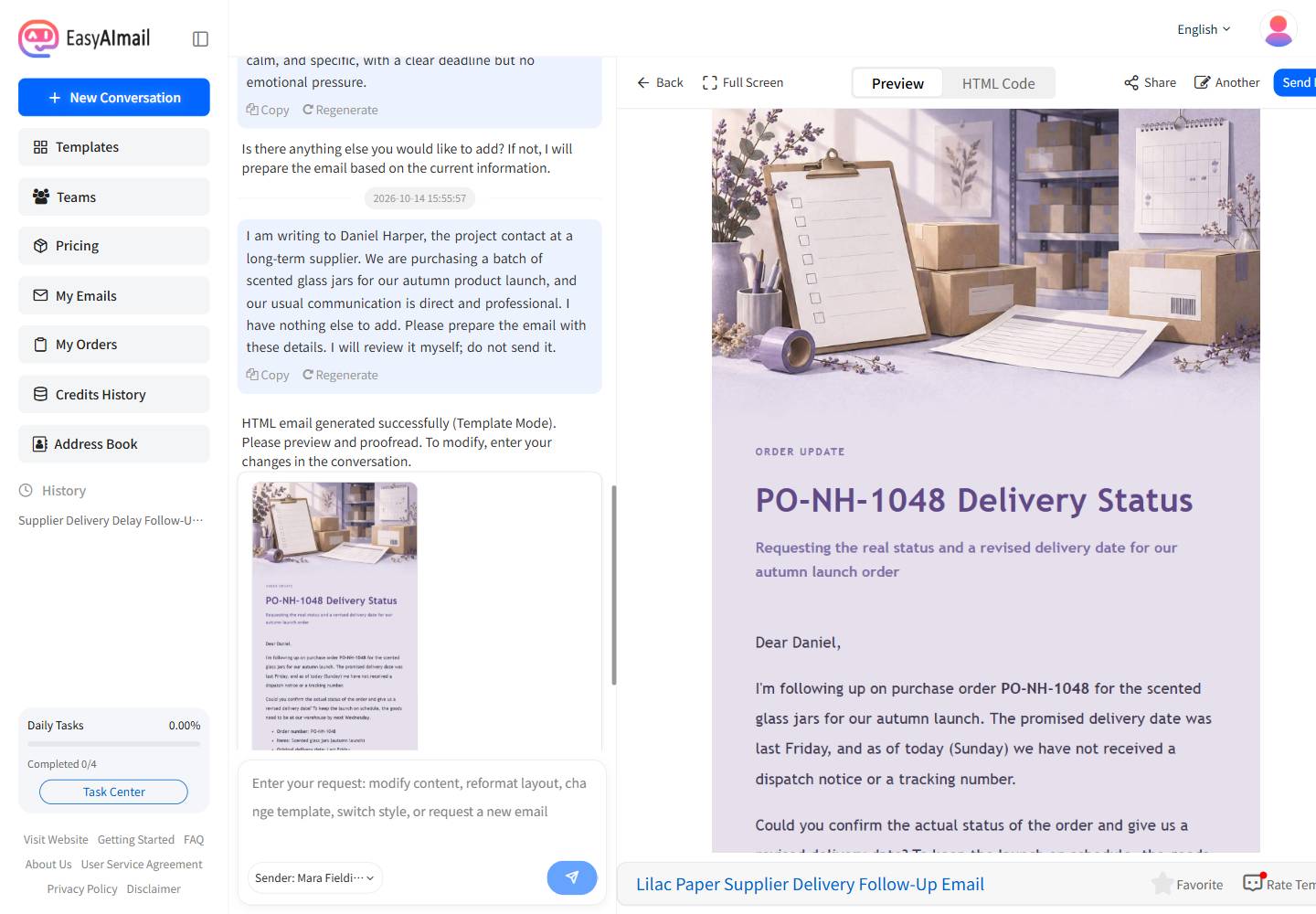
How to Follow Up With a Supplier When a Delivery Date Has Passed
Learn how to request a factual production and shipment update from a supplier after a promised delivery date has passed, without vague or hostile wording.
Read more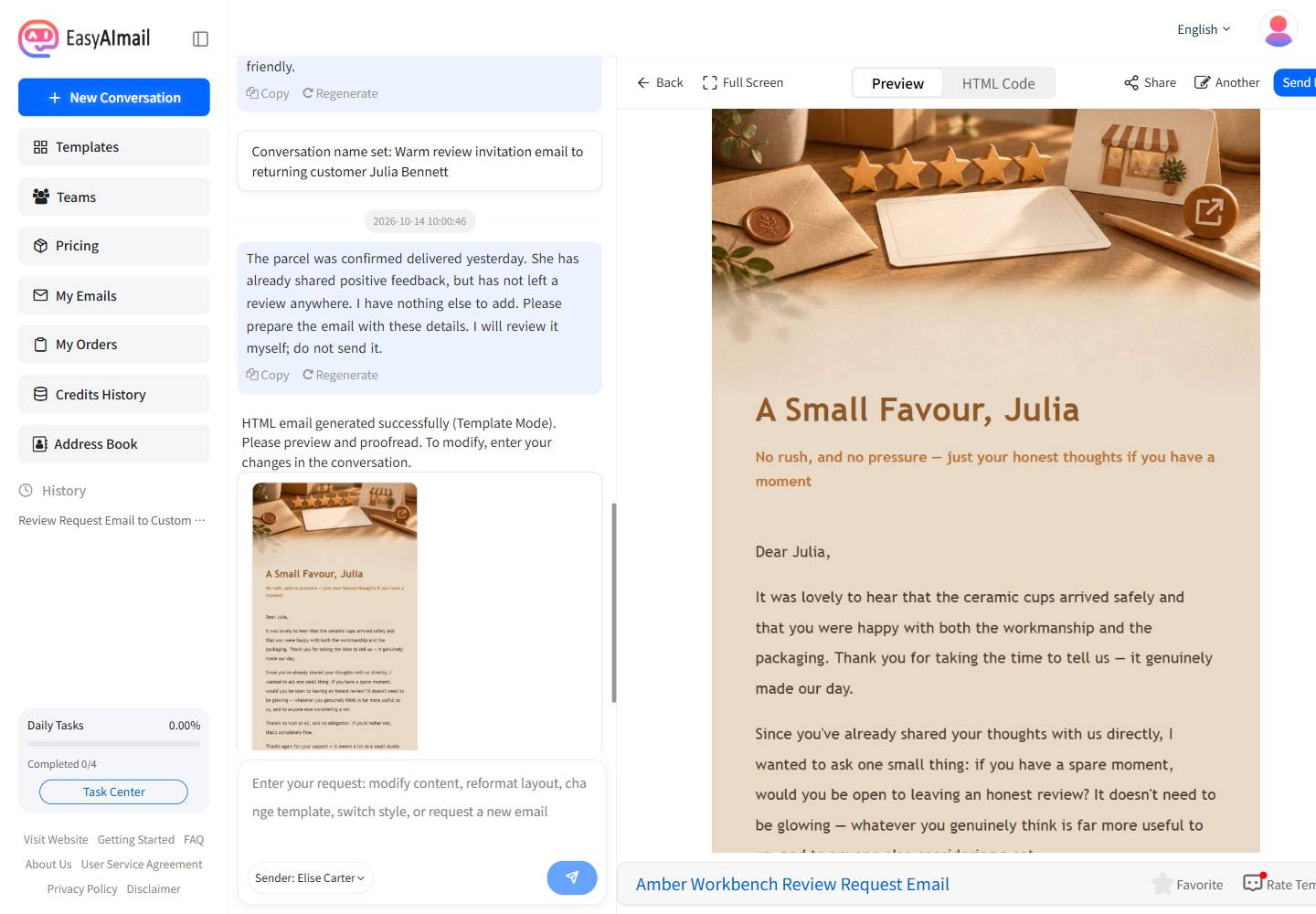
How to Ask a Happy Customer for a Review Without Sounding Pushy
Learn how to invite a satisfied customer to leave an honest review with a clear, low-pressure email that respects their time.
Read more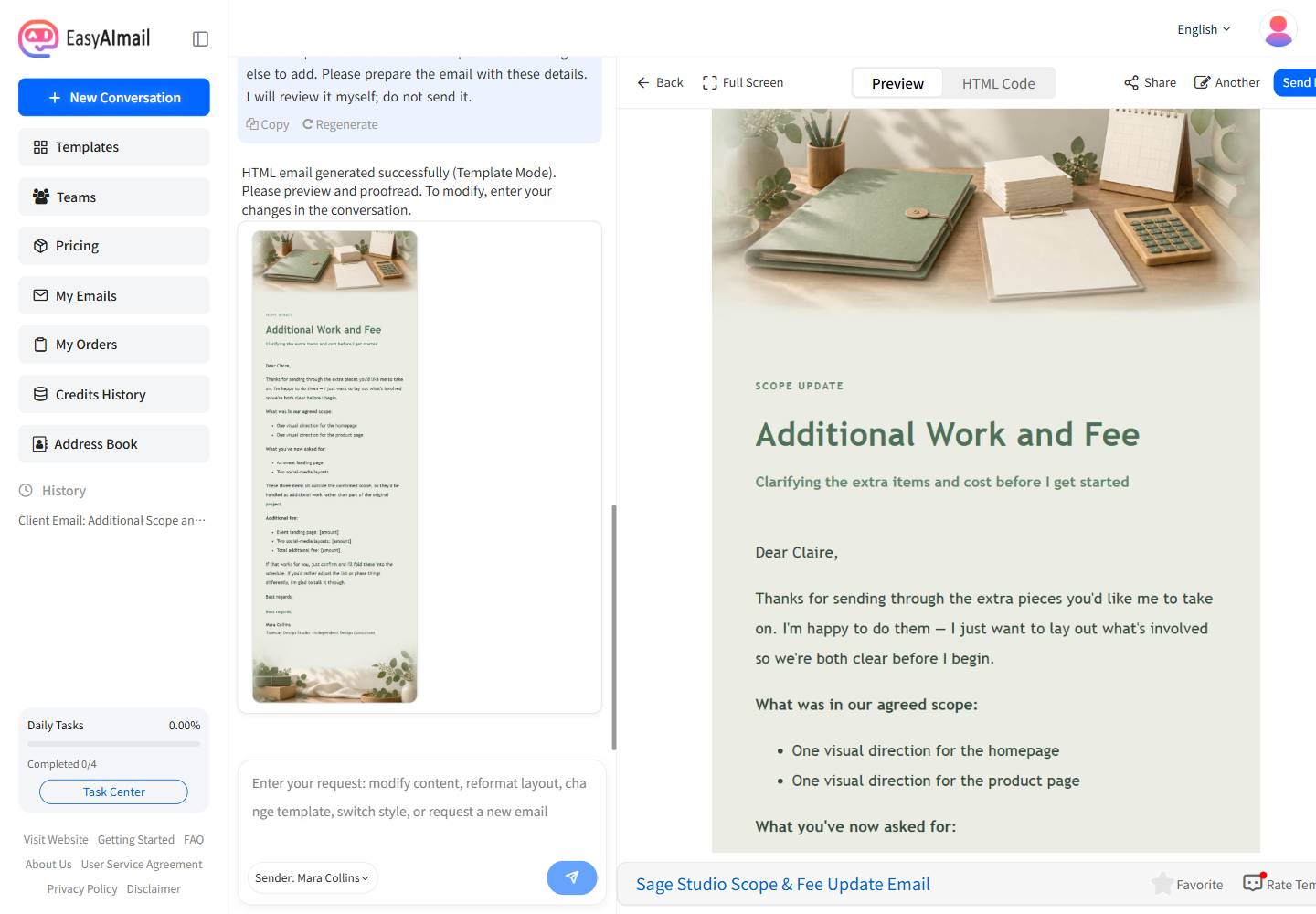
How to Tell a Client Extra Work Is Outside the Original Scope
Learn how to confirm added work, scope, fees, and timing with a client without sounding defensive or doing unpaid extra work.
Read more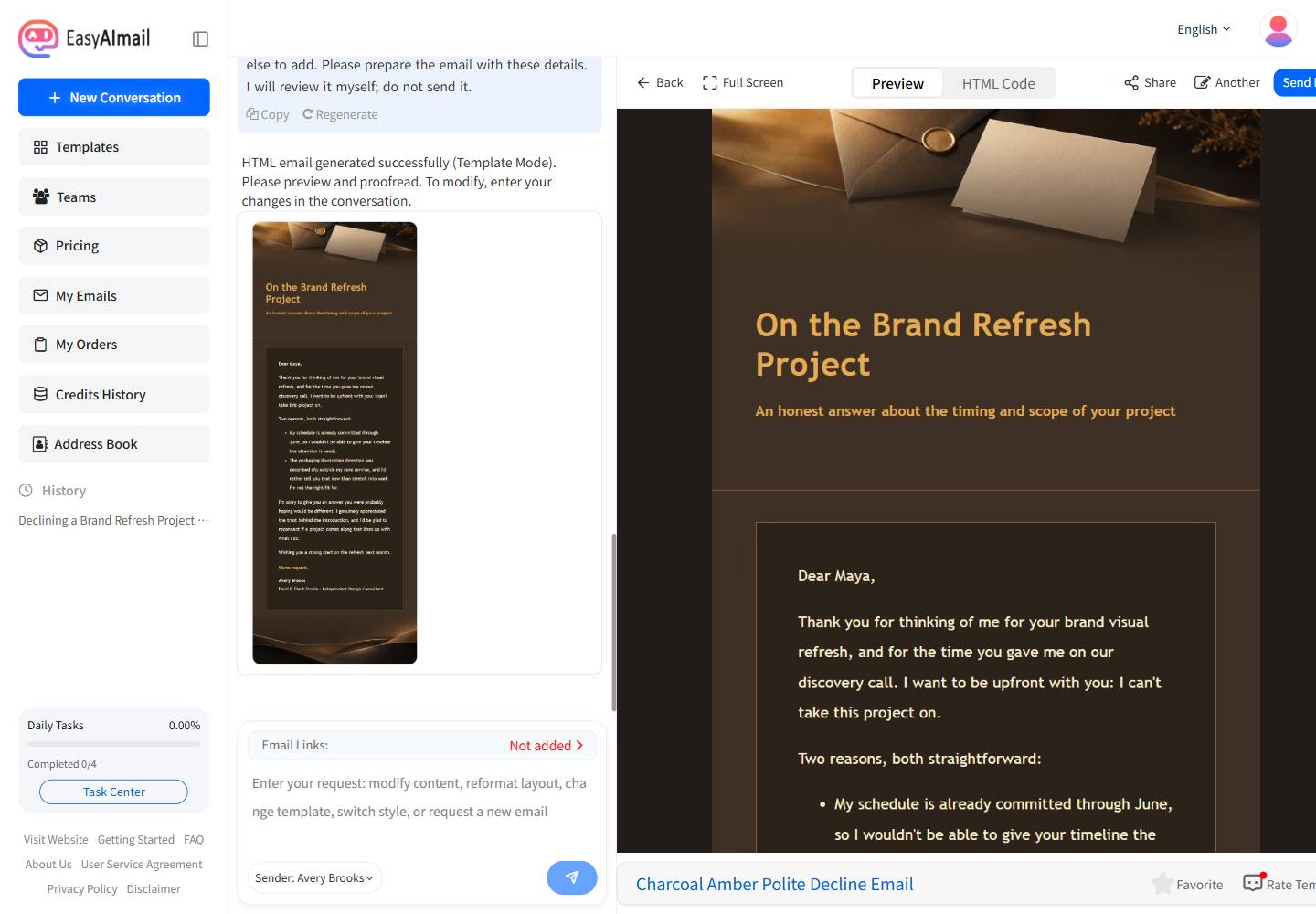
How to Politely Decline a Client Without Damaging the Relationship
Learn how to politely decline a client by stating the answer clearly, giving a brief real reason, and knowing when an alternative is useful.
Read more