The hard part is not saying Merry Christmas. It is letting people know their work was seen without making a holiday note feel like another performance demand. A Christmas message from a manager to a small team should recognize real effort, make the break feel protected, and avoid language that quietly asks people to stay available.
The risk hidden inside a warm holiday note
Managers often mean well when they send a year-end message. But a generic "thank you for all you do" can land as a slogan after a difficult quarter. A message that talks about "keeping momentum" or "coming back stronger" can make people wonder whether they are expected to read, reply, or prepare while off work.
Small teams make this more noticeable. People know who stayed late to solve a problem, who covered a handoff, and who protected a detail that would otherwise have been missed. They also know when a note avoids that reality. The goal is not a sentimental recap. It is a clear, human record of what the team carried and permission to put work down.
What the team needs to hear before the break
Name the work in a way that feels recognizable: a brand refresh, a client launch, or a difficult deadline. Then state the rest boundary plainly. "No one needs to reply to this email during the break" is better than "enjoy some time off" because it removes ambiguity. If there is a genuine emergency path, say who owns it.
Three things worth recognizing
Contribution, not personality
Praise the work that was done. "You protected the details during a rushed launch" gives people something real to take in. Labels such as "rock stars" or "superheroes" may sound upbeat, but they can turn overwork into an identity the team is expected to maintain.
Shared effort, not a winner's podium
For a small group, speak about the ways people supported one another. You do not need to rank individuals in a Christmas email. Save formal awards or performance feedback for a setting where everyone understands the criteria.
Rest as an operational decision
Say what can wait and who will handle the exception. The point is not to perform kindness. It is to make the expectation practical enough that people can log off without guessing.
Christmas message example for a small team
Subject: Thank you before the holiday break
Dear North Coast Studio team,
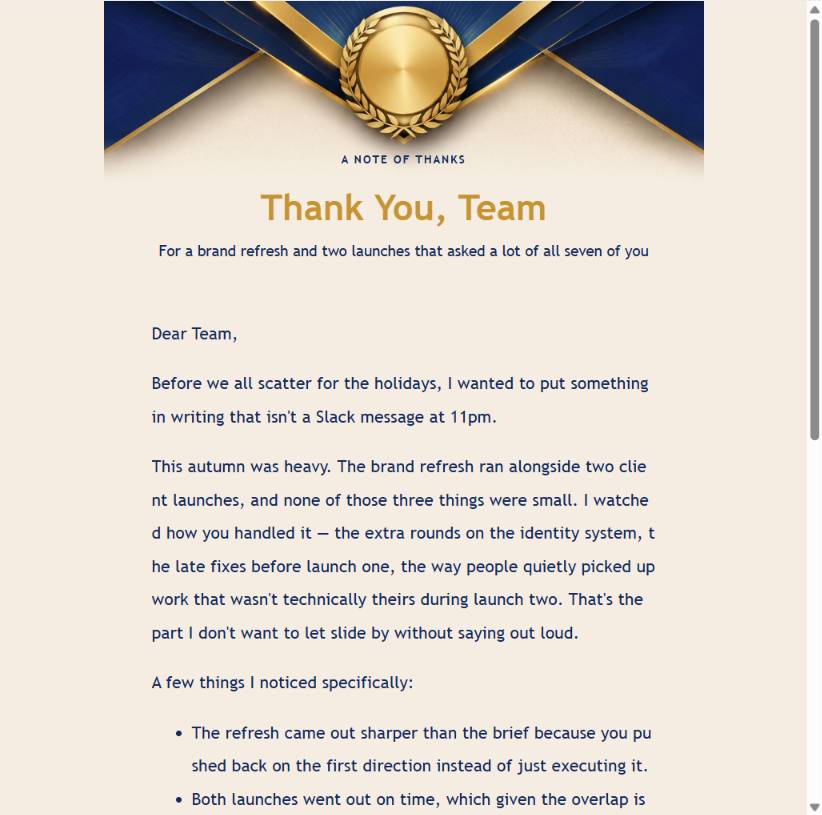
Before we step away for the holidays, I want to thank you for the work you carried this autumn. We finished the brand refresh and two client launches in a short stretch, and it happened because people stepped in for one another and kept hold of the details when the schedule got tight.
I saw the extra care in the work: the questions raised before something became a problem, the calm handoffs, and the willingness to help when a teammate needed room. That effort made a difference to our clients and to each other.
This is not a message that needs a reply. The email can wait, reviews can wait, and I will own any genuine urgent issue that appears. Please take the break, switch off where you can, and come back rested.
Thank you for how you worked together this year. Wishing you a peaceful Christmas and a good start to the new year.
Noah Bennett
Creative Director, North Coast Studio
The example gives credit without turning the team into a family metaphor or implying that their value is measured by availability. It also says exactly what happens to work during the break.
Put the rest boundary in the body, not in a footnote
If you want people to disconnect, the sentence needs to be visible. Do not bury it after several paragraphs of praise. A clear middle or closing line works well: "There is no need to reply during the holiday break." If urgent work has an owner, name the role or the person who will handle it. If you cannot offer that coverage, avoid promising that nothing will be expected.
This separates the email from a party invitation. How to Write a Team Holiday Party Invitation Email needs logistics, an RSVP, and a reason to attend. A manager's thank-you needs no action at all. For a peer-to-peer holiday note, How to Write a Christmas Email to a Client or Colleague is a closer match.
Avoid accidental performance pressure
Skip promises about bonuses, promotions, or next year's targets unless those decisions are already official and belong in a separate announcement. Avoid asking people to share their wins in reply. Avoid adding a request to update a tracker before the break. Each one turns a thank-you into a task.
The phrase "we could not have done it without you" is fine when followed by a real example. On its own, it is easy to read as boilerplate. Better: name the work, say what it protected, then close the loop with rest.
What the two visible template tests showed
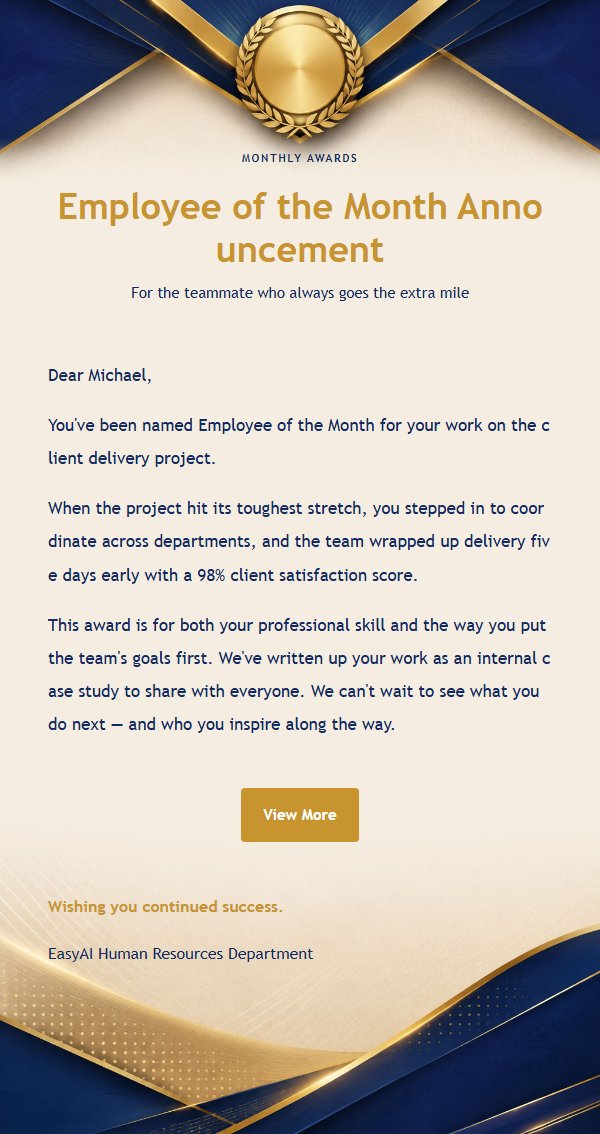
In this English-interface test, the simulated manager described a seven-person design team, a demanding autumn, a brand refresh, and two client launches. EasyAImail recommended templates first. The user reviewed details and chose the formal "Royal Blue & Gold Team Recognition Email" for a clear achievement-led direction.
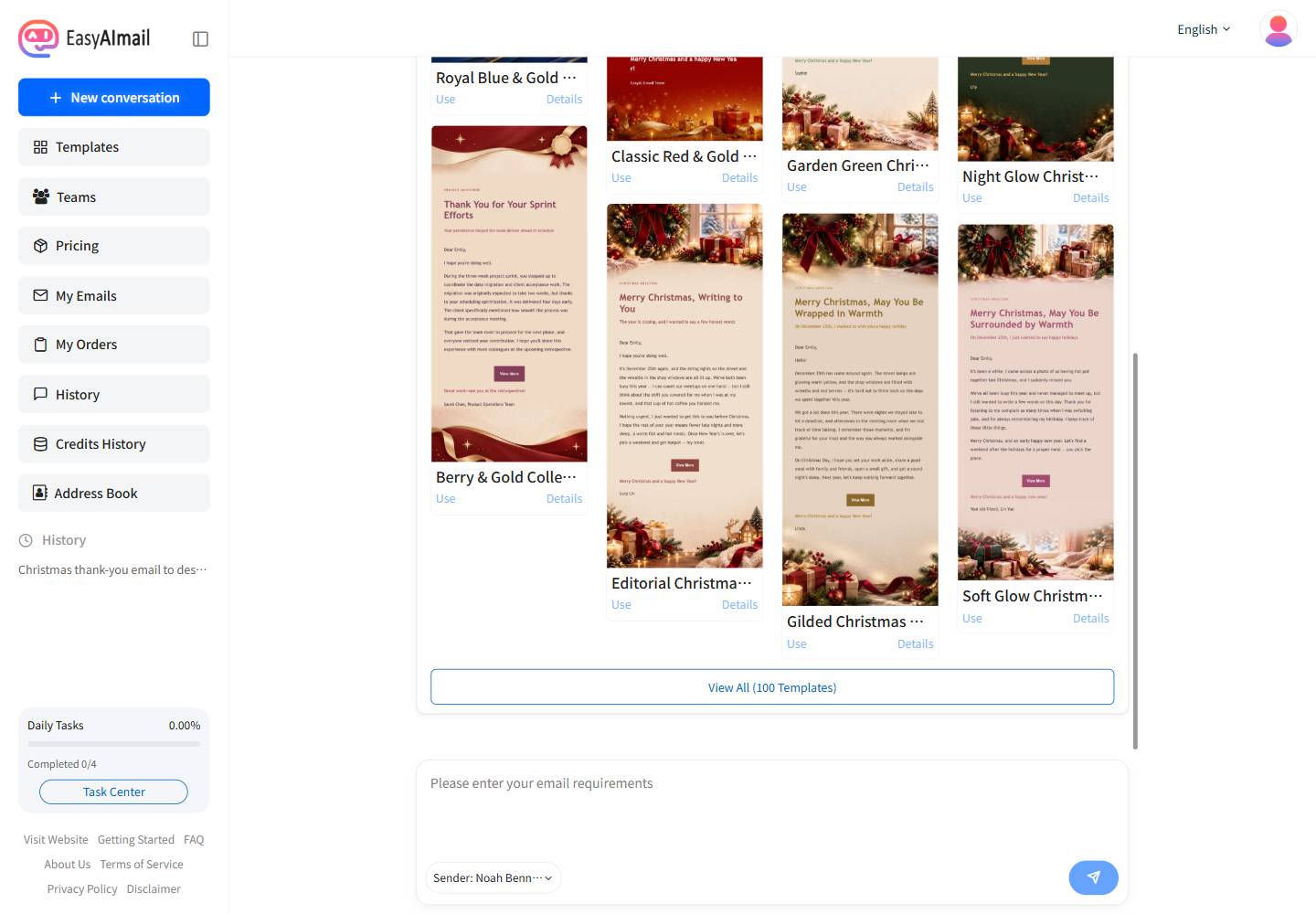
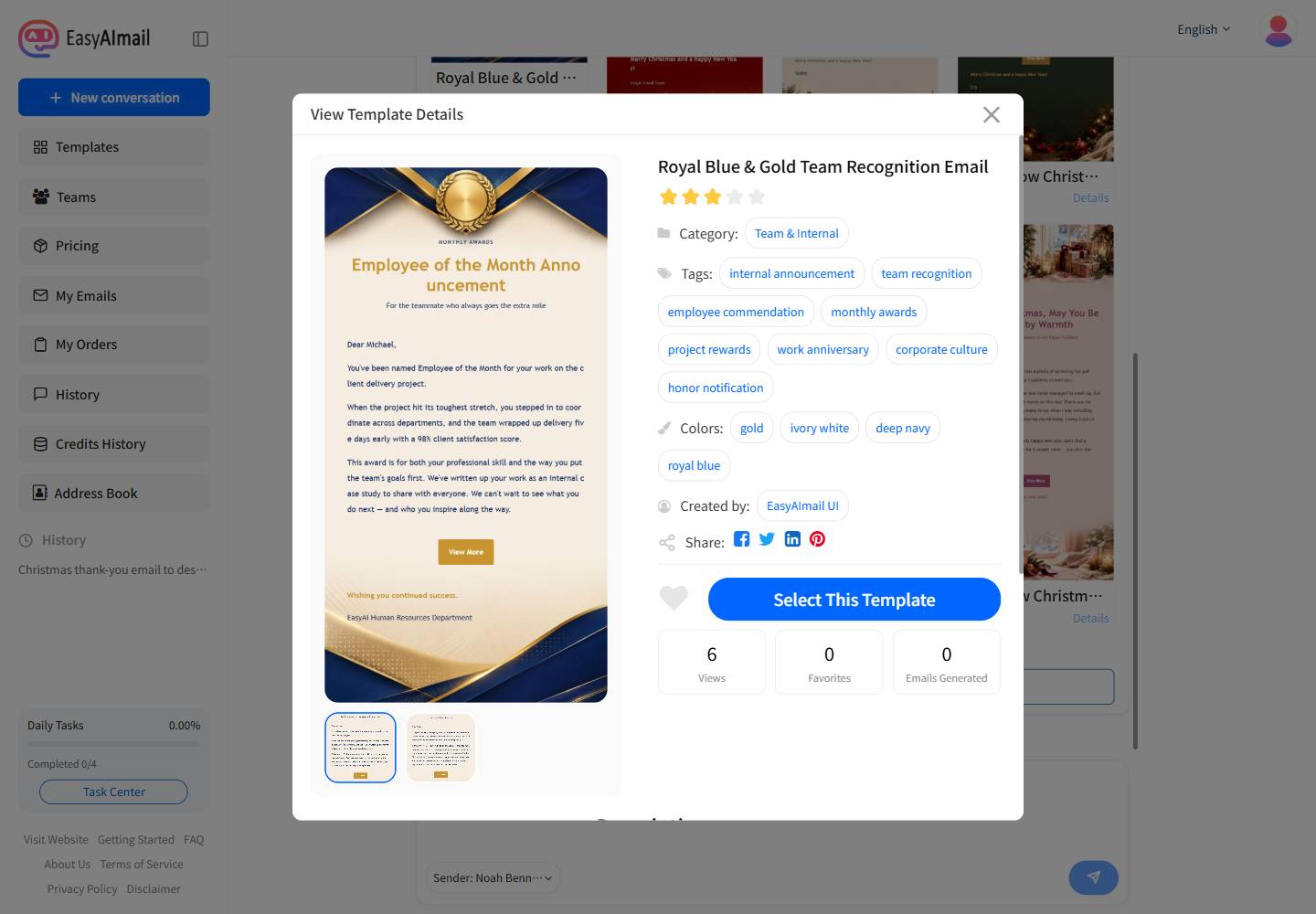
The visible detail page named internal communication, team recognition, project rewards, and employee commendation, with navy, royal blue, gold, and ivory. A separate clean conversation used "Berry & Gold Colleague Appreciation Email" for readers who prefer a warmer, more familiar appreciation visual.
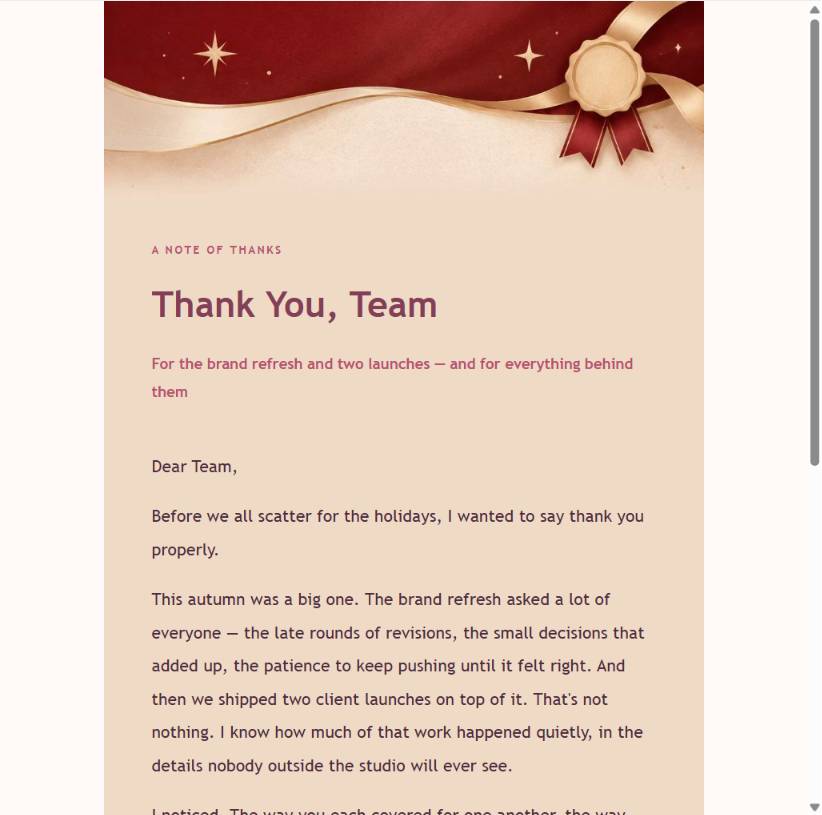
Neither option was selected automatically. The user looked at the details, chose the template, answered only the missing questions, and reviewed the complete HTML email. Both tests stopped before sending.
Use EasyAImail without taking the message out of the manager's hands
With EasyAImail, you can start with the situation rather than a finished draft. Describe the team, the work that should be recognized, and the boundary around time off. AI recommends relevant templates, but you choose after reviewing their details. It asks for missing information, generates the complete HTML email, and gives you the preview to check before you decide whether to send.
That matters for a team note. The tool can help the message look complete; the manager still decides what recognition is fair, what can wait, and whether the tone is right for the people receiving it.
FAQ: manager Christmas messages to small teams
How long should a manager's Christmas message be?
Usually 150 to 220 words is enough. The team should be able to read it quickly and find the one thing that matters: their work was noticed and the break is real.
Should I mention every person by name?
Only if a small group and a clearly shared context make that fair. Do not use a holiday note as a substitute for individual feedback, awards, or a performance review.
Should I say people do not need to reply?
Yes, when you genuinely do not expect a reply. It removes pressure, especially in teams that normally move quickly over email or chat.
What if we have holiday coverage?
State the coverage arrangement plainly and name the person or role responsible. Do not imply that everyone should quietly remain available.
Related resources
- How to Write a Team Holiday Party Invitation Email is for an event that needs attendance and logistics, not a thank-you without an action item.
- How to Write a Christmas Email to a Client or Colleague helps with a peer or client relationship where a manager's rest boundary is not the central issue.
Before you send it, make sure the message gives the team recognition and rest, not another unspoken task.