The hard part is not sending a holiday wish upward. It is making the thanks sound like a real working relationship rather than carefully staged flattery. A Christmas email to your boss or manager works best when it is short, specific, and free of a hidden year-end request. You are not trying to prove loyalty or create an opening for a salary conversation. You are simply naming one piece of support that mattered.
Why this email can feel awkward
An email to a manager carries a power difference, even when you get along well. That is why broad praise can feel uncomfortable on both sides. "You are an incredible leader" asks your manager to receive a compliment that is too big to respond to naturally. It can also make them wonder whether a request is coming next.
The useful question is smaller: what did this person do that changed your work? Maybe they gave you room to lead a difficult meeting, made time for practical feedback, or trusted you with a client-facing task before you felt fully ready. One real answer is more convincing than a paragraph of admiration.
Decide whether Christmas is the right moment
This kind of note is a good fit when you genuinely want to thank your current manager, the relationship is respectful, and the message can stand without a reply. It is also useful when most of your work happens remotely and ordinary appreciation is easy to leave unsaid.
Do not use a holiday email to raise a performance concern, negotiate pay, follow up on a promotion, or ask for time off. Those are legitimate subjects, but they deserve a direct email with a clear purpose. Putting them inside a Christmas thank-you makes the appreciation feel strategic.
Keep the message to four decisions
Start with the reason you are writing now
One line is enough: the year is ending, and you wanted to thank them before the break. This gives the email a natural frame without turning it into a greeting-card broadcast.
Name one moment of support
Choose an event your manager can recognize. "When you asked me to lead the client review" is stronger than "for always believing in me." It says what happened and why it stayed with you.
Explain the effect in work terms
You do not need to write an emotional testimonial. A sentence about becoming more confident, clearer in meetings, or better prepared for a responsibility is enough. It keeps the note grounded.
End with a low-pressure wish
Wish them a restful holiday and good start to the new year. Avoid a question that creates a task, such as asking about their plans. The note can be complete without a reply.
Christmas email example for a manager
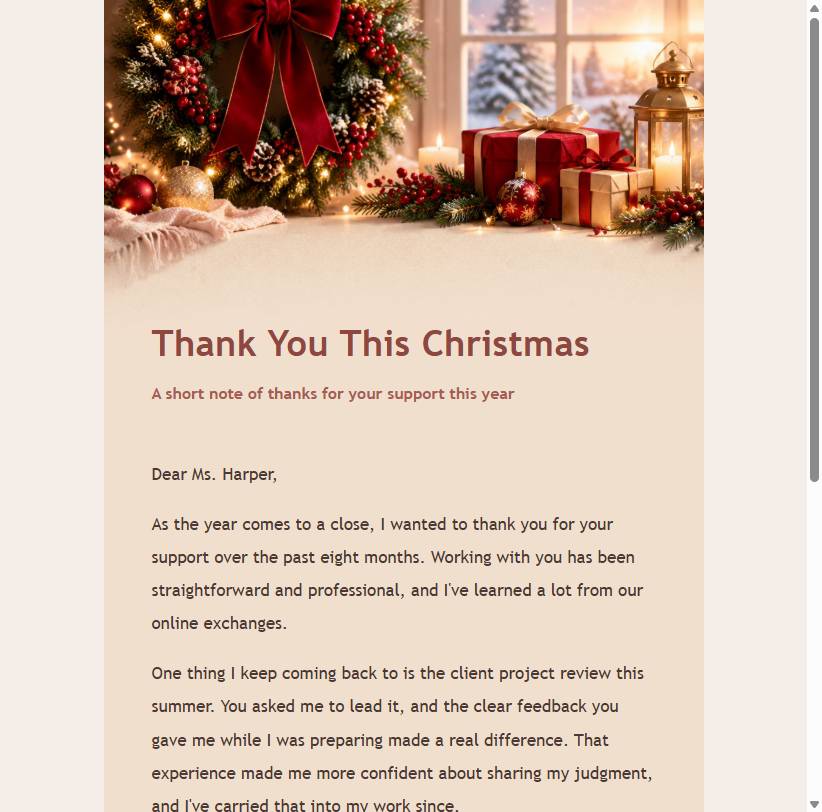
Subject: A small Christmas thank-you
Dear Ms. Harper,
As the year comes to a close, I wanted to thank you for your support over the past eight months.
I keep thinking about the client project review this summer. When you asked me to lead it, I was not sure I was ready. The feedback you gave me while I prepared made a real difference. I left that review more confident about sharing my judgment, and that has stayed with me.
I have appreciated how direct our working relationship has been, even with most of it happening online.
Wishing you and your family a peaceful Christmas and a good start to the new year.
Sophie Martin
This email has one point of gratitude, one concrete memory, and no implied bargain. It does not require the manager to reassure the writer, celebrate them in return, or answer during a break.
What makes a thank-you sound calculated
Avoid stacking praise: "You are the best boss I have ever had" does not add useful meaning. Avoid forecasting your ambition: "I cannot wait to take on even more next year" can turn a simple note into a performance signal. Avoid attaching a favor: "By the way, can we discuss my next step in January?" changes the entire message.
The same restraint helps with other occasions. How to Write a Birthday Message for Your Boss Without Sounding Like Flattery explains why a specific observation is safer than a grand compliment. For a practical work issue that needs a response, use a direct format such as How to Tell Your Manager About a Priority Conflict Before a Deadline.
Keep holiday warmth inside professional boundaries
"I hope you and your family have a restful holiday" is usually appropriate. Personal details are not required. If you do not know whether the person celebrates Christmas, "wishing you a restful holiday season" is a considerate alternative. Do not assume travel plans, religious practices, or family circumstances.
Length matters, too. Around 120 to 150 words is often enough. A longer email can accidentally turn a thank-you into a report on the year. The recipient should be able to understand the point in one calm read.
What the visible template test showed
In this English-interface test, the simulated user described an eight-month relationship with a current manager and one specific moment of support: leading a first client project review. EasyAImail recommended Christmas templates first. The user opened the visible details and chose "Editorial Christmas Greeting Letter" because its quiet paper-like spacing suited an upward thank-you better than a louder celebration card.
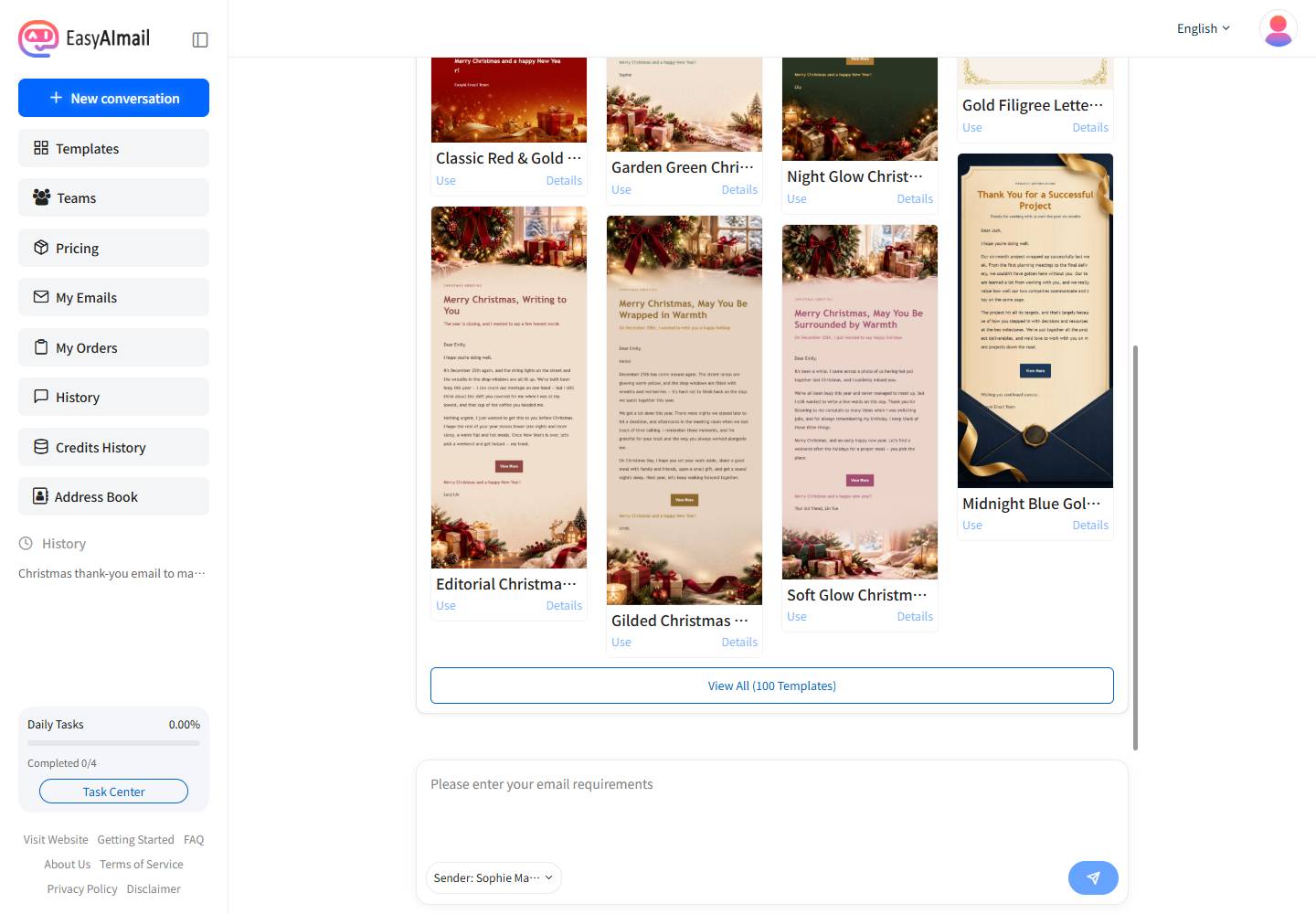
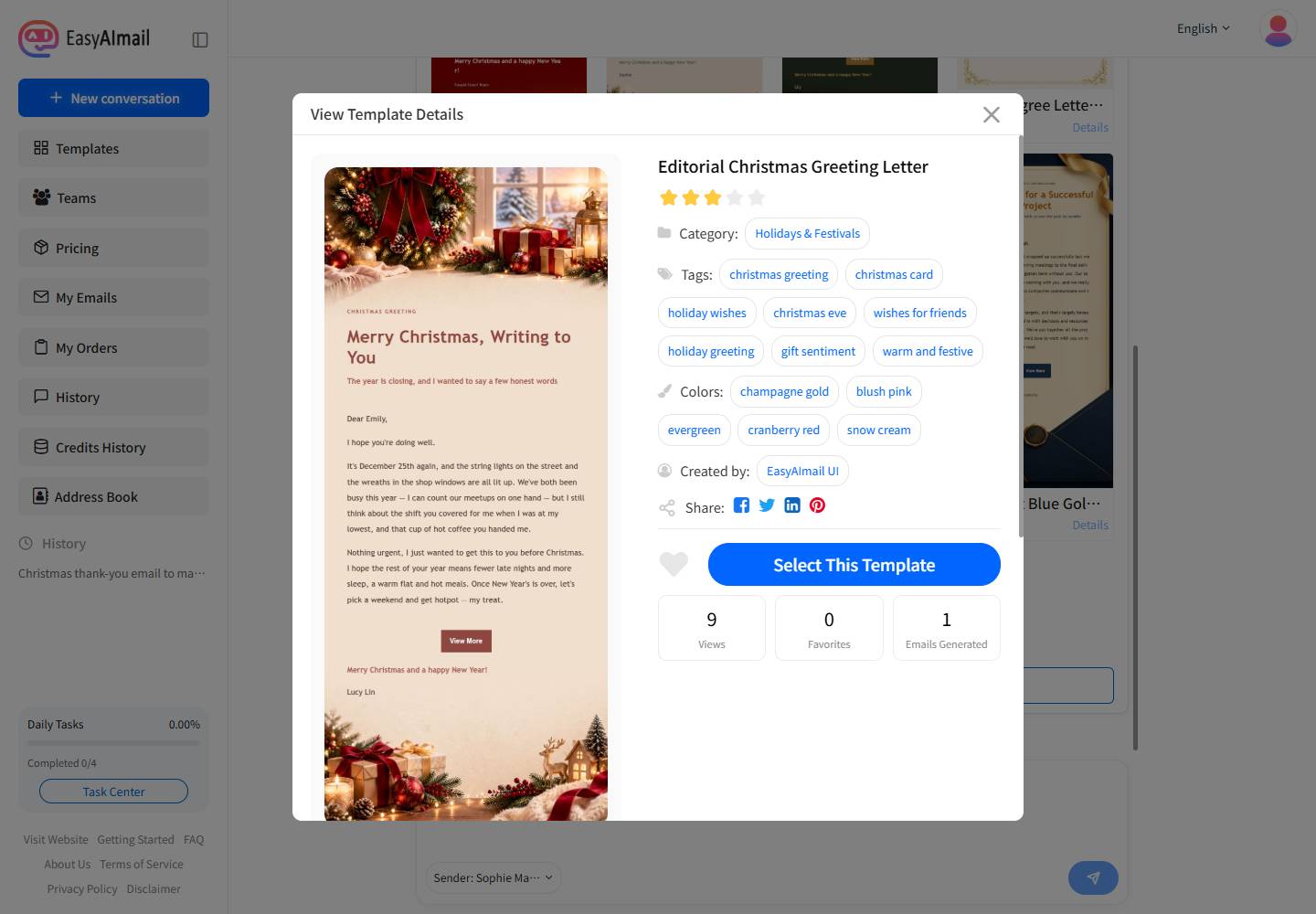
The reviewed details listed Christmas greetings and holiday wishes, plus evergreen, cranberry, champagne-gold, and snow-cream colors. The decision was not made by AI on the user's behalf. The user reviewed the details, selected the template, supplied missing context gradually, then reviewed the complete HTML email. Nothing was sent during the test.
Use EasyAImail to finish the whole email
EasyAImail is useful here because the difficult part is not only wording. You can describe the relationship and the support you want to acknowledge. AI recommends relevant templates; you decide which visual direction fits. It asks for the missing facts, generates a complete HTML email, and lets you review it before you decide whether it belongs in your draft or should be sent.
That leaves the relationship judgment with you. A template can help a thank-you feel complete, but it cannot decide how personal, formal, or timely your note should be.
FAQ: Christmas emails to managers
Should I send a Christmas email to my manager?
Send one when it reflects a real working relationship and you have something specific to thank them for. A short note is optional, not a workplace requirement.
Can I mention my manager's family?
Yes, in a general holiday wish if it feels natural. Do not use personal details you only know indirectly or make assumptions about their plans.
Should I ask for a meeting in the same email?
No. Send a separate, direct message for a meeting, promotion discussion, or work request. Keeping the Christmas note free of an ask protects its meaning.
What if my company does not celebrate Christmas?
Use "holiday season" or a year-end thank-you instead. The same structure still works: one real contribution, one effect, and a calm closing.
Related resources
- How to Write a Birthday Message for Your Boss Without Sounding Like Flattery shows how to keep an upward occasion message specific rather than inflated.
- How to Tell Your Manager About a Priority Conflict Before a Deadline is for a practical issue that needs a clear response, not a seasonal thank-you.
Before you send it, make sure the email leaves a specific thank-you, not a year-end request in holiday wrapping.