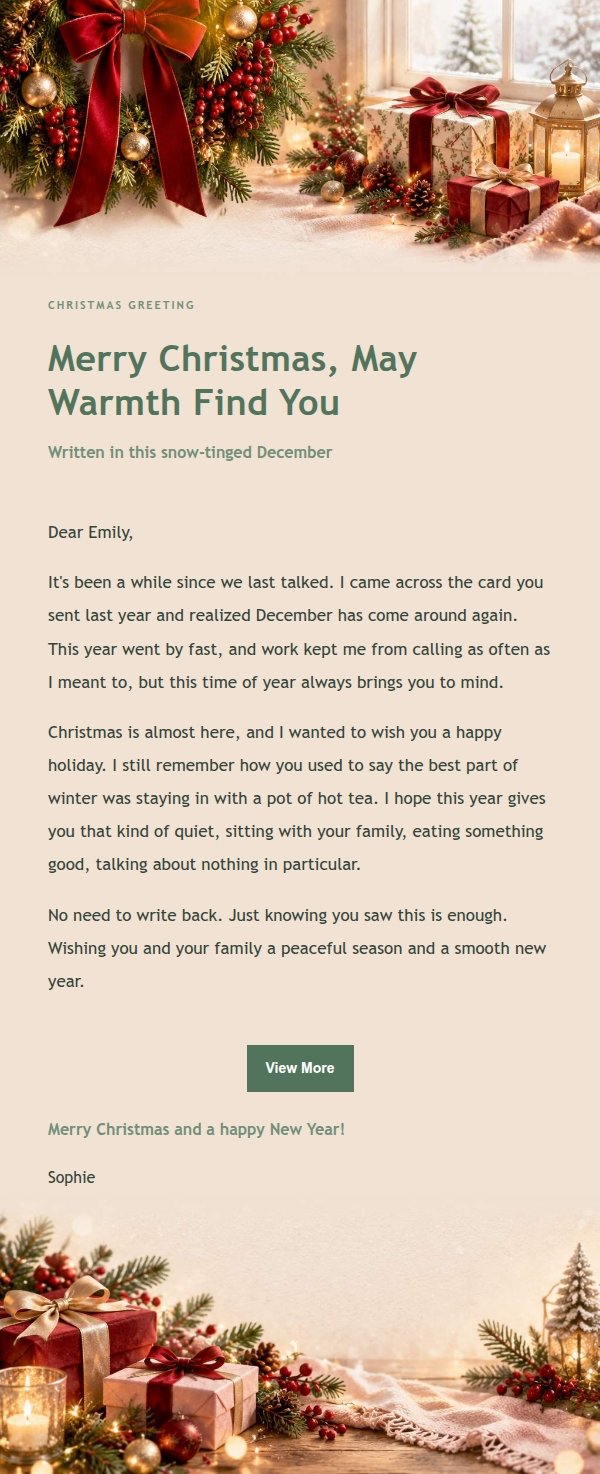
The hard part is not writing Merry Christmas. It is showing that their help still matters without turning an unexpected message into an obligation. A Christmas email to a teacher or mentor needs one specific thank-you, an appropriate address, and no pressure to reply. It need not become a confession about years of silence or a bid to restart a relationship.
Use this for a former teacher, professor, or mentor whose advice mattered at a particular time. It helps when a presentation or work decision brings their guidance back after two or three years of no contact. The goal is not to catch them up. It is to say thank you clearly.
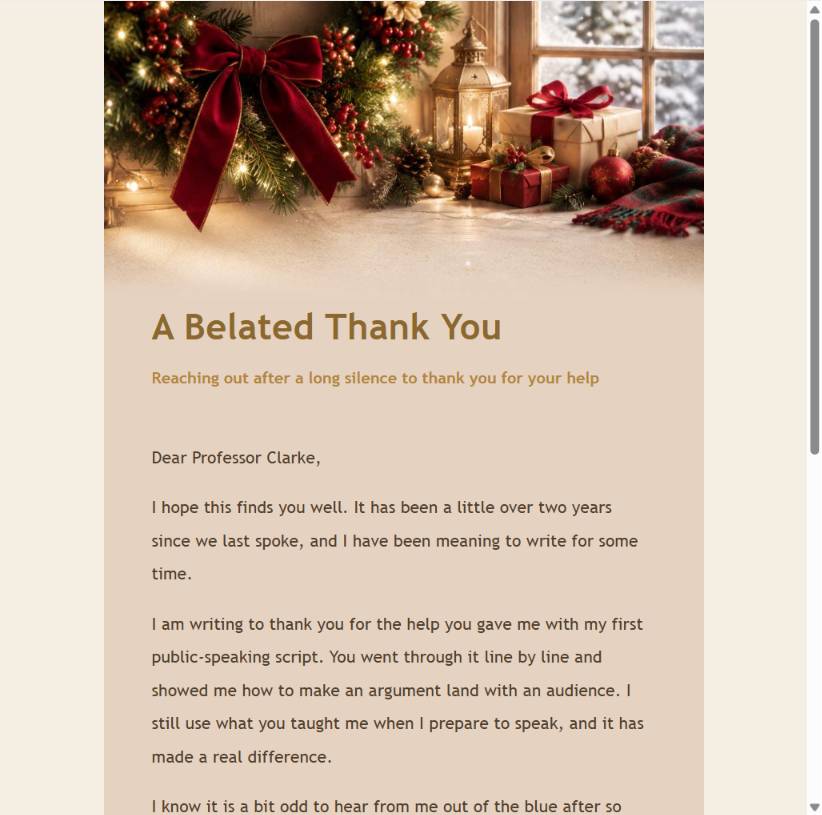
Start with how the recipient may read it
Time apart does not make a note unwelcome. The concern is simple: "Are they writing because they need something?" Answer it early.
You can acknowledge that the message is a little unexpected, without apologizing at length. Then name one real memory: what they did and how it still shapes your work or judgment. Close with a light seasonal wish. Do not schedule a meeting, add a request, or turn a reply into a courtesy they owe you.
Decide whether this is gratitude or an apology
If you simply never expressed your thanks well, do not make the whole email an apology for disappearing. Too much apology shifts the attention from their help to your discomfort.
If you genuinely owe an apology because you missed an obligation or ignored an important message, acknowledge it briefly and take responsibility. In that case, How to Write a Thank-You and Apology Email to a Professor After Years is the more useful starting point. Do not hide a real apology inside a routine Christmas greeting.
Four parts of a thoughtful message
Use the form of address you used before
"Dear Professor Clarke" is safer than switching to a first name when you are unsure. Follow the relationship you actually had, not the closeness you hope the email might create.
Name one specific impact
"Thank you for all your help" is sincere but easy to skim past. Try something like: "You helped me revise my first public-speaking script and showed me how to make a complex argument clear." One recognizable detail makes gratitude feel real without making the email long.
Explain why you thought of them now
One sentence is enough. Perhaps you are preparing an important presentation and remembered their guidance. It explains the timing without asking them to absorb a full account of your last few years.
Give them freedom not to reply
"I only wanted to thank you properly and wish you and your family a peaceful Christmas" is lighter than "I hope to hear from you soon." If you want to leave a door open, say you would be glad to hear how they are if they have a moment. Do not make it an assignment.
A Christmas email example for a former teacher
Subject: A Christmas hello, and a thank-you I have meant to send
Dear Professor Clarke,
As the year comes to a close, I have been thinking of the people whose advice has stayed with me. I recently prepared an important presentation at work, and it brought me back to the time you helped me revise my first public-speaking script.
You did more than improve the draft. You showed me how to make a complicated idea clear to an audience, and I still use that approach whenever I need to speak with confidence. I realized I never thanked you properly for the patience and care you gave me then.
It has been a little over two years since we last spoke, so I hope this note does not feel too abrupt. I am not writing to ask for anything. I simply wanted to say thank you and wish you and your family a peaceful Christmas.
With warm regards,
Maya Bennett
What to remove before you send
Read the draft once with a simple question in mind: does this line thank them, or does it ask them to manage my awkwardness? These parts can usually be cut or shortened.
- A long explanation of why you did not write for two years.
- An overly familiar greeting you would not have used when you were their student.
- "Please reply" or a request to meet right away.
- Broad praise that replaces one real memory.
Two visual directions for different relationship distances
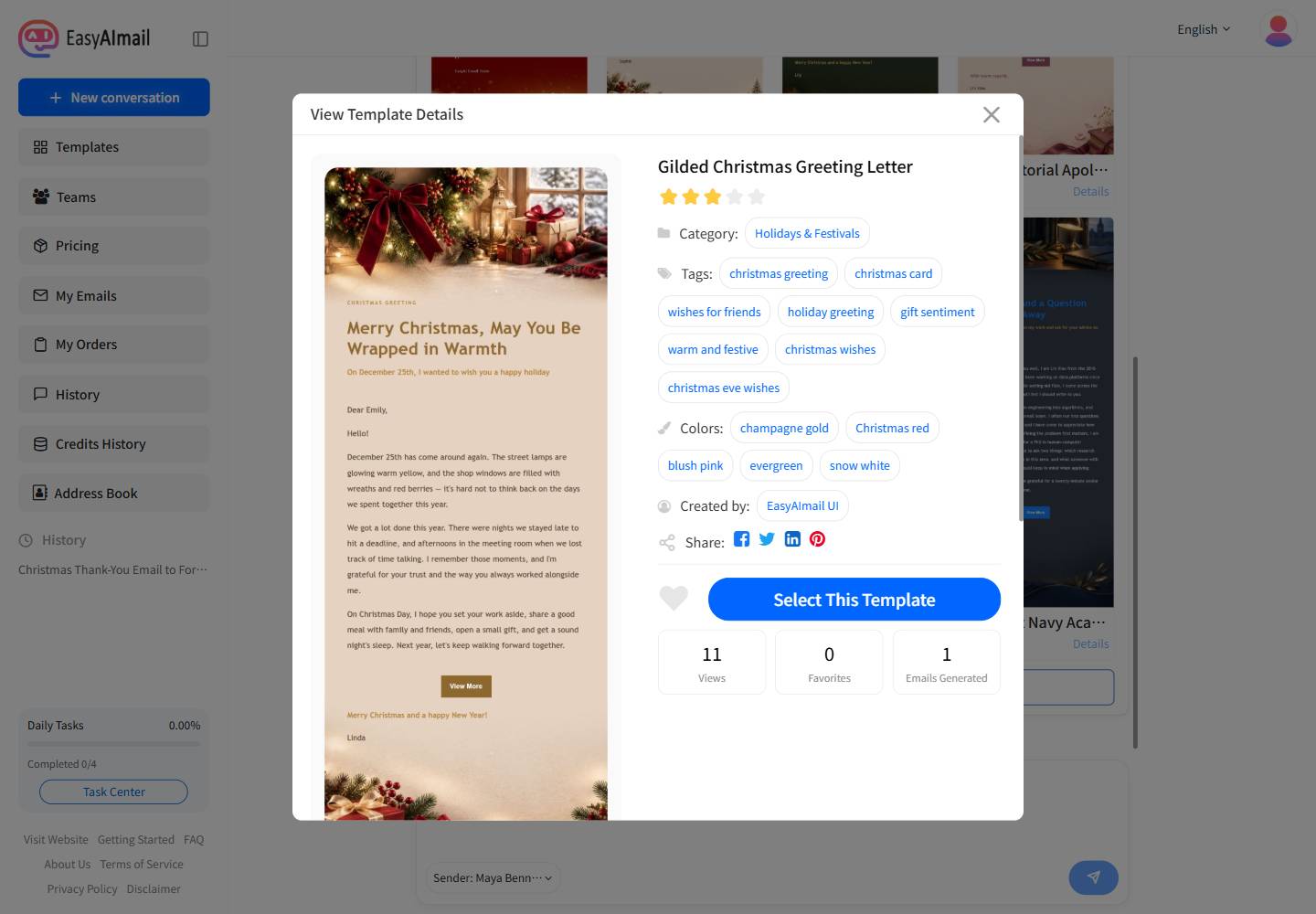
In this English-interface test, the user began with a real concern: a Christmas thank-you after more than two years out of touch. EasyAImail recommended relevant templates, and the user opened the details to review the name, tags, colors, description, example, and URL before making either choice.
Gilded Christmas Greeting Letter uses a champagne-gold, evergreen, and letter-paper direction. It is a good fit when you want a formal salutation and a restrained seasonal atmosphere.
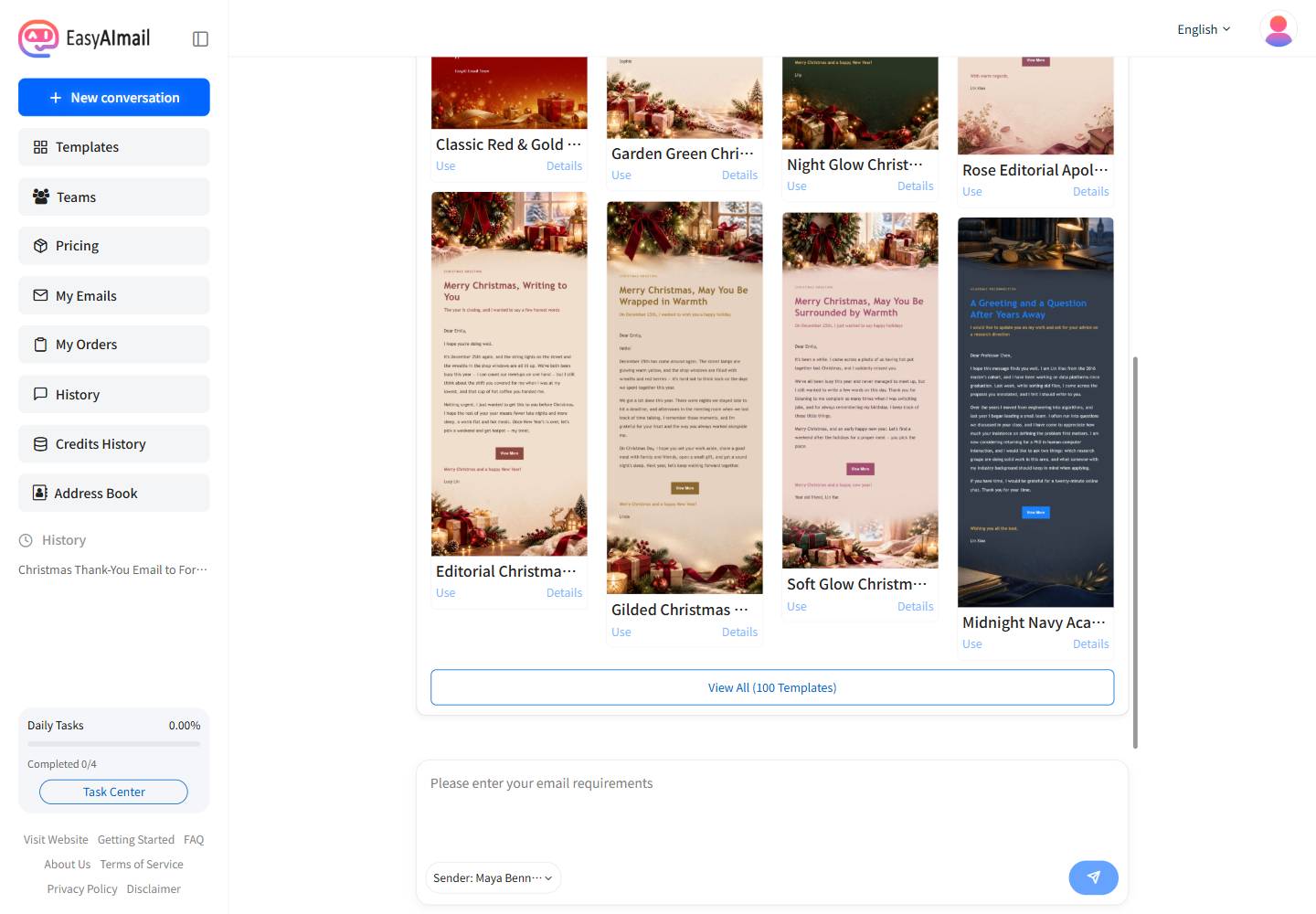
Garden Green Christmas Greeting feels more natural and warm while keeping a refined paper-like body area for a longer note. It can suit a mentor who knew your work well, provided you still keep the greeting, memory, and next step appropriately measured.
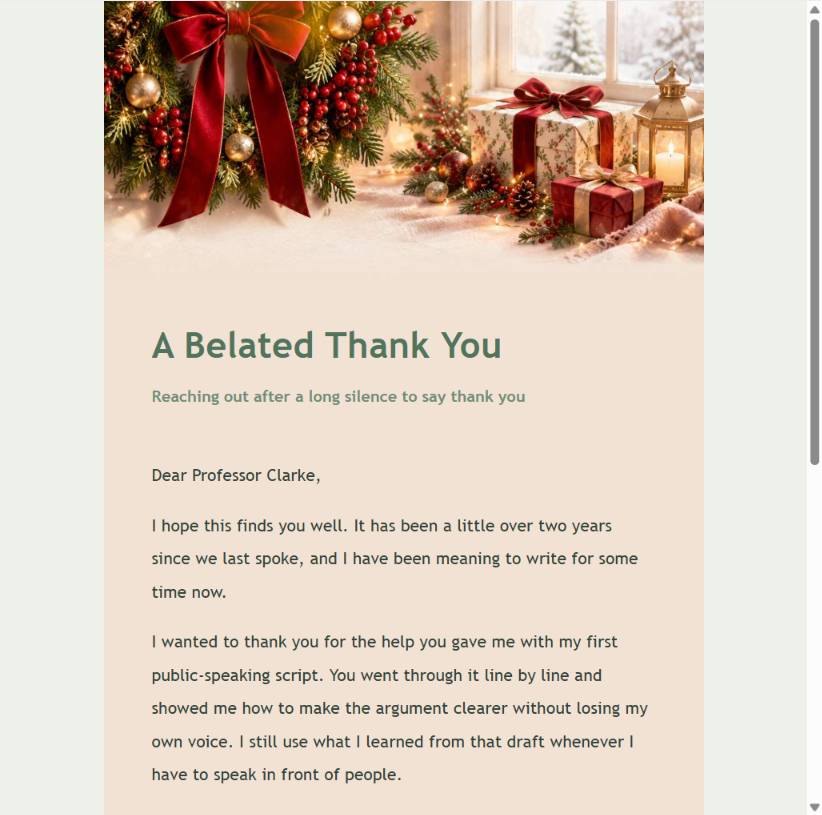
A template gives the message a visual direction. It does not decide whether the relationship is close enough for a first-name greeting, an invitation, or a personal update. Those choices remain yours.
Use EasyAImail without handing over the judgment
With EasyAImail, you first describe who the email is for and what feels difficult about writing it. AI recommends relevant templates, and you inspect the details before selecting one. After that, it asks only for the missing details, such as the salutation, the specific reason for thanks, or the tone. You preview the complete HTML email, revise it conversationally if needed, and decide whether to send it. The sending decision stays with you.
That process is useful when a generic holiday line is not enough. It helps you turn your own memory and intention into a complete email without pretending a tool can decide the right level of closeness.
FAQ: Frequently asked questions
Is it strange to email a teacher at Christmas after years of no contact?
Usually not, when the note is respectful, specific, and does not ask for anything. A short thank-you without pressure to reply is often more natural than continuing to put it off.
Should I say Merry Christmas or Happy Holidays?
If you know the recipient celebrates Christmas, a Christmas wish is fine. If you are not sure, "Wishing you and your family a peaceful holiday season" is warm and more neutral.
Should I include a life update?
Keep it to one or two lines that connect to the thank-you. Mentioning a presentation that brought their advice to mind works well. A complete account of your life since graduation does not belong in the first note.
Can I ask to meet or schedule a call?
You can, but it is usually better not to lead with that after a long gap. Leave a gentle opening instead: "If you ever have a spare moment, I would be glad to hear how you are doing."
Related resources
- How to Write a Thank-You and Apology Email to a Professor After Years is for cases where you also need to acknowledge a delayed apology.
- Christmas Wishes for a Friend: What to Write and What to Skip helps separate gratitude to a teacher from a more casual holiday note to friends or family.
Before you send it, make sure the email leaves gratitude rather than pressure. They may not need to reply, but they can still know their help was not forgotten.