
How to Write a Thank-You and Apology Email to a Professor After Years
After years without contact, writing to a former professor can feel difficult for a reason that has little to do with grammar. You may remember how much their support meant to you, know that you should have replied sooner, and still worry that a sudden message will feel intrusive, awkward, or emotionally heavy.
This kind of email does not need a complete account of your life, and it does not need to place the professor under pressure to respond. A better approach is to acknowledge the delay, give only the context needed to explain the silence, and make the gratitude specific.
Start with the real problem: how to reopen the conversation
When years have passed, people often rewrite the first sentence again and again. Should the email begin with an apology? Should it explain what happened? Will a simple thank-you sound too sudden? These questions are understandable, but the message should not become a long self-explanation.
If the lost contact was connected to private circumstances, a brief sentence such as “I was going through a difficult period and did not handle communication well” may be enough. The professor needs context, not your complete personal history. One clear apology is also stronger than repeated self-criticism.
A simple structure for a sincere apology and thank-you email
- Use a direct subject line: “I wanted to apologize and thank you” tells the professor why you are writing.
- Explain why you are reaching out now: greet them and acknowledge that the message is long overdue.
- Keep the explanation brief: provide the necessary context without turning the email into a memoir.
- Make the gratitude concrete: mention the support, patience, or guidance that stayed with you.
- Remove the pressure to reply: make clear that you are not asking for a recommendation, a favor, or emotional reassurance.
This structure recognizes the silence while giving the recipient room to receive the message freely. It is usually more natural than leading with several paragraphs of explanation.
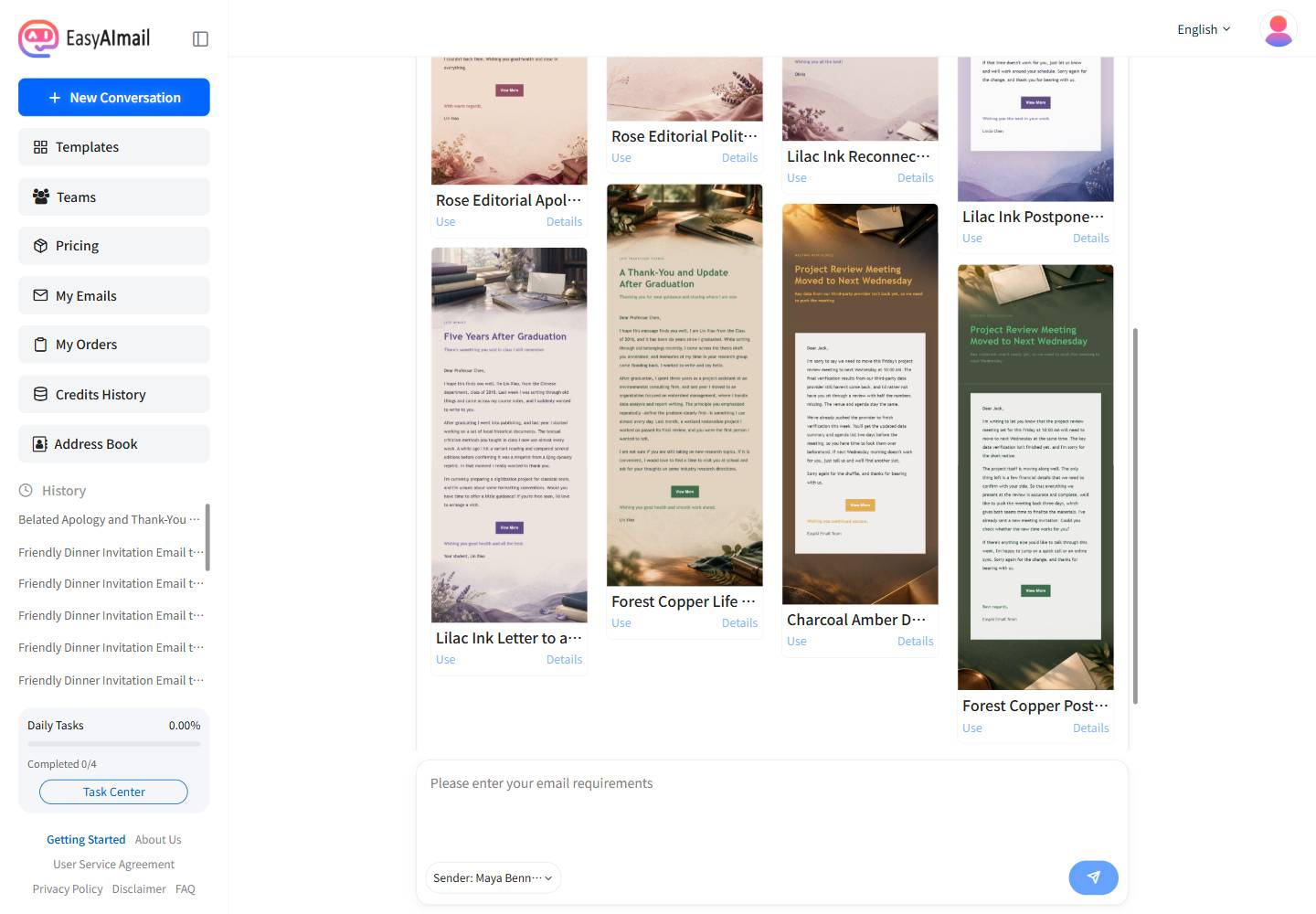
Use EasyAImail to shape the wording step by step
If you know that you want to express an apology and gratitude but are unsure how to phrase it, start a conversation in EasyAImail with the core intention. Then answer the AI's follow-up questions one at a time about the background, form of address, purpose, and tone. This gradual process feels more like a real writing conversation than submitting a complete brief all at once, and it helps you decide what actually belongs in the message.
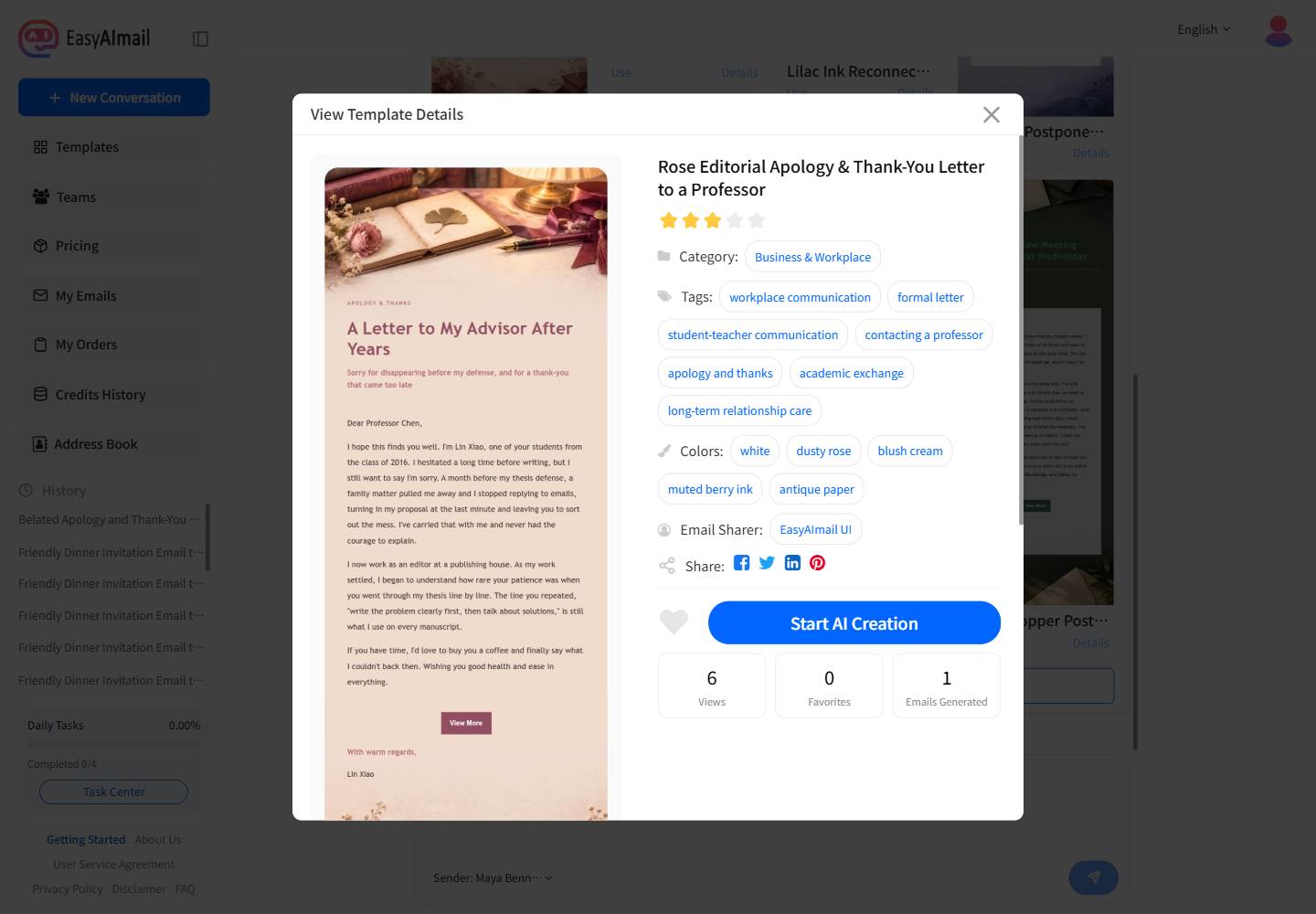
For this scenario, the English interface selected Rose Editorial Apology & Thank-You Letter to a Professor. Its tags cover student-teacher communication, contacting a professor, apology and thanks, and long-term relationship care. The dusty rose, blush cream, and antique paper palette keeps the letter personal, warm, and formal without making it look like a business follow-up. Proofread every name, fact, and private detail yourself, and keep the email in preview until you are ready to decide whether to send it.
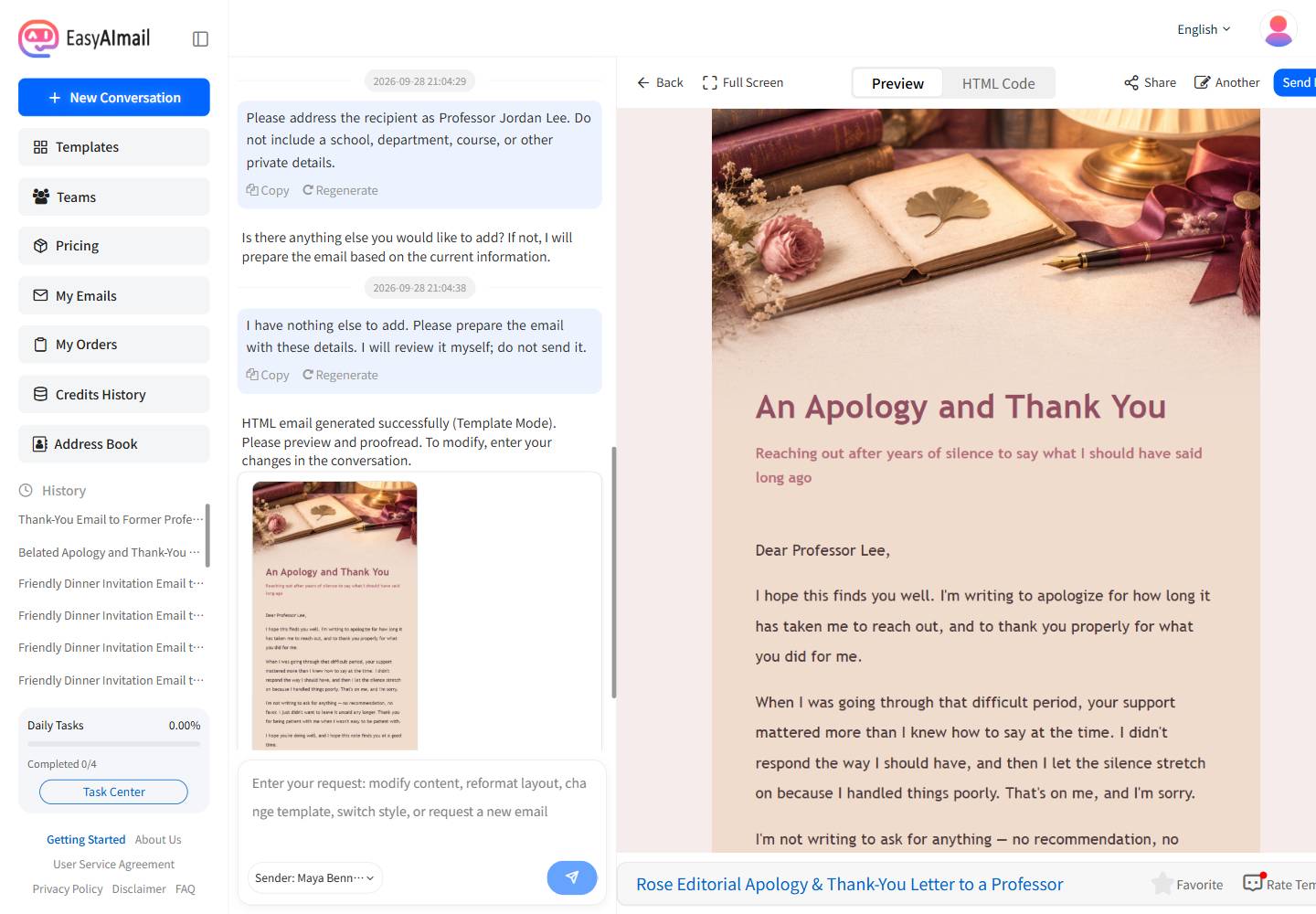
The goal is not to make a late message perfect. It is to make the apology clear, the gratitude specific, and the professor free to respond only if they wish.