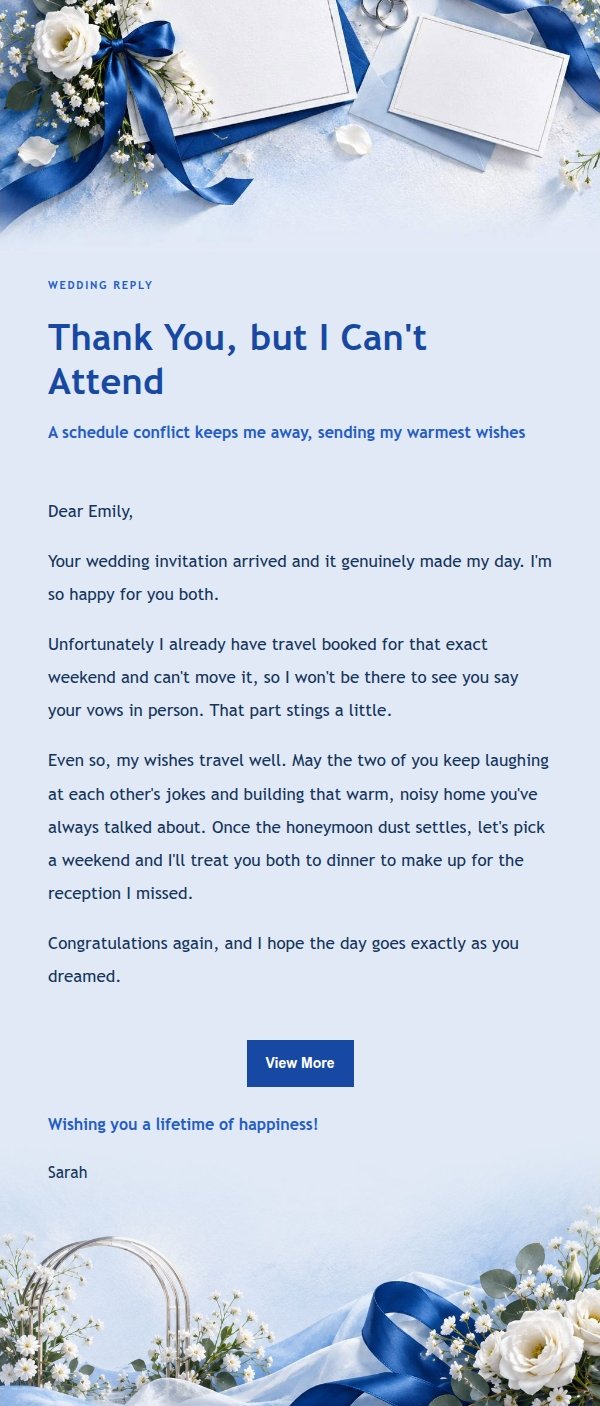
When you cannot attend a wedding, it is easy to over-write the reply: travel details, family details, repeated apologies, and no clear answer. Start by thanking the person, say plainly that you cannot attend this time, and leave the warmth with the couple. Being sincere does not mean handing over your private life.
Give the couple an answer early
They need an RSVP, not a mystery. Thank them, then say you will not be able to attend. Do not spend three paragraphs building toward the point, and do not use “maybe” if you already know the answer is no.
Clear is not cold. The uncomfortable alternative is leaving someone unsure whether to keep a place for you.
A simple three-part reply
- Thank them. Let them know the invitation mattered.
- State the decline. One short sentence is enough.
- Offer good wishes. Keep the focus on the couple and the day ahead.
You can say you are sorry to miss it without explaining family commitments, travel constraints, money, or the history of the relationship. A gift is not a required line in the email either; it is a separate personal choice.
Wedding decline email example
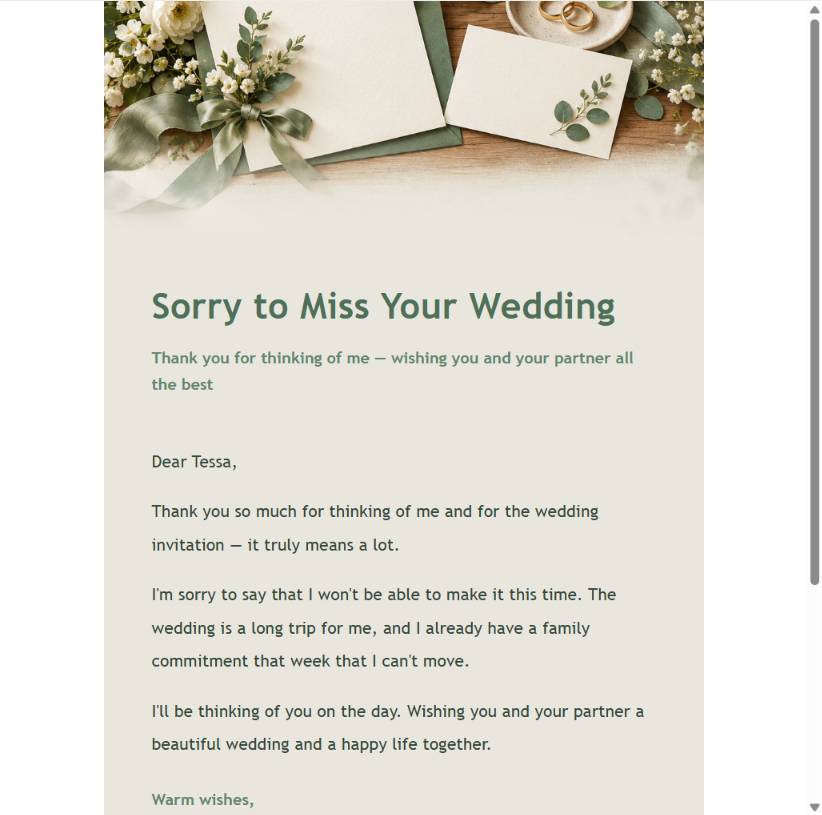
Subject: Congratulations, and thank you for thinking of me
Dear Tessa,
Thank you so much for inviting me to your wedding. I was genuinely happy to hear your news and to know that you thought of me.
I am sorry to miss it, but I will not be able to attend this time because of a family commitment I cannot move.
I hope the day feels joyful and easy, and that you and your partner have a wonderful start to this next chapter together.
Warmly,
Renee Walker
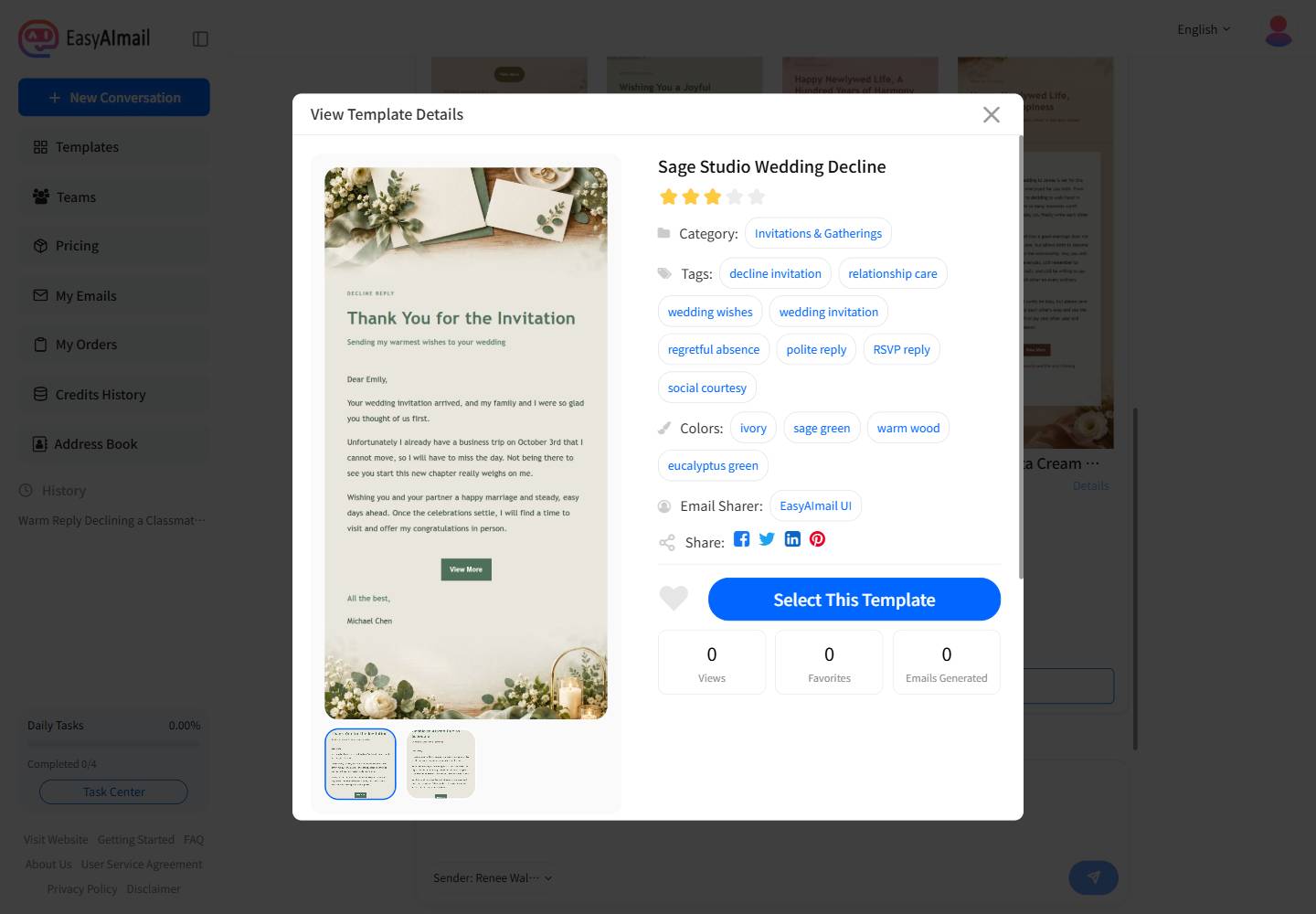
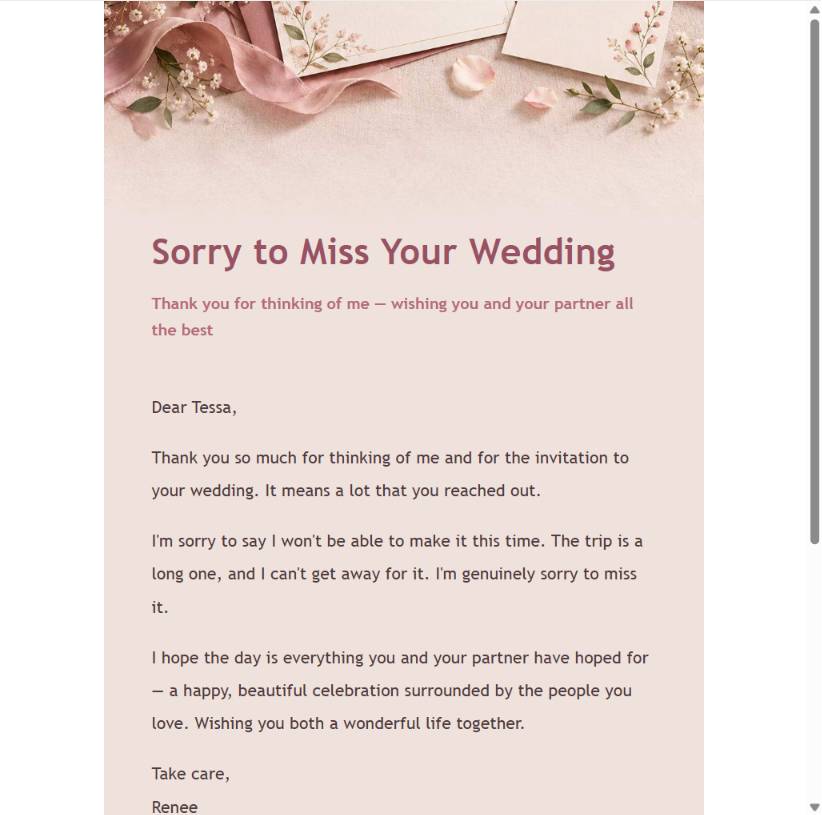
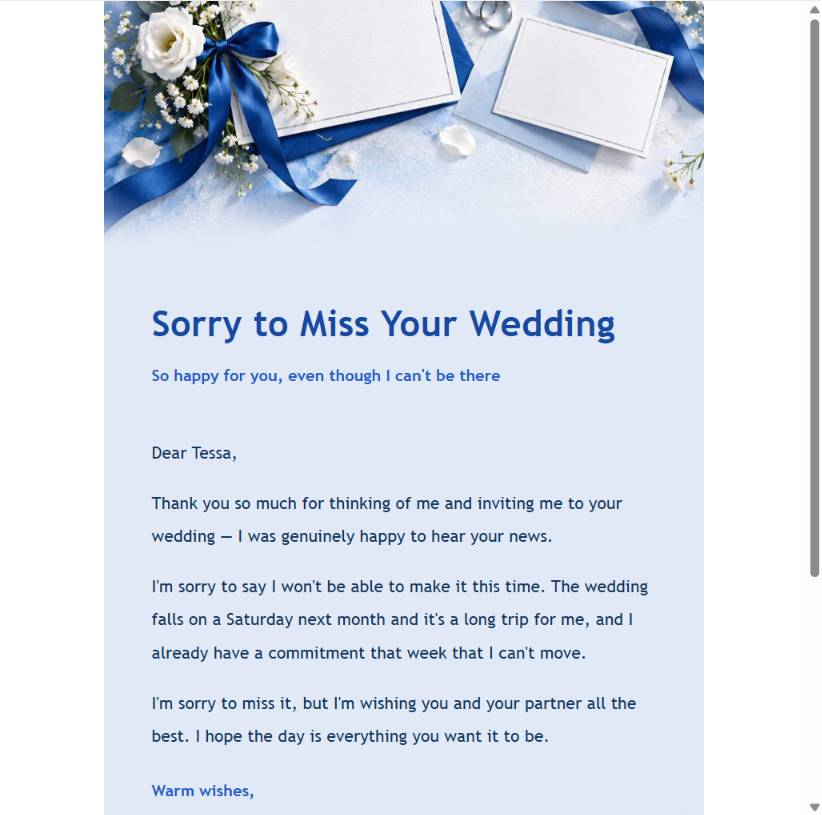
In this English-interface test, the simulated user opened the recommended template details before choosing a design. Its purpose, examples, tags, and tone needed to fit a kind personal decline, not resemble a decorative wedding invitation.
The relationship changes the texture, not the answer
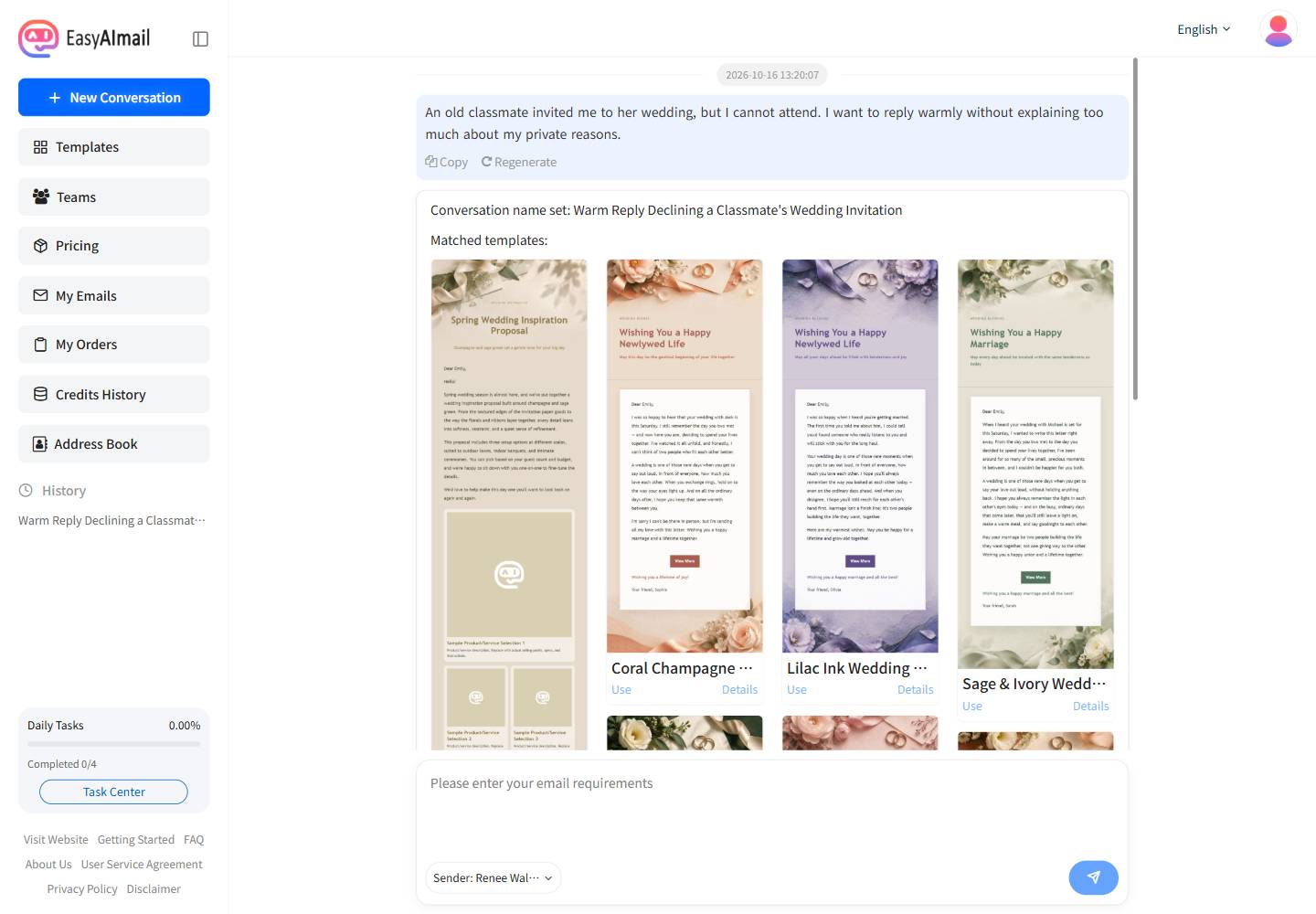
For a close friend, you might add a personal memory. For a relative, a more formal note may feel right. For an old classmate, a brief, warm reply is often the most respectful choice. These three previews come from separate conversations about the same facts. The user reviewed the details and chose a visual direction; the tool did not choose on their behalf.
Let EasyAImail help with the awkward middle
You can begin with a normal sentence: “I need to decline an old classmate’s wedding invitation without explaining too much.” EasyAImail can recommend relevant templates, but you inspect the details and decide what fits the relationship.
It then asks for the greeting, closeness, reason boundary, and tone in smaller turns. Before generating, you can make clear that a gift should not be treated as required. This workflow generates and previews the email only; it does not send it.
Before you send
Before you send it, check that the answer is clear in the first two paragraphs, the wishes feel real, and you have removed private details you do not want to share.
Do I need to give the real reason?
No. “I have a prior commitment I cannot move” is usually enough. More detail can invite questions you never intended the email to answer.
Should I mention a gift?
Not unless you want to. A gift is not a condition of a gracious RSVP.
Can I promise to make it up later?
Only if you genuinely intend to arrange it. A sincere good wish is better than an easy promise you may not keep.
> All people, dates, and email copy in this article are fictional examples. The email was generated and previewed only; it was not sent.