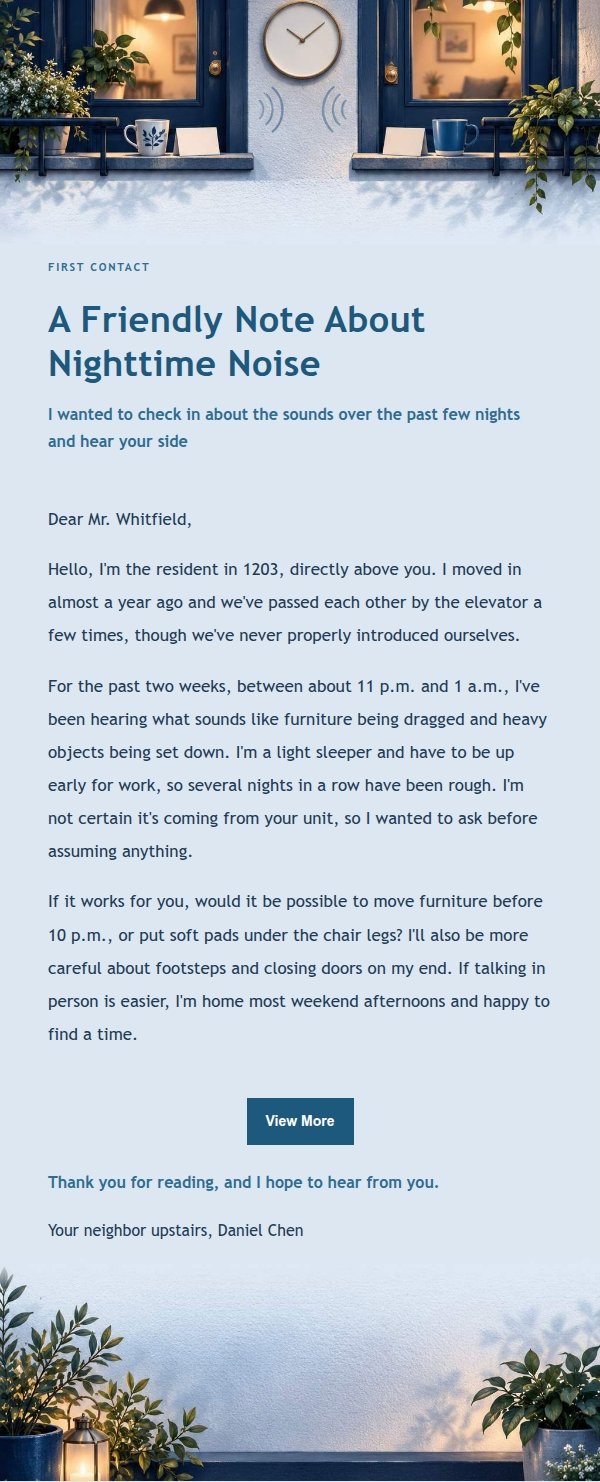
The first email to a neighbor can carry a lot of accumulated irritation. You want a daily problem to improve, but you do not want the first note to turn the relationship into a fight. Start by introducing yourself, state what you have actually observed, and make one small request that is easy to answer. The point of a first email is not to win an argument. It is to open a door.
Keep the first note about the immediate issue
If the issue is late-night noise, say when it happens, what you can hear, and what kind of arrangement would help. Do not guess at intent, explain someone else’s behavior for them, or bring rules, complaints, or escalation into a first message.
That does not make your comfort less important. It gives the other person a fair chance to understand the facts and respond without feeling accused.
Use four small parts
- A brief introduction. Say who you are and your relative location.
- Observable facts. Mention the time, place, and what you heard or saw.
- The practical impact. One or two sentences is enough.
- A low-pressure next step. Ask about a quieter time or suggest a short conversation.
“You are always loud” gives someone nothing concrete to work with. It also makes defensiveness more likely before they understand the concern.
First neighbor email example
Subject: A quick note about noise in the evenings
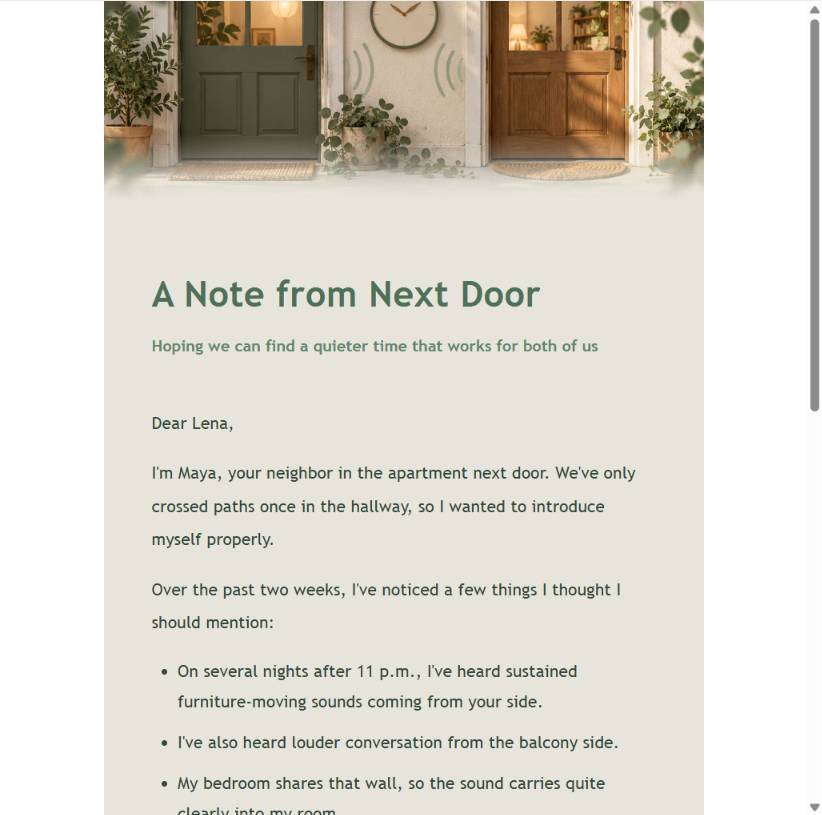
Dear Lena,
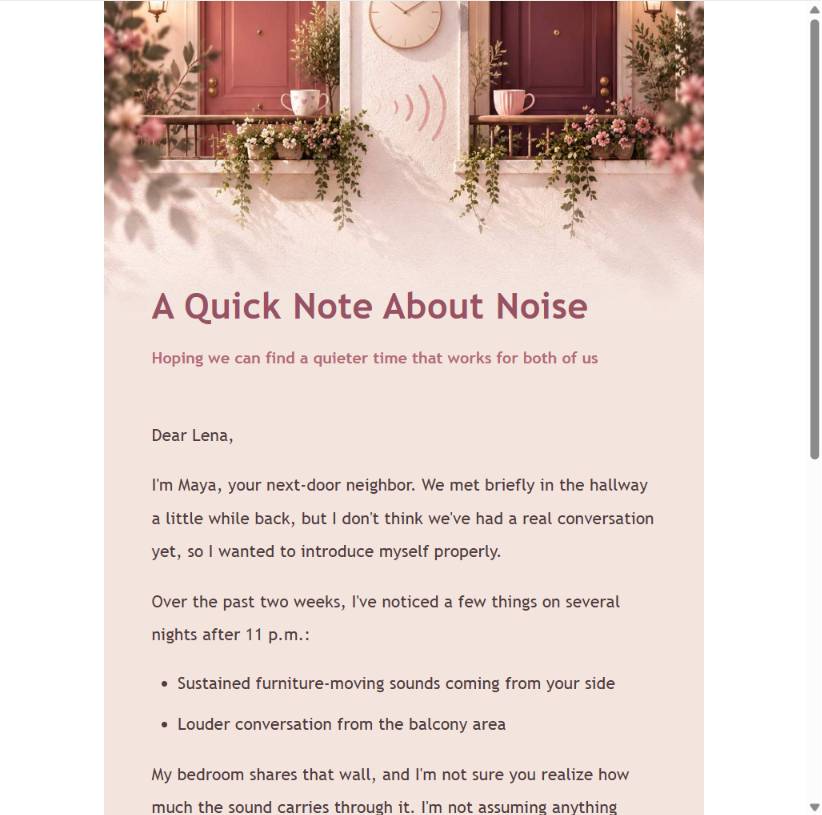
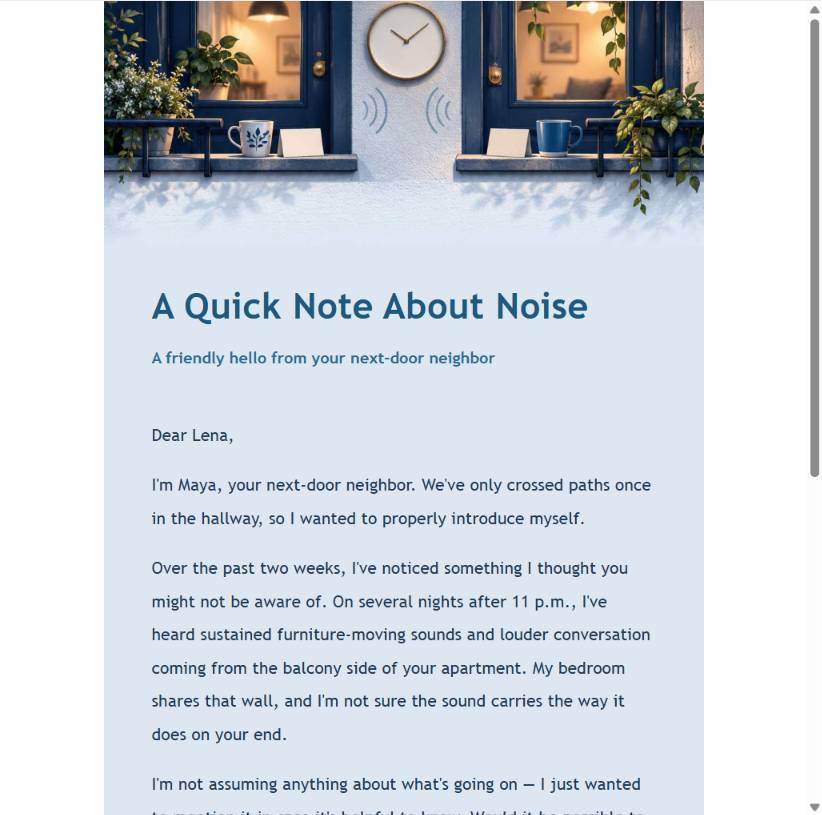
I am Maya, your next-door neighbor. We met briefly in the hallway, but I do not think we have had a proper conversation yet, so I wanted to introduce myself.
Over the last two weeks, on a few nights after 11 p.m., I have heard furniture moving and louder conversation from the balcony side of your apartment. My bedroom shares that wall, and I am not sure you realize how much the sound carries.
I am not trying to assume a reason or make this into a complaint. Would you be open to finding a quieter time that works for both of us? I would also be happy to talk in person when convenient.
Thank you,
Maya Ellis
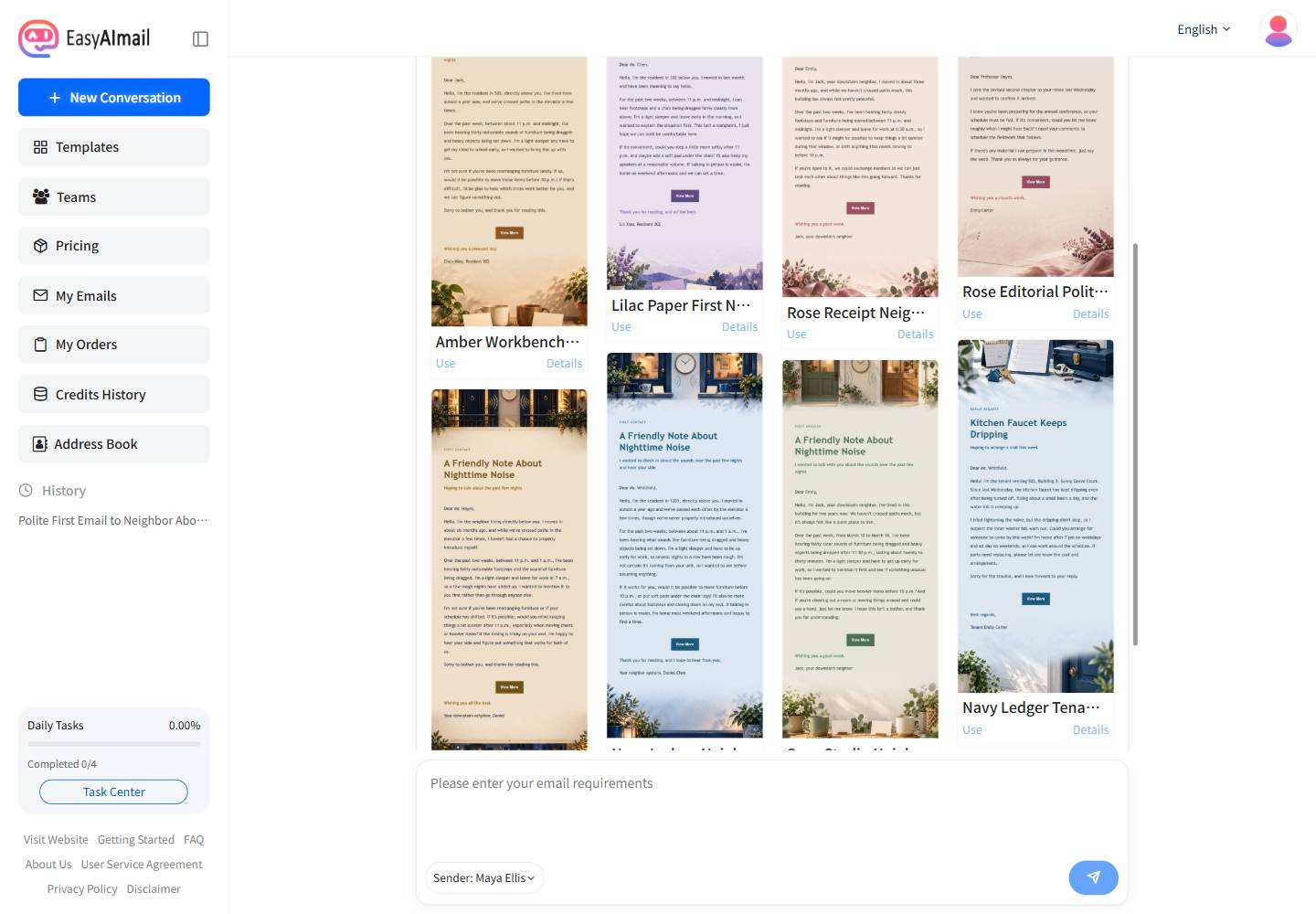
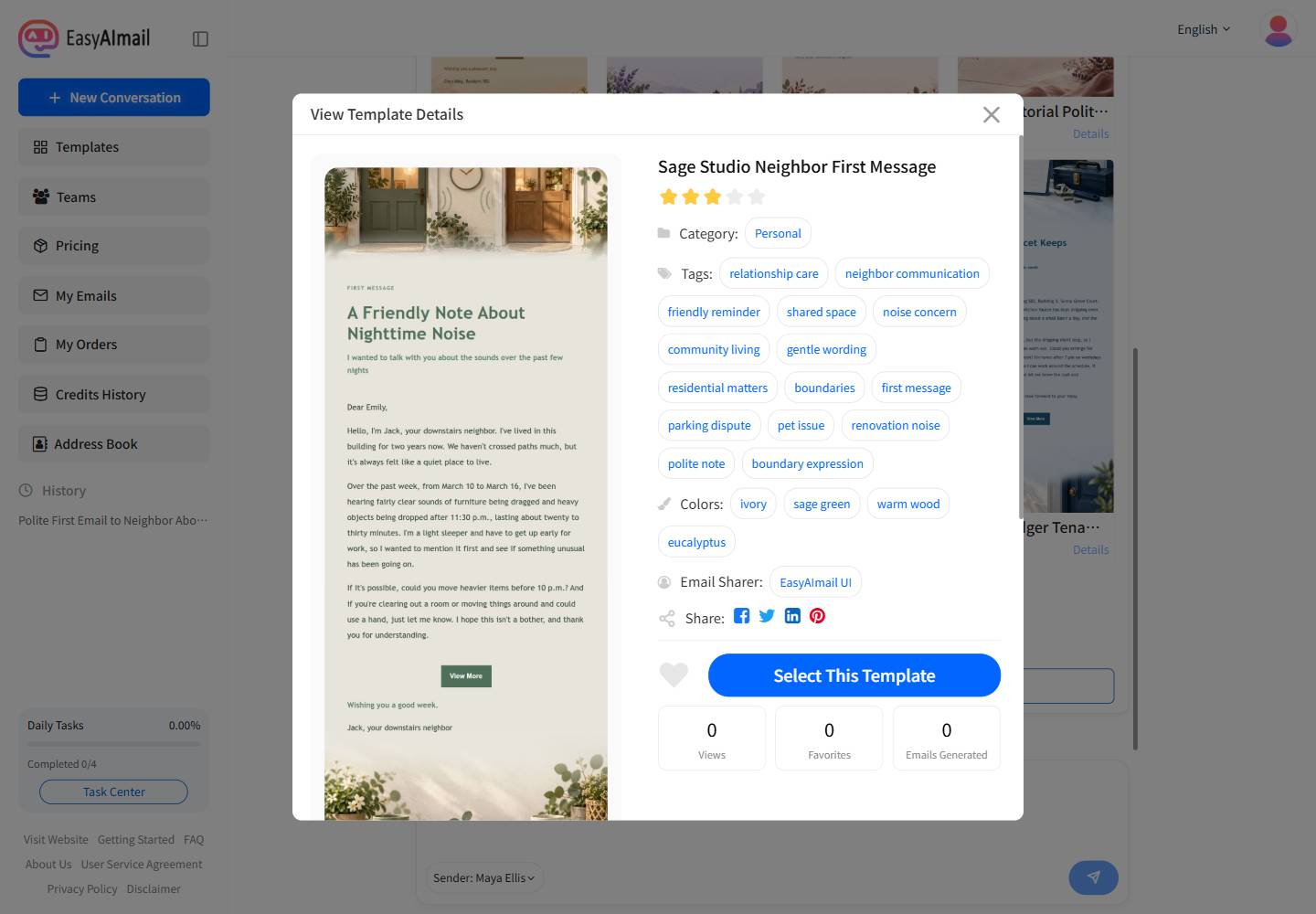
In this English-interface test, the simulated user opened the recommended template details before choosing a first-contact design. Its description, tags, examples, and visual tone had to support a calm, factual request, not a complaint, threat, or legal notice.
One request, different reading experiences
A soft neutral version can fit two people who barely know each other. A rose receipt treatment is gentler for someone trying to lower the temperature from the first line. A clearer, structured version is helpful when there are several times or facts to state. These previews come from separate conversations and different templates, not renamed copies of the same screenshot.
Start small in EasyAImail
Start with an ordinary sentence: “I need to write my first email to a neighbor about a living issue, without sounding adversarial.” EasyAImail may recommend templates, but you open the details, compare the purpose and style, and choose what feels appropriate.
It then asks for the greeting, facts, relationship, next step, and tone in smaller turns. Before generating, you can make the boundary explicit: do not guess at intent, cite rules, or mention complaints or escalation. The workflow previews the email; it does not send it.
Before you send
Before you send it, check that every claim is something you actually observed, the language does not assign blame, and the next step is light enough for the neighbor to answer.
Should I mention building management or police in the first email?
No. This article is about a first, polite, non-confrontational contact. It does not provide rental-law advice or tactics for complaints, threats, or escalation.
Do I need to list every date and time?
For a more specific note, two or three representative times can help. For a light first contact, “a few nights after 11 p.m. over the last two weeks” may be enough.
What if they do not reply?
Give them a little time. If the issue needs further handling, make that later decision based on your own circumstances; do not turn this first note into an ultimatum.
> All people, places, and email copy in this article are fictional examples. The email was generated and previewed only; it was not sent.